

Lebanese Immigrant Hilwie Hamdon Helped Build Canada's First Mosque
Canada’s first mosque was built with borrowed blueprints and CAD 5,000 raised door to door. Nearly 90 years later, its story is still tied to a community that keeps growing.
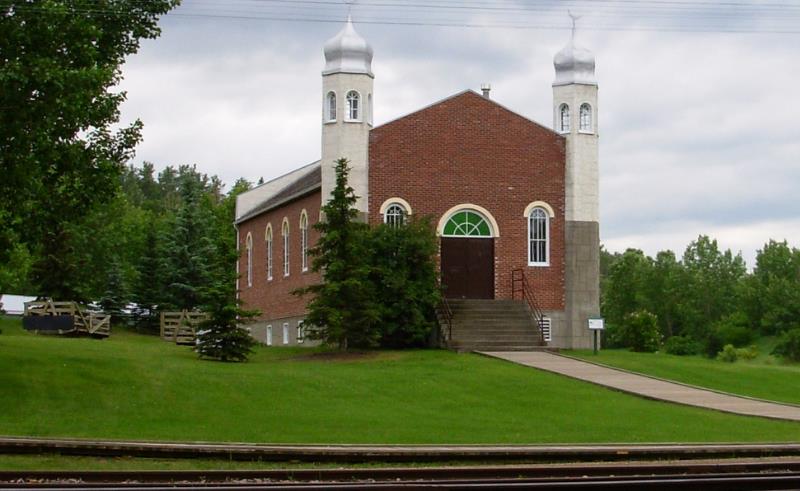
Canada's first mosque doesn't quite look like a mosque at all - at least, not at first glance. Al Rashid, dedicated in Edmonton on December 12th, 1938, has two hexagonal minarets, each topped with a silver onion dome and crescent moon, set into a brick building with a gabled roof and rows of tall arched windows.
Walk past it quickly, in the historic village where it now stands, and it reads as something else entirely. A Ukrainian Catholic parish, maybe, or a Bukovynian church that wandered onto the Prairies.
That's not an accident of taste. It's the fingerprint of Mike Drewoth, a Ukrainian-Canadian contractor who had never seen a mosque and had no particular blueprint to work from.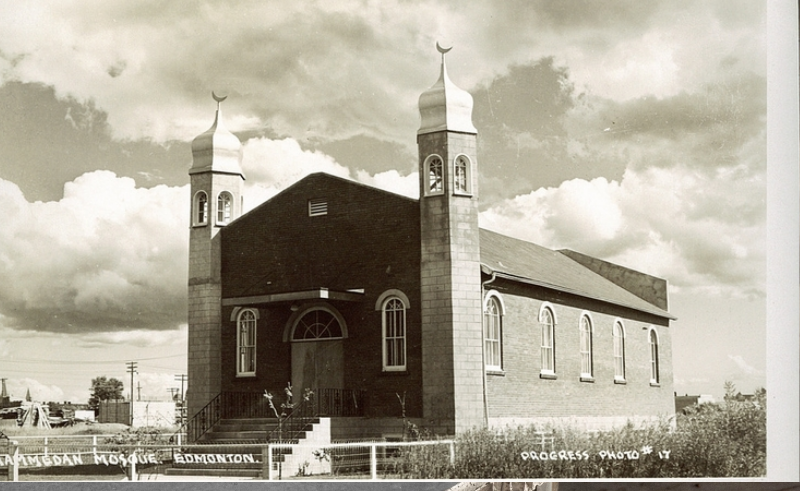 The women who hired him gave him one instruction, as near as the record can tell it. We want a place to pray. Everything else, the arched windows, the domes, the churchlike bones of the structure, came from the only sacred architecture Drewoth already knew. Even the two hexagonal towers, the minarets, were closer to decoration than function, borrowed from church steeples rather than built to call a neighbourhood to prayer.
Al Rashid wasn't the only early mosque to look a little different from what we'd expect today. In Cedar Rapids, Iowa, a community of Lebanese and Syrian immigrants started building what would become the Mother Mosque of America in 1929, completing it in 1934, four years before Al Rashid. It's a plain, one-story wooden building on a quiet residential street, built mostly by the congregation's own hands and distinguished from its neighbours mainly by a small, crescent-topped dome over the door.
In Brooklyn, a community of Lipka Tatars - Muslims whose families had lived for generations in Lithuania, Poland and Belarus - bought a wooden former Methodist church in 1931 and converted it into what's now the Powers Street Mosque. Its clapboard exterior already looked, by accident, like the wooden mosques some of the congregation remembered from home. They added a crescent moon to its single existing turret and left the rest largely as they'd found it.
Three different communities, all building in the same narrow window of the Depression, arrived at the same result by three different routes. But the routes all point in the same direction. When Islamic architecture travels with a community too small and too broke to import its own tradition wholesale, it doesn't disappear. It bends to wherever its people land, borrowing whatever roofline, tradesperson or material happens to be within reach.
Islamic architecture has its own deep vocabulary, from the columned hall and courtyard to the minaret. But that vocabulary was built by communities with centuries of masons and money behind them. A dozen Lebanese and Syrian families on the Canadian Prairies during the Depression had neither. What they had was Hilwie Hamdon.
Hamdon was born in 1905 in Lala, a village in Lebanon's Beqaa Valley, part of a broader wave of emigration out of what was then called Greater Syria as the Ottoman Empire came apart.
Arab immigrants had been arriving in Canada since roughly 1882, and by the time Hamdon crossed in 1922 to join her husband Ali, a fur trader who built a business far north in Fort Chipewyan, there was already a small, scattered Muslim population across the Prairies with nowhere formal to pray.
In 1933, wanting better schools and closer ties to Edmonton's small Arab community, she moved the family south on her own. The Hamdon home quickly became an informal gathering place, with hot meals, Arabic conversation and a soft landing for newly arrived bachelors from the Middle East. But Hamdon wanted something more permanent than a kitchen table, and she went and asked for it.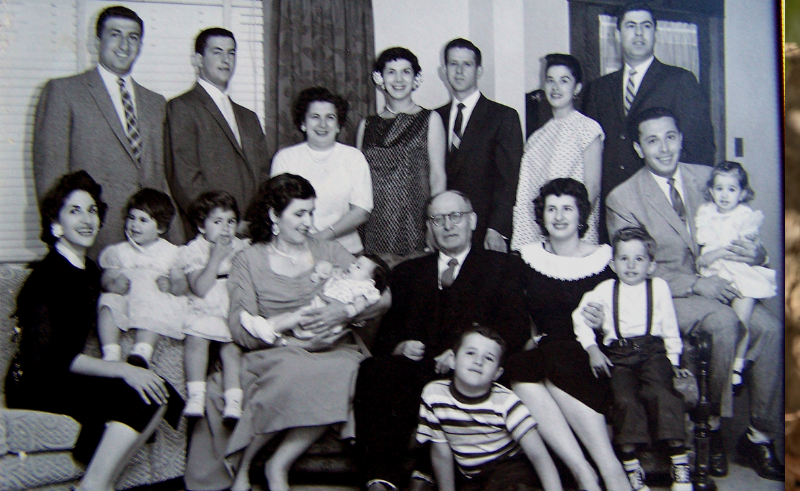 She approached Mayor John Fry directly. He pointed out that her community didn't have the money to build anything. "We'll get the money," she told him.
Fry agreed to hand over a lot if the community could raise the CAD 5,000 needed for construction, a formidable sum in the depths of the Depression.
Hilwie and a circle of women went shop to shop down Jasper Avenue, Edmonton's main street, asking for money toward a building most of the shopkeepers would never set foot in. They didn't limit themselves to Muslim donors. They asked Christian shop owners. They asked Jewish shop owners.
Contributions came in from all over until the five thousand dollars was, improbably, in hand. One of the women who lived through it would later call it a very cooperative community.
With the land secured and the money raised, the congregation hired Drewoth and largely left the design to him. The main hall he built was rectangular, lit by arched windows on both sides, with small rooms off the front for ablutions. Inside was a mihrab marking the direction of Mecca and a small minbar, or pulpit.
An insulated basement, added at the community's insistence, was meant for the teas and dinners that were already, before the building existed, the heartbeat of Edmonton's Muslim social life. Once it opened, that's what the basement became. A space for multi-faith, multi-ethnic gatherings with no religious purpose at all, open to anyone in the city who wanted to come. The floor was covered edge to edge in donated, mismatched rugs.
When the mosque opened that December, the dedication was performed by Abdullah Yusuf Ali, one of the era's most respected translators of the Qur'an. Fry attended. So did I.F. Shaker, the Christian Arab mayor of the small town of Hanna, Alberta, who served as master of ceremonies.
"It is significant that people of many faiths are sitting friendly together," Fry said that day. "This could not have happened in some lands." That was the building Hamdon made possible. A mosque that looked like a church, paid for by three faiths, run by a congregation that treated its basement as a town hall.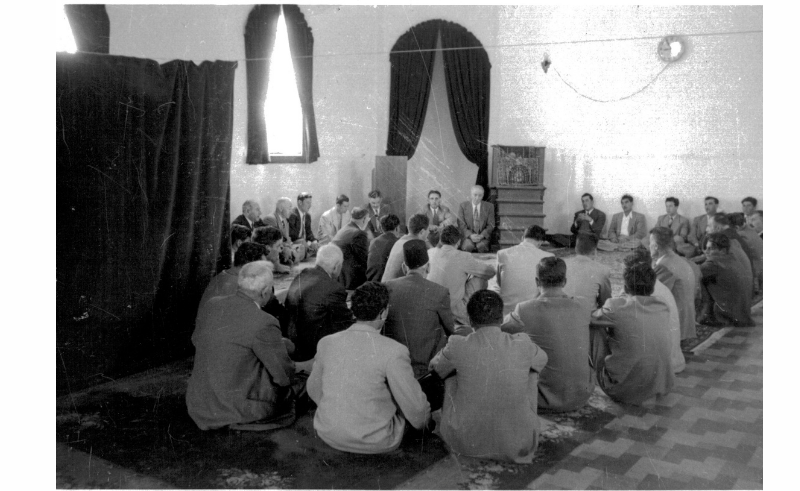 Its look outlived its own era, too. When a Pakistani Muslim community in south Edmonton built Markaz-Ul-Islam in the 1980s, they used Al Rashid as a template, reproducing its domes and minarets. The influence can also be seen in mosques in Lac La Biche and in the Muslim Community of Edmonton's own building.
But the mosque's story didn't end with its opening. Over the next five decades, the building would be moved twice, each time because Edmonton needed the land it stood on for something else.
In 1946, the Edmonton Public School Board asked the congregation to move so the neighbouring high school could expand. The community agreed, on the condition they'd get an equivalent lot, and the mosque was lifted and relocated a few blocks away, to 102nd Street and 111th Avenue, where it would stand for the next several decades.
Arab immigration to Canada surged after the Second World War, with close to 50 thousand people arriving between 1946 and 1975. By 1980, Edmonton's Muslim population had passed 20 thousand, well past anything the little building could hold. The congregation began building a larger, purpose-built Al Rashid Mosque elsewhere in the city, and in 1982 the doors of the old building closed for what most people assumed was the last time.
For the next decade, the old building sat empty on its lot beside the Royal Alexandra Hospital, doing nothing, belonging to no one in particular.
Then the 1980s oil boom pushed the hospital to expand, and in 1988 it moved to grow its parking lot onto the mosque's land. The building faced demolition. A fundraising committee formed but couldn't raise enough on its own.
It was Lila Fahlman, one of the Muslim women Hamdon had inspired a generation earlier, who went to the Canadian Council of Muslim Women (CCMW) and pushed the group to take the lead in saving the building.
What happened next belonged to another generation of the same family. Karen and Evelyn Hamdon, Hamdon's granddaughter and grand-niece, were among the CCMW members who picked up the campaign.
And it wasn't a particularly easy case to make. City officials initially told the women the mosque wasn't historically significant enough to belong in Fort Edmonton Park, the city's living-history site, and public debate over the move included arguments that the park should not have to accept a "historical intruder."
The women appealed the decision anyway, ran a public campaign and slowly turned the argument around, helped along by a single benefit dinner that raised close to CAD 40,000 in one night. They hosted three more dinners, travelled the province collecting donations and drew support from the Muslim community in Lac La Biche and CCMW chapters as far away as Ontario. A CAD 25,000 contribution from the province brought the total close to the full CAD 75,000 moving-and-restoration bill.
In 1991, the roof came off, the building was lifted from its foundation and loaded onto a flatbed truck from Lupul's Movers. On a moonlit night, it rolled quietly through Edmonton's sleeping streets and down into the river valley toward its new home.
It sat open to the Alberta sky for nearly a year while restoration funds were gathered, long enough for the rugs to be tracked down and the curtains resewn to match the originals, before reopening at Fort Edmonton Park on May 28th, 1992, in a ceremony that honoured both the women who'd built it and the women who'd saved it.
Passing in 1988, the same year the demolition notice arrived, Hamdon didn't live to see the mosque moved a second time, restored or formally declared a historic building.
But that rescue mirrored the original campaign almost exactly. Women going out into the city and asking for money it didn't yet have, and somehow coming back with it. It's the same instinct that put the mosque in a Ukrainian builder's hands in the first place, the same one Hilwie handed the mayor on the day she told him not to worry about the money.
The building the congregation left behind in 1982 kept its own story going, too. That replacement mosque, ironically, opened with the same gap in its architecture the old one had never quite filled. It launched that August without a minaret of any kind.
What's now recorded as Canada's first genuine mosque minaret, built to serve a mosque rather than borrowed from a church, wasn't added until 1984, two years later, the same year the congregation founded Alberta's first Muslim youth organization.
The building has kept changing since. An estimated CAD 4.2 million renovation completed in 2024 added an elevator and accessible washrooms, widened the main entrance and rebuilt the gymnasium, changes aimed less at how the mosque looks than at who can move through it easily. It still does the kind of work the original basement once did, too, opening its doors as an emergency winter shelter during Edmonton's coldest nights, the same instinct Hilwie's congregation had toward the building as public space, just under a different roof now.
And even now, that building is starting to run out of room. Edmonton's Muslim community has grown large enough that the 1982 mosque now holds two Eid prayer sessions, and since 2021 the congregation has been pushing to rezone land on the outskirts of the city for a larger complex, tentatively called a grand mosque, with a school, recreation centre and room to grow. The proposal is still caught in municipal approvals.
But the pattern is familiar. This is the third time in 90 years that an Al Rashid congregation has looked at the room it's standing in and started raising money for a bigger one.
What Hamdon built is still standing in Fort Edmonton Park, moved there by a campaign led in part by her own granddaughter more than half a century after Hilwie first convinced a mayor to give the community a piece of land. Today, the mosque remains part of the park's living-history grounds – a small building that has been moved, saved and remade, but never really left Edmonton's Muslim community behind.