

How Egypt’s Sam Shendi Turns Stainless Steel Into a Language of Colour
Sam Shendi trained as a classical figurative sculptor in Egypt, then found his voice in stainless steel and colour after years away from art in the UK.
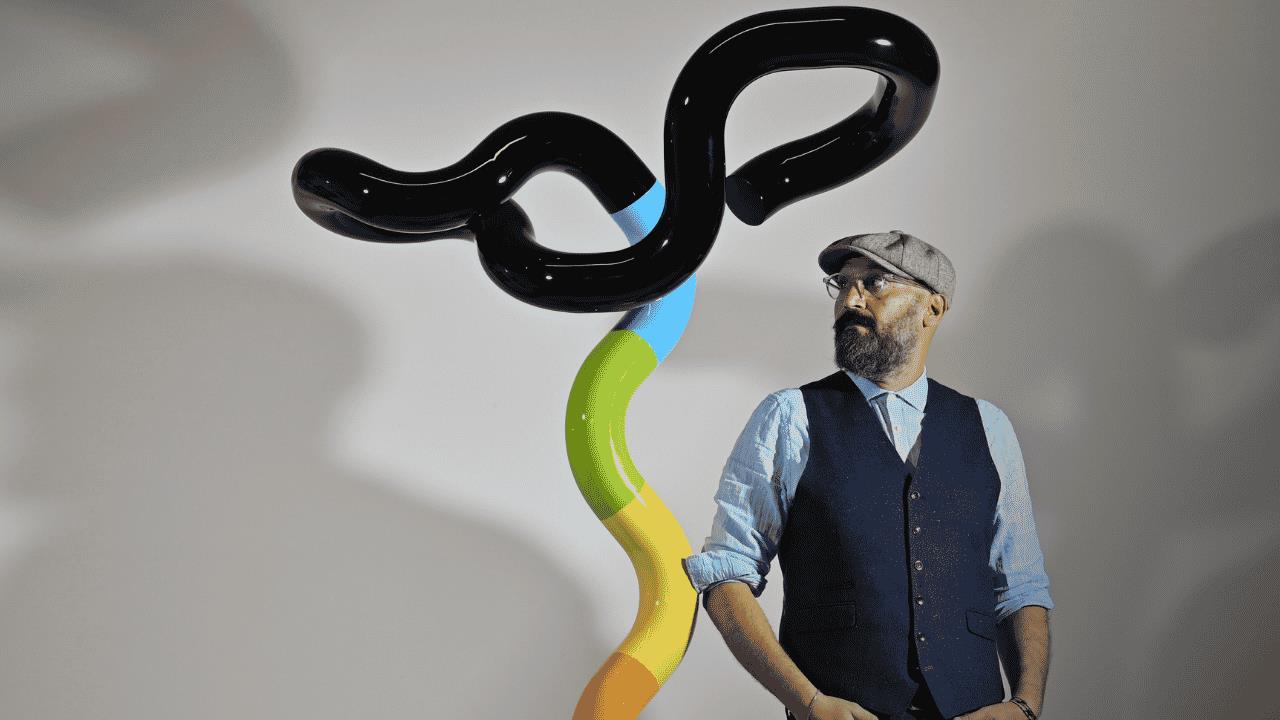
Egyptian visual artist Sam Shendi has not sketched in years. Instead, a piece starts as a feeling he cannot name, one that sits with him for weeks, sometimes months, before he ever touches material. "There is something inside me that started creating, beyond my control," he says. "These forms rotated in my imagination constantly and do not leave my imagination until I managed to bring it to reality."
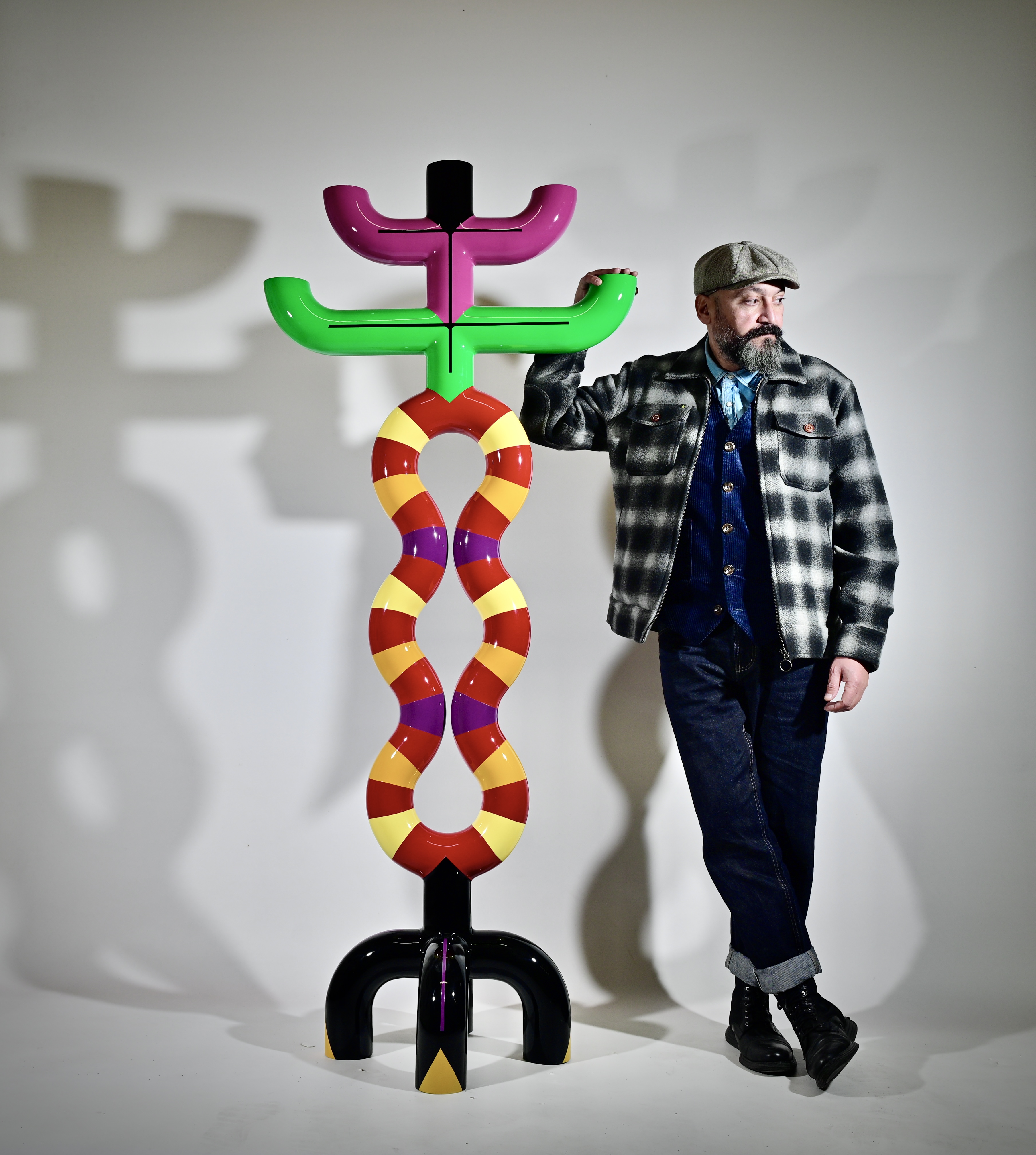 Shendi graduated from Fine Art University in Egypt in 1997, trained in the classical, figurative tradition. He moved to the UK shortly after, expecting to carry that training forward.
Instead, he found an art scene that had moved past the figure entirely, deep into abstraction. "I struggled so much trying to present myself as an artist," he says.
For years he stepped away from art altogether, working as a home designer and eventually starting his own company. Sculpture became something he did on the side, funded by his own profit, made for no one but himself.
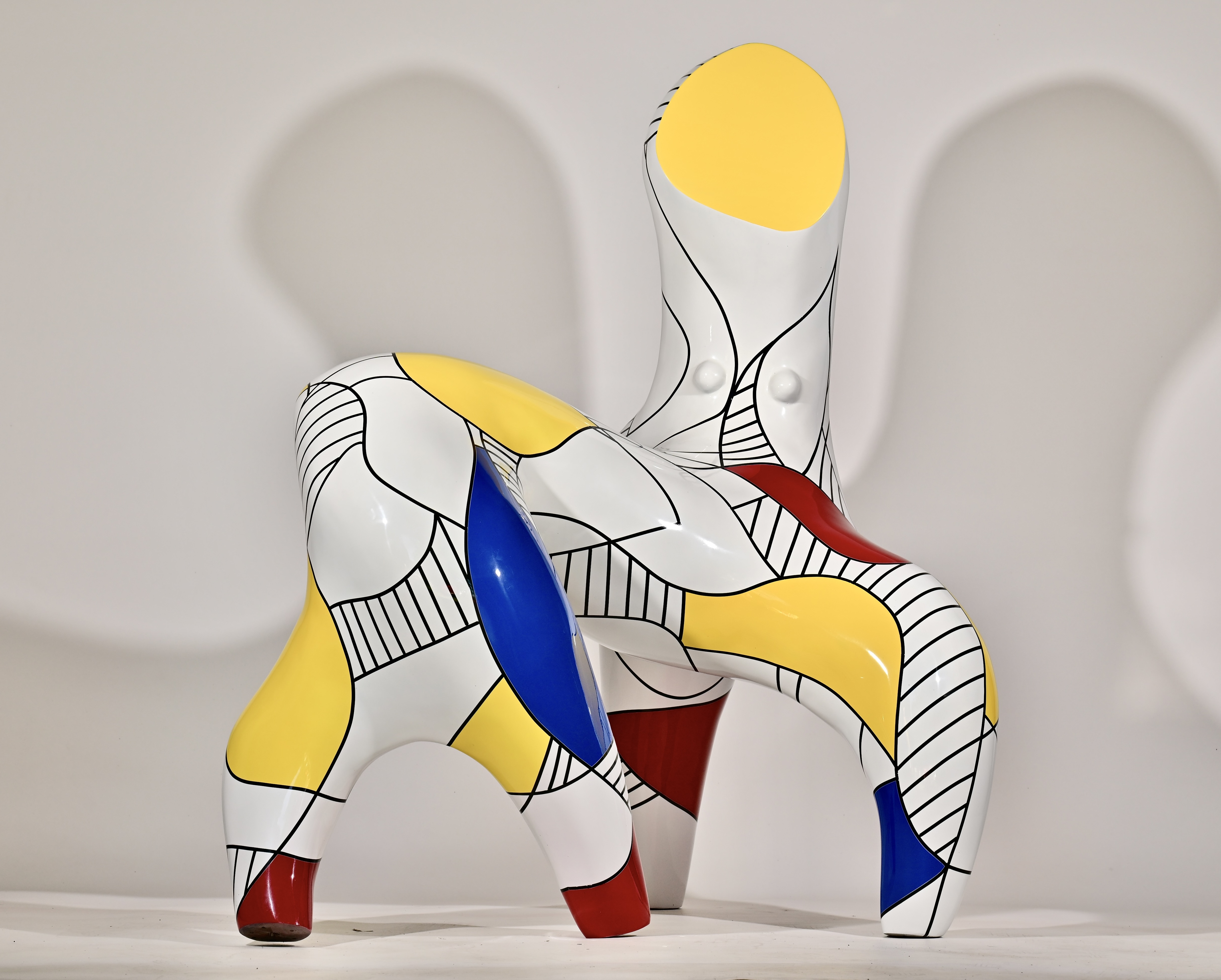 "I really do not care if it is being sold or who will take it," he explains. "I just wanted to prove that I'm a sculptor and I have my own ideas."
What came out was a kind of minimalist, architectural object. The figure is still present underneath, but no longer recognisable as one.
 Around nine years into his time in the UK, he discovered stainless steel, and it changed the direction of his work. Where Egyptian sculpture had always leaned on stone, wood, bronze and clay, stainless steel felt current. "It is a material that speaks of the time that we live in now," he says. "It's available in every house, it exists everywhere."
The pieces he made in it, uncoloured and precise, started to weigh on him. "I felt like they were too industrial, they were too heavy," he says of looking at that work.
The shift came from colour and from an observation about language. In Egypt, a fake smile is a yellow one. In the UK, someone bruised by life is 'black and blue.' "I discovered that people use colours to describe emotion and they describe other people's behavior, and it is an international language," he says.
After his first show in 2010, he began making sculptures in stainless steel and fiberglass, coloured in the primary palette he had settled on. He found that paint did something structural to the work. "As soon as you add colour to the sculpture, it becomes very light."
That instinct for colour as a statement led to Art D'Égypte's Forever Is Now exhibition at the Giza Plateau in 2023, where Shendi was invited to install a piece beside the pyramids. He took his inspiration from the exhibition's title.
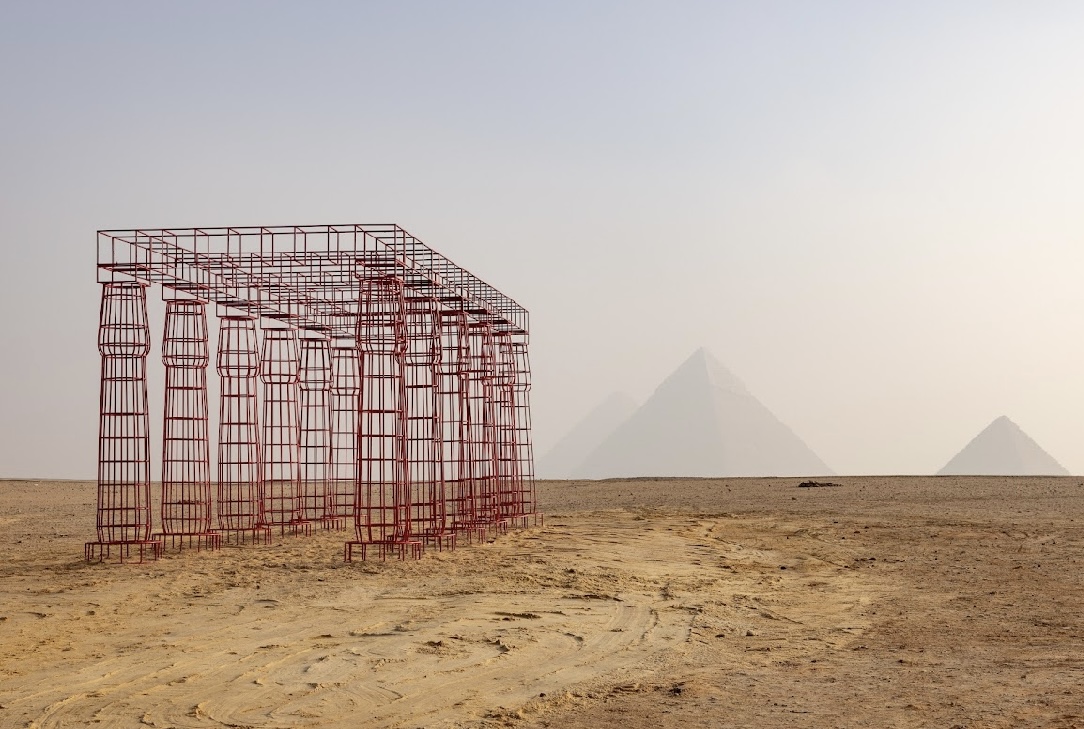 If the pyramids represented forever, he wanted to build something that belonged to now. "I wanted to create this digital temple," he says, "because up north here next to the pyramids we do not have any temples at all, they are all in the south of Egypt, and I am certain they exist but there is nothing in it." He was not after a ghost or a phantom, Shendi explains, but something closer to a soul, a trace of what might once have been there.
Dominating the pyramids was never the plan. "I wanted it to be open, so I could see the light pass through it without anything solid covering the pyramids," he says.
Red was a deliberate colour choice. "It is a warning colour, it is a statement for you to stop. This is me telling you to wait, observe and start moving."
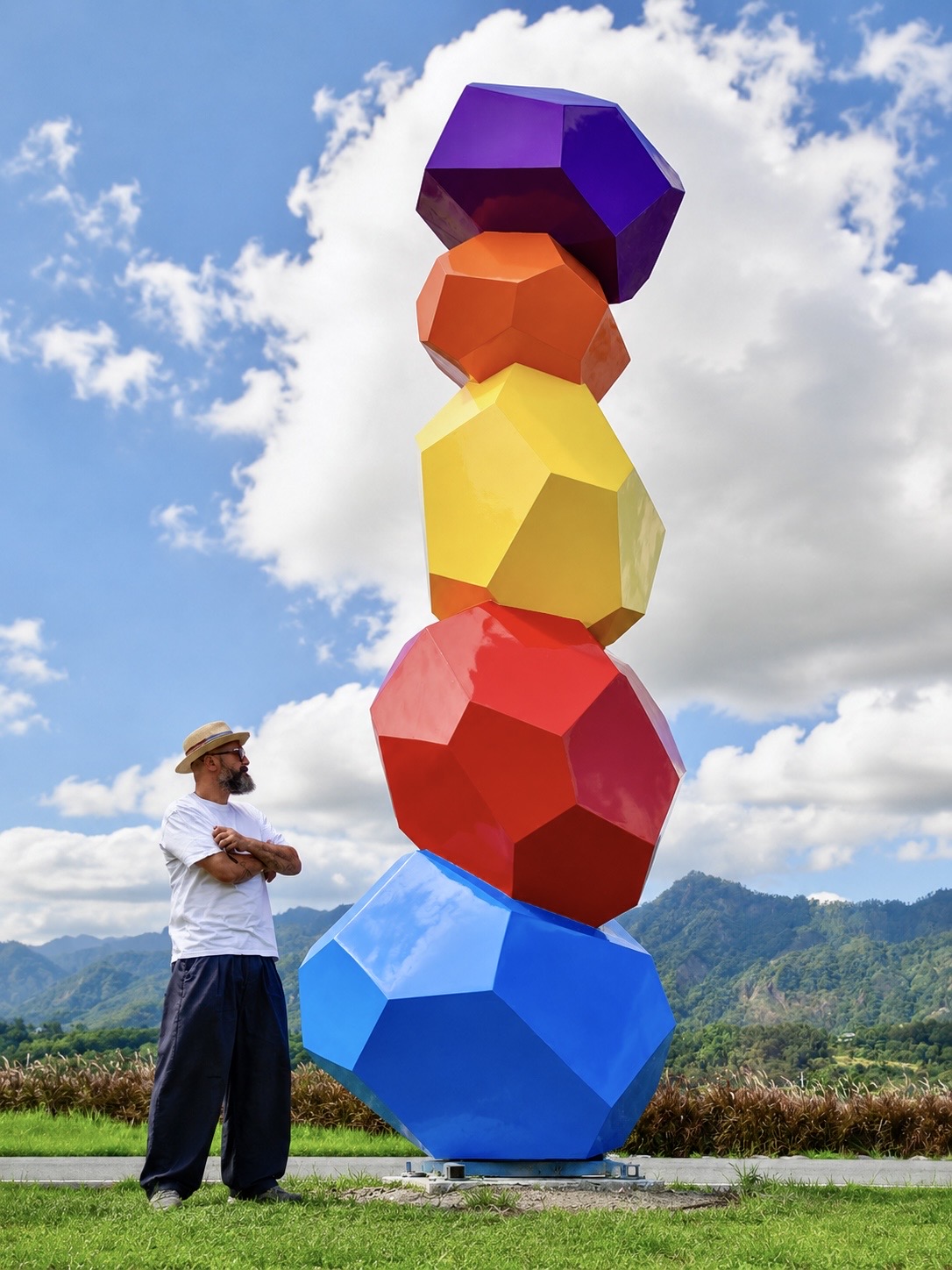
Since then, Shendi has kept pushing past the primary colours that first defined his work, moving further into scale and public space, most recently with The Shape Between Us in Taiwan, a stacked, precarious arrangement inspired by a children's balancing toy.
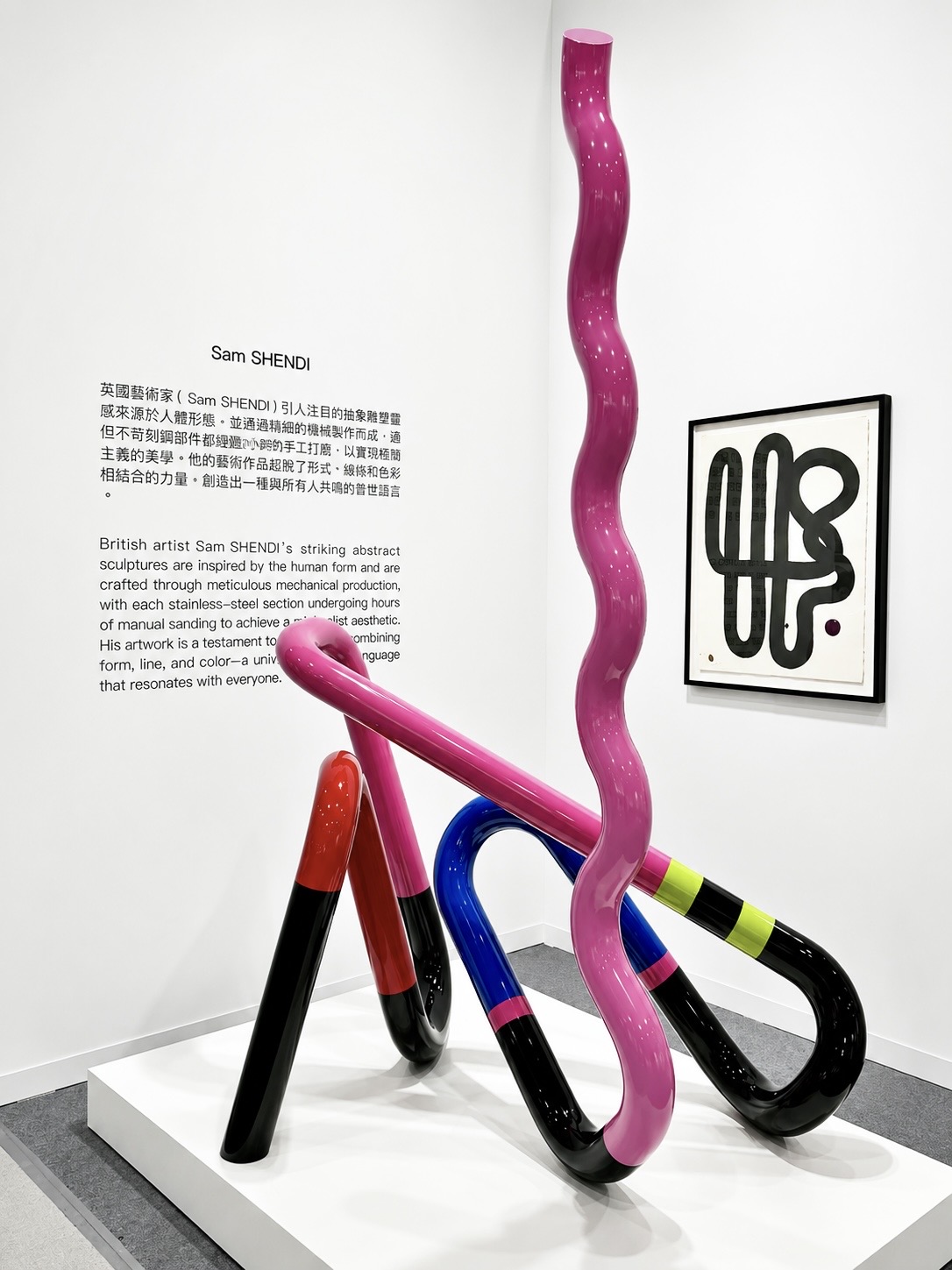 Scale, for Shendi, is not just a matter of ambition. "When you go large you need to understand every object that you create has a sort of energy, so the bigger you are the more dominating the energy that you are," he says.
His smaller sculptures, he admits, tend to end up forgotten in a corner of the studio, while the larger ones feel almost alive, part of a dialogue between him and the work.
That is also why he gravitates toward public space over museums and galleries. He sees large-scale public artifacts as a language, the same one he believes past civilizations used to speak to the future. "I found large objects, or large sculptures, or even installations, are something you can be part of instead of something you look at," he says.
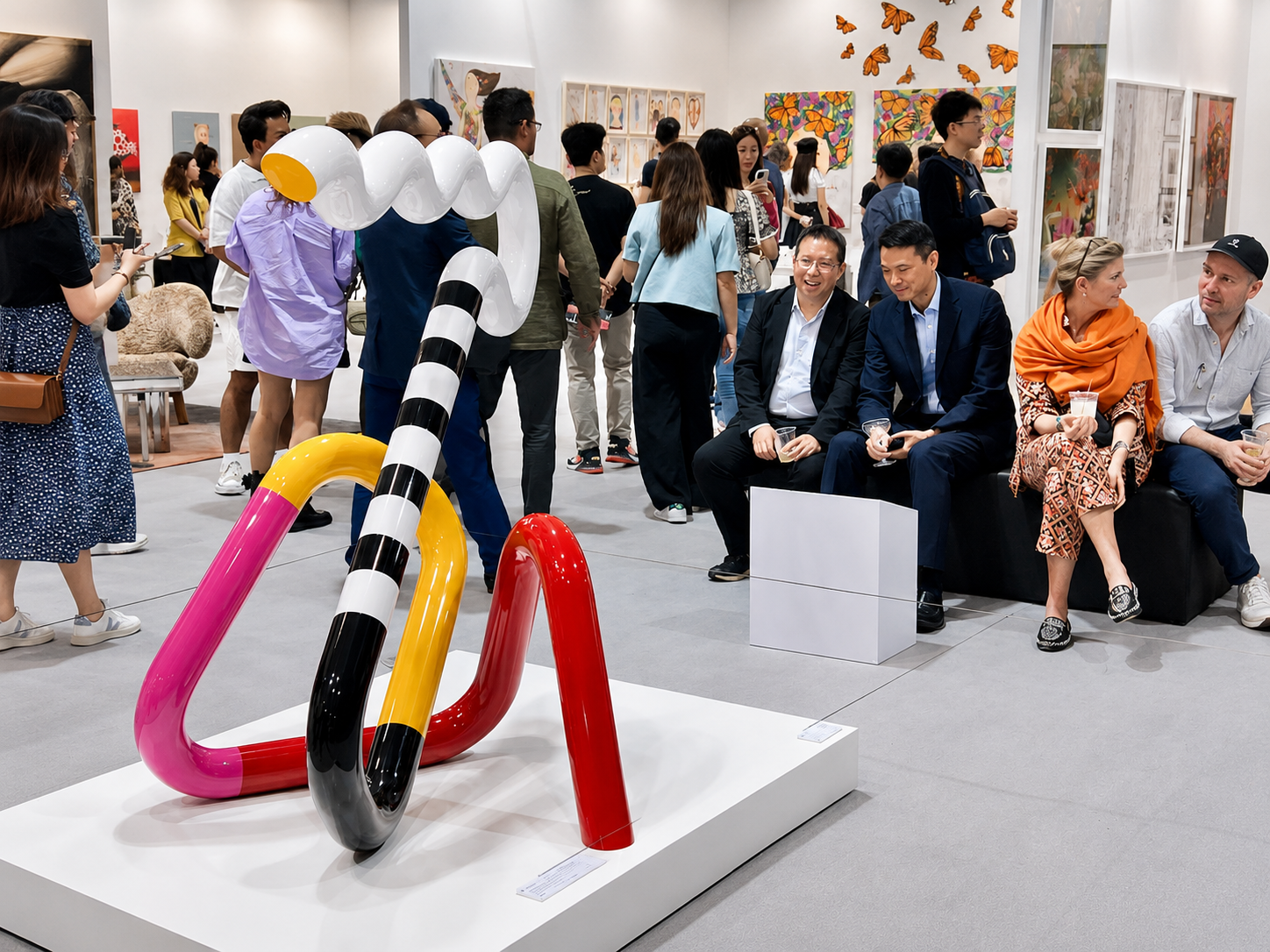 "Art for me is a diary. Every day you write a page about your daily life, my sculptures are a diary." Shendi makes only one of each piece, as it comes from him and belongs to him before it belongs to anyone else. "I want everybody to just feel it instead of trying to understand it."
"I remember all my work because they all come out for a reason," he says, "and the reason is they are inside me."
- Previous Article These MENA Walls Tell Stories Beyond the Landmarks
- Next Article The Intricate Beauty of Ben Youssef Madrasa