

Cairo Design Week Builds Frank Lloyd Wright’s 1927 Ras El Bar Cabin
Designer Amr Orensa spent 15 years tracing Frank Lloyd Wright’s unbuilt beach-hut drawings for Ras El Bar. This month at Cairo Design Week, one of them is set to be built at full scale.

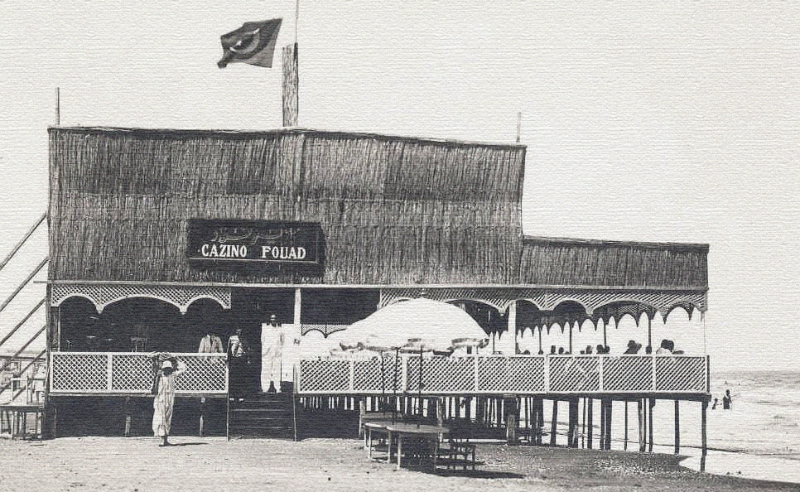
Around 15 years ago, while researching the architectural heritage of Damietta, designer Amr Orensa found himself following a curious lead linking Ras El Bar to Frank Lloyd Wright. He had been collecting old photographs of Damietta with a local teacher when an online search led him to a set of beach-hut sketches by the American architect and dated 1927.
“How did Frank Lloyd Wright design for Ras El Bar, and we in Damietta don't know anything about it?” he recalls thinking.
At the time, all he could find was a single, low-resolution sketch. Had it not been for Wright's handwritten reference to Ras El Bar on the drawing, Orensa might well have dismissed it as a fabrication.
It offered little indication of what Wright had planned, and the accounts Orensa encountered were contradictory. Some claimed the huts had been built, only to be washed away by floodwaters soon afterwards, while others said they had never made it beyond the drawing board. The Frank Lloyd Wright archive now classifies the Ras El Bar cabins as an unbuilt project.
 “It was a fascinating subject, but I had no way of establishing what had actually happened to the huts. I didn't know where to take the research, but it stayed with me for the next 15 years,” Orensa tells SceneHome.
The proposal dates to a particular moment in Ras El Bar's history. Situated where the Nile meets the Mediterranean, the town was becoming one of Egypt's most fashionable summer destinations during the 1920s.
Orensa says travel to Europe had become more difficult for Egyptians accustomed to spending their summers abroad after the First World War, making Ras El Bar an increasingly popular alternative for families from Cairo, members of the royal circle and other prominent visitors.
“What had once been a place people visited to hunt wild birds was becoming a popular summer destination, with an architectural character distinctive enough to catch the attention of any established architect,” Orensa says.
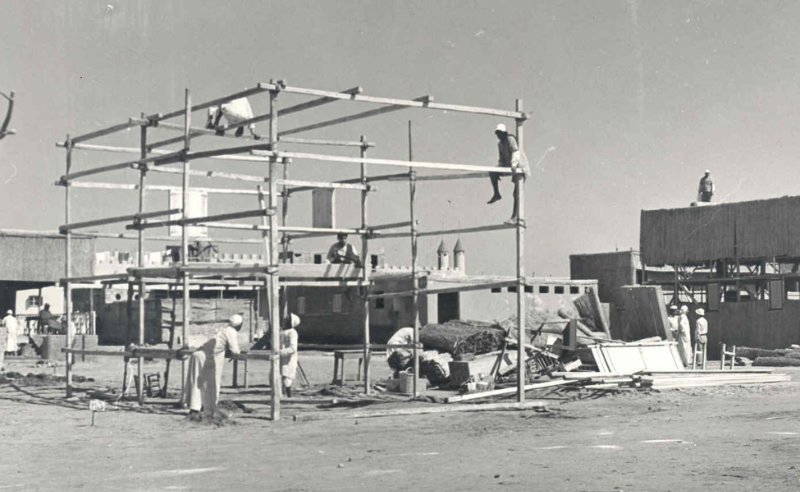
Ras El Bar's architecture was designed around the particular conditions of its coastal climate. Houses were erected at the beginning of summer and dismantled at the end of the season, as permanent structures struggled with the winter flooding that historically affected the area.
This gave the town a building tradition that was as temporary as its occupation. Local construction relied on materials and skills already familiar to the community, particularly woodworking, which had long been part of Damietta's boatbuilding and fishing industries. Timber frames formed the structures, while reeds gathered from the banks of the Nile were woven into wall coverings.
This is the context in which Orensa reads Wright's proposal.
“What is interesting about these sketches is how clearly they show Wright's respect for the identity of Ras El Bar. He didn't arrive with the intention of imposing a recognisable modernist style on the town. He was the first to look at how people were already building there,” Orensa says.
Realising the sketches remained beyond Orensa's reach for years.
The opportunity to return to them came through a collaboration with Waad El Hadidy, an Egyptian interior designer based in New York who works in hospitality design through her studio, The Medusan.
When El Hadidy visited Egypt and suggested that they work together, Orensa proposed bringing Wright's beach-hut design to life for Cairo Design Week.
The idea required more than the original sketch he had found online. It also meant approaching the Frank Lloyd Wright Foundation for access and permission to build a design that had never been realised.
The Foundation initially explained that it did not usually license unbuilt projects. The surviving material consisted of sketches rather than a complete construction package, leaving anyone attempting to build the design to interpret and fill in details Wright had never resolved.
The team presented its proposal as a temporary, educational and non-commercial project. The Foundation eventually agreed to make an exception and partner on it.
The digitisation of the Frank Lloyd Wright archive also made a much fuller collection of drawings available to the team, including several iterations of the Ras El Bar cabins.
“We found eight sketches, with different iterations. It's clear that he was still brainstorming. So we picked one of them, and that's what we're going to build,” Orensa says.
The archive offered another way to fill some of the technical gaps. The team studied Wright's Ocotillo Desert Camp, designed shortly afterwards in 1929 and also built using lightweight timber and canvas, to understand how similar ideas were eventually worked out in practice.
They began by developing a three-dimensional model before moving on to the technical drawings required for construction.
The elements are being prefabricated so the team can assemble the cabin at Ghurnata Community Space during the period leading up to Cairo Design Week. The contemporary structure will use wood and canvas, retaining the temporary character of Wright's original proposal.
Orensa sees value in those techniques beyond their historical connection to Wright.
Egypt's contemporary coastal developments are filled with restaurants, cafés, clubhouses and other buildings used largely during particular seasons, yet many are constructed as permanent structures.
“Lightweight timber and canvas buildings could be better suited to beach cafés, clubhouses and other facilities that may need to be dismantled or relocated. Their construction can be quicker, their materials reused, and their open structure allows for better ventilation,” Orensa argues.
He also hopes the installation will encourage architects and architecture students to look again at the assumptions behind contemporary coastal construction.
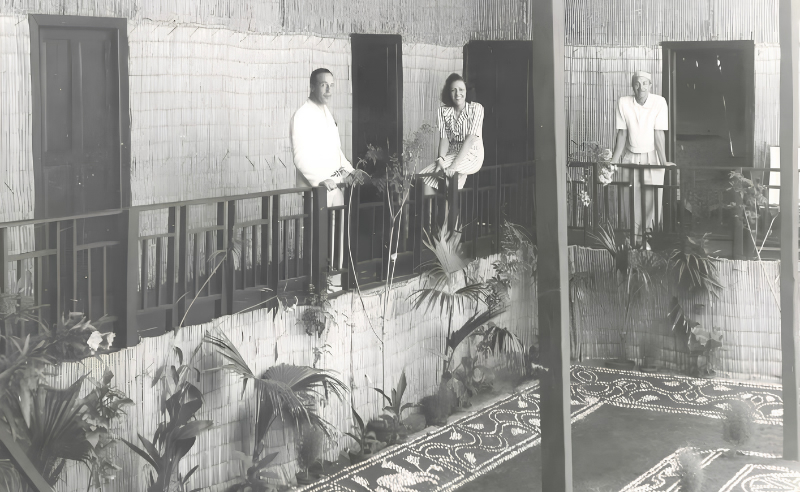 The technique itself does not belong to Wright. Part of what interests Orensa is that the drawings point back towards a local Ras El Bar building tradition that was already working with temporary structures long before the American architect encountered it.
“These buildings are very environmentally friendly because they are all organic materials. Cost-wise, it is much less than what is currently being done. The efficiency is much higher, the design is much better. So what is missing? Why don't we do this?” he asks.
The team is set to present a full-scale, temporary interpretation of the selected 1927 design at Cairo Design Week.
A specially composed soundscape will bring the sounds of Ras El Bar into the installation, while an exhibition will trace the history of the drawings and place them within Wright's wider work.
Inside the structure, a documentary will explore Ras El Bar's distinctive cabin architecture. A discussion bringing together representatives of the Frank Lloyd Wright Foundation and members of Egypt's design community will consider what those ideas might still offer contemporary practice nearly a century later.
- Previous Article inMotion Puts Egypt’s Automotive Future on Show at Cairo Design Week