

Mohamed Fares Designs Egypt's WTM London 2026 Pavilion
The pavilion seeks to showcase Egypt’s history, culture and landscapes beyond its Ancient Egyptian heritage.

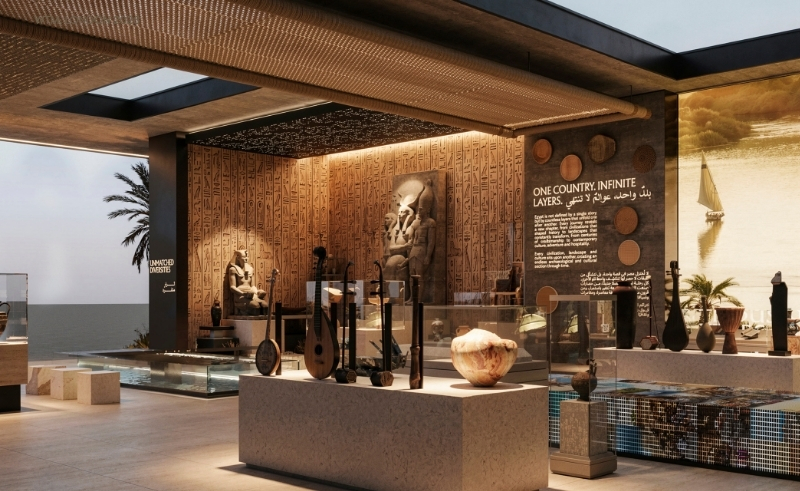
Egypt is often introduced through its ancient monuments, yet its history and identity extend across many civilisations, landscapes and cultural traditions. For the World Travel Market (WTM) London 2026, Mohamed Fares has designed a pavilion that brings these different aspects together, taking visitors through the country's past, present and future.
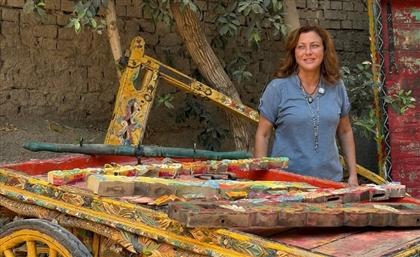
Mohamed Fares, co-founder of Alchemy Studio and founder of MF & Associates, developed the pavilion in collaboration with Egypt's Ministry of Tourism and Antiquities and the Egyptian Tourism Authority. It marks the country's position as Premier Partner of the international travel trade show, taking place in London from November 3rd to 5th, 2026. Titled 'Unmatched Diversities', the concept explores the country's different identities, from ancient civilisation and contemporary life to its deserts, coastlines, arts and hospitality.
“Every civilisation, landscape and culture sits upon another, creating an ongoing record of the country's history,” Fares explains. “We wanted visitors to move through these layers and discover how each one contributes to Egypt's identity.”
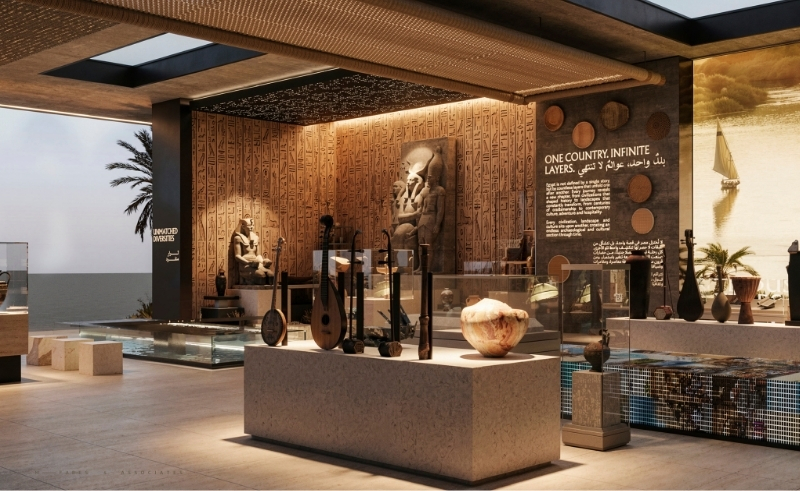
The pavilion is organised into three chapters: Origins, Experiences and Tomorrow. Visitors begin in an open gallery. The first section, The Origins, focuses on the Pharaonic period. At its centre, a plaque introduces the pavilion's concept, surrounded by papyrus plants, which were used in ancient Egypt for writing and record-keeping. The heritage displays also feature replicas of Egyptian antiquities. All the artefact replicas featured throughout the pavilion were created by Konouz Egypt, while United Group was responsible for its construction and fit-out.
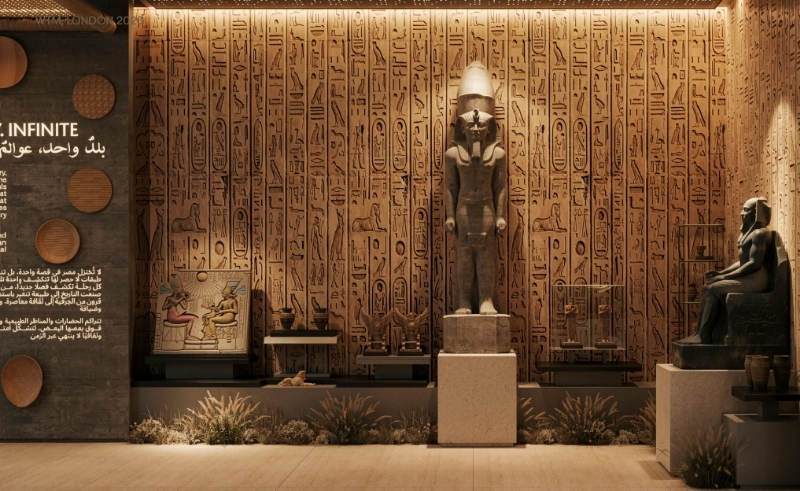 The journey then moves into The Now, where ceramics and paintings introduce visitors to contemporary Egyptian culture. The gallery continues into the Islamic era, adding another period to the country's history. A screen set into the floor rises slightly to form a low cube, showing footage of Esna Temple, diving in the Red Sea and Siwa. The images move between archaeological sites and natural landscapes, offering a glimpse of the different places and experiences that make up Egypt's tourism offering. Between this gallery and the immersive room, a wall features El Katb, the scribe. Representing those who documented Egypt's history, the figure acts as a narrator, guiding visitors from the historical displays towards the final chapter.
The final chapter, The Future, takes visitors into a cross-shaped room at the centre of the pavilion. Three screens surround the space, with cube seating arranged in front of them. A film takes visitors through different parts of Egypt, moving from downtown Cairo and Moez Street to the Pyramids. The presentation brings together historic landmarks and contemporary urban life, concluding the visitor's journey before they enter the exhibition's business areas.
 Beyond the immersive room, the pavilion opens into its largest section, accommodating 110 exhibitors. Each has an individual space equipped with a small screen for meetings and business discussions. The structural columns carry illuminated light boxes featuring printed imagery related to Egypt's different historical periods, continuing the pavilion's visual narrative throughout the trade area. The pavilion also accommodates the Egyptian delegation's private meetings and operational needs. At the exhibitor end, a staircase leads to an upper deck reserved for private meetings.