

Twelve Designers Rework Arab Heritage at Qatar's Design Doha Biennial
Selected from more than 120 entries across 50 countries, 12 designers spent a year developing furniture and lighting inspired by Arab craft, architecture and everyday traditions.
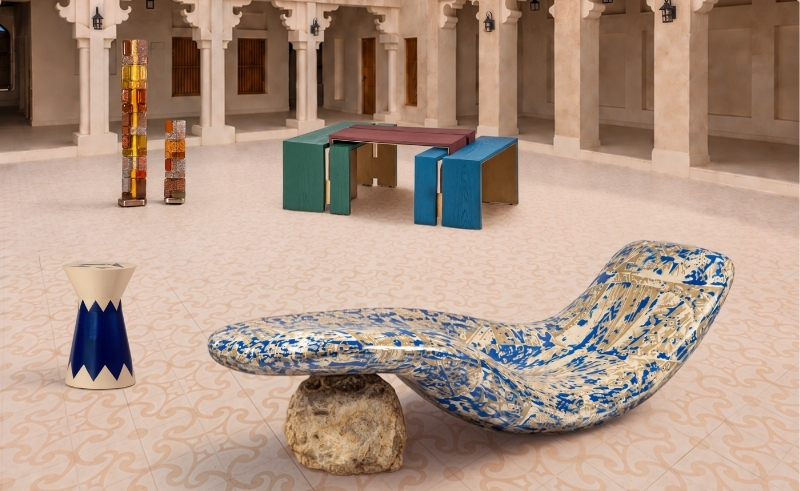
FROMM.Lab is bringing 12 furniture and lighting projects to Design Doha Biennial 2026, Qatar Museums' contemporary design biennial, after a year-long process that took the works from an international open call through mentorship and production, a preview in Milan and finally back to the region whose material culture inspired them.
Presented under the title Interlaced: Dialogues in Design, the exhibition opens November 5 in Fereej Al Asmakh, one of Doha's historic neighbourhoods, and runs until January 31, 2027. Architect and designer Etienne Bastormagi curates and project-manages the exhibition as part of the FROMM.Lab team.
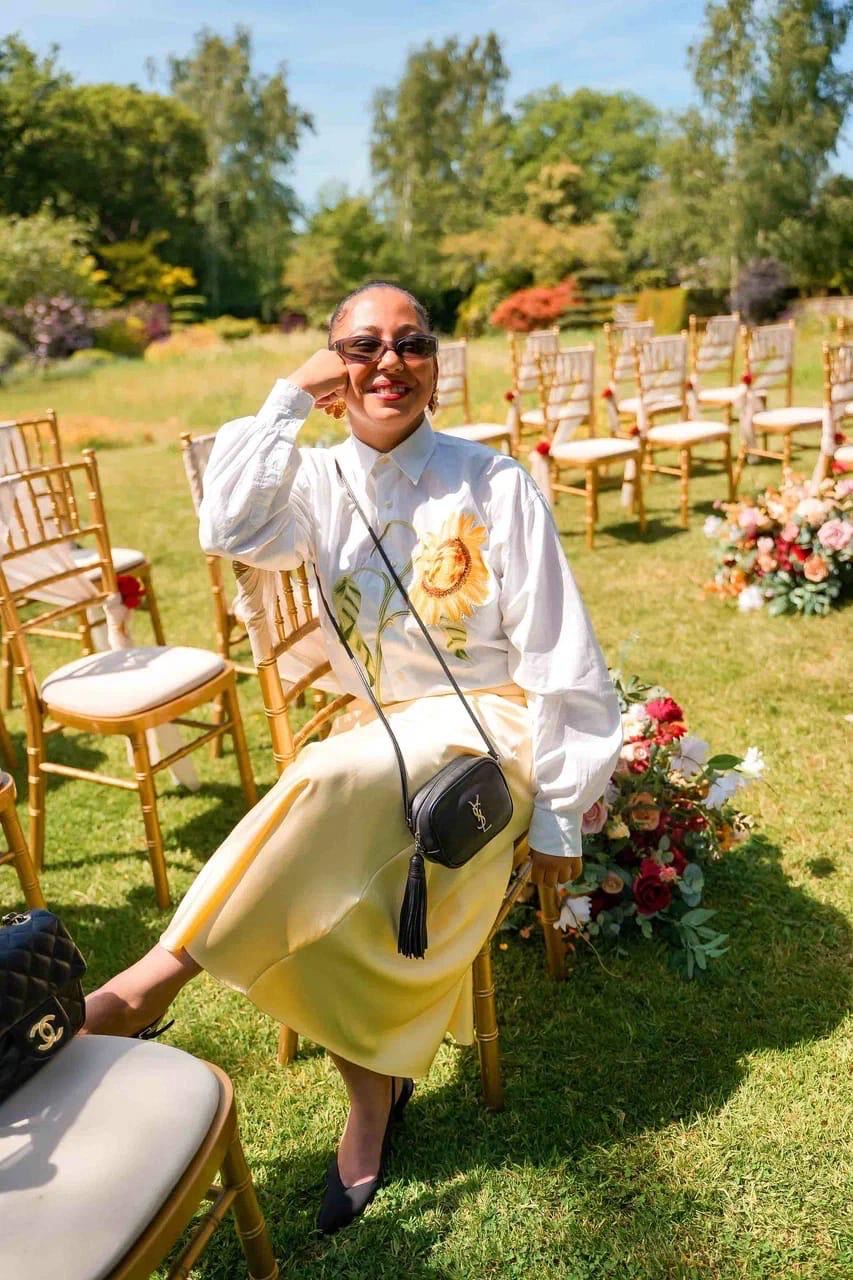
FROMM.Lab is the educational and creative development platform of FROMM., a contemporary furniture and accessories brand founded by Alia Rachid in 2021 between Doha and Milan. The platform was created to support emerging designers through mentorship, production and connections with the wider design industry.
Its first international design competition launched during Milan Design Week in 2025 with a brief that was deliberately broad: reinterpret Arab heritage through contemporary furniture and lighting.
More than 120 submissions arrived from over 50 countries.
An international jury selected twelve projects, ranging from chairs and tables to modular furniture and lighting. The designers then spent the following year working with FROMM.Lab and international mentors on materials, technical development and the difficult transition from an idea on paper to an object that could actually be made.
That process is part of what Rachid wanted the programme to address.
"What makes this journey special is seeing those ideas move beyond concepts into real objects, developed, produced and presented internationally," she says.
"Bringing the 12 projects together in Doha is particularly meaningful for us. It reflects what we believe Qatar can offer as a platform for creative talent, cultural exchange and the growth of the design industry."
Four of the projects had an early outing at Alcova, an independent design exhibition held during Milan Design Week, in 2026: Cecilia Rinaldi's SARJ, Daniel Heilig's Bastion, Ismail Hutet and Blanca Scully's Minara: Pillars of Light and Xinyi Wang's Dusk-Dawn Dune.
The Milan presentation gave the designers their first international exposure as a group. Two of the projects later reached award shortlists: Minara became a finalist for the Arab World Institute's 2026 Design Award in Paris, while Dusk-Dawn Dune was shortlisted for the Isola Design Awards.
Doha brings all twelve together for the first time.
Interlaced is organised around three ideas, Making, Place and Rituals, and almost every object begins with something recognisable: a garment, a piece of architecture, a way of sitting, a childhood practice or an object used around the home.
The exhibition's setting adds another layer. Fereej Al Asmakh is one of the older parts of Doha, with courtyard houses, narrow passageways and shared spaces that place contemporary objects inside a neighbourhood carrying its own architectural history.
"In the context of Fereej Al Asmakh, fragments of ritual, making and a sense of place take on another dimension," Bastormagi says. "The neighbourhood itself becomes part of the exhibition, where objects, spatial memory and the lived history of Doha intertwine in an ongoing dialogue."
Some of the most immediate works begin with the body.
Egyptian designer Abeer Borhan's SHE Console takes its cue from the sight of women carrying vessels on their heads. Its sculptural legs, made from oak and reclaimed pine from a century-old Egyptian log, turn that balancing gesture into a repeated human form.
Saudi designer Areej AlGhonaim looks to the traditional dress of women from the Ghamid community in southern Saudi Arabia for her GAMID Chair. Palm fronds, velvet and semi-transparent fabric evoke the lightness and layering of the clothing, with a curved oak backrest following the movement of a scarf.
Other projects begin around the ways people gather.
Japanese studio KURANOIE's Unfurl takes the sufra, the cloth spread on the ground for shared meals, and translates its folds into a coffee table made from glass and travertine. A temporary surface that disappears when the meal is over becomes something solid.
French-Tunisian designer Marwane Soumer looks to the mastaba, a raised platform used for sitting and gathering, for STRATA. Layers of recycled PETG, wood and stainless steel build the form up almost geologically, connecting the social function of the platform with processes of erosion and sedimentation.
Daniel Heilig's Bastion moves between Qatar and Japan. The Hungarian-German designer draws on the geometry of Qatari forts and traditional Japanese woodworking to create a side and coffee table whose intersecting forms are held together through the logic of a Japanese timber joint.
Movement itself becomes the starting point for Lebanese-American designer Assaad Feghali.
His BADU chair draws on Bedouin traditions of travel alongside memories of domestic comfort from the American Midwest. Interlocking walnut rods support a textile seat, allowing the chair to be dismantled, carried and assembled somewhere else.
Italian designer Cecilia Rinaldi also looks to Bedouin material culture in SARJ. A hand-knitted leather seat stretches across a laser-cut aluminium frame, taking its basic structure from the traditional camel saddle and placing handwork against industrial fabrication.
Two of the projects come from Qatari designers and begin with practices closer to home.
Hiyya Biyya, by Amina Fakhroo, Noof Al-Naama and Noor Al-Abdulmalik, combines an outdoor chair with a planter using stainless steel and woven palm leaves. The project takes its name from a Qatari tradition in which children nurture plants before releasing them into the sea, singing for the safe return of pilgrims.
"We were drawn to this idea of giving to nature with the hope of receiving something in return," the designers say.
"This exchange inspired our choice of natural materials and shaped a design that feels fresh while staying connected to our heritage."
Galyiah and Lolwa AlMohannadi of G&L Studio start with khoos, the traditional practice of weaving palm fronds.
Their Intertwined collection turns the rhythm and layering of that craft into a modular bench and console system. Its pieces slide, stack and rotate, allowing one object to become several arrangements.
Three designers approach heritage through light.
Spanish designer Catalina Martínez Rojo turns the Arab fountain into a floor lamp with NAFURA. Textured glass panels catch and diffuse the light, drawing on the reflections and movement of water without reproducing the fountain literally.
Minara: Pillars of Light, by Lebanese designer Ismail Hutet and French-American designer Blanca Scully, takes its references from hypostyle halls, spaces supported by rows of columns, and ablaq, the alternating bands of light and dark stone found across historic architecture in the region.
Its stackable elements surround a continuous light source and can be rearranged into different heights and sequences, allowing the piece to change its own architectural rhythm.
Australian-Chinese designer Xinyi Wang turns to the desert for Dusk-Dawn Dune. The brass lamp follows the appearance of dunes as light shifts across them at sunrise and sunset, concealing its light source beneath an overhang so the surface itself appears to glow.
Taken together, the twelve works offer very different answers to the same original brief.
A camel saddle, a scarf, a palm frond, a shared meal and the light moving across a dune all become starting points. The year of development that followed asked the designers to take those references beyond an image or an idea and work out what they could become as physical objects.
Interlaced brings that process back to Doha, setting the finished works inside Fereej Al Asmakh and placing twelve individual readings of Arab heritage in conversation with the architecture, rituals and materials that gave many of them their beginning.
- Previous Article CDW 2026’s Theme ‘All About–إحنا’ Examines Egypt’s Creative Identity