

HodHod Is Bringing Egypt's Street Culture Into The Home
Howayda Abouheif's HodHod looks to Egypt's streets for inspiration, repurposing carts, wheels and other everyday objects while keeping the colours, stories and character they carry.
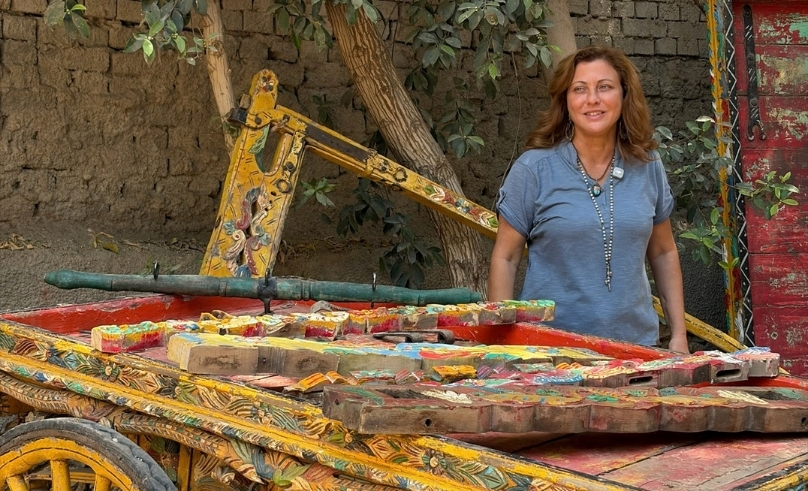
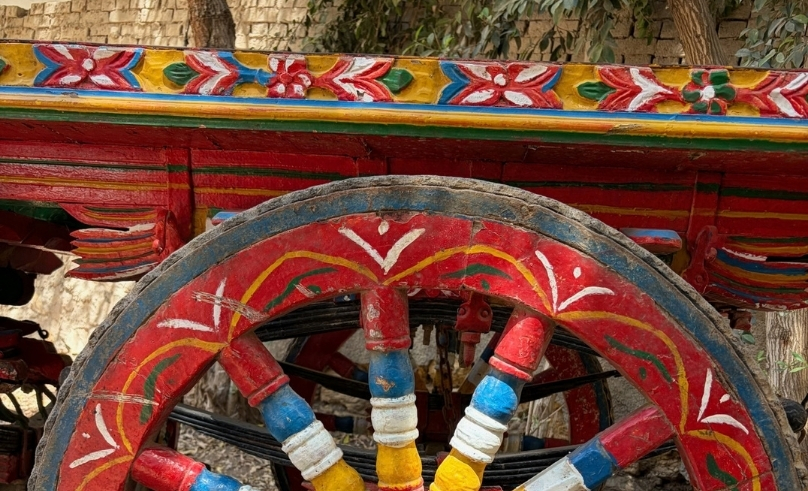
In Egypt, colour is everywhere on the streets. Fuul and kebda carts are covered top to bottom in carved flowers, birds and brightly painted shapes.
Trucks carry prayers and traditional sayings in looping calligraphy across their backs, while tuktuks and other working vehicles are often marked with drivers' children's names, small charms and personal touches.
Most of us pass these things every day without thinking much about who made them, or why they look the way they do. Howayda Abouheif did.
Abouheif never envisioned starting a furniture brand. Her background is in television and production: she has worked as a presenter, content producer and executive producer, and owns her own production company.
HodHod, named after the hoopoe bird, began in June 2026 with something much simpler. She was looking for a coffee table for her garden, and wanted to make it from an old "karro", the Egyptian Arabic name for the traditional horse- or donkey-drawn wooden carts long used by vendors and workers to transport goods and make a living.
She had always been drawn to what she calls "shaabi" art, from the objects people use to the ways they decorate them, and had collected pieces for her own home long before she thought to sell them.
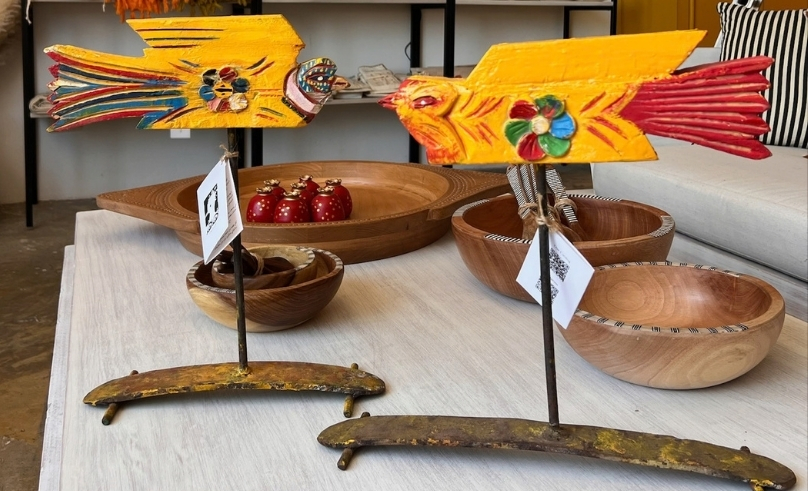
Her years abroad, including in Italy, pushed her to think about how these distinctly Egyptian objects might find a place in contemporary interiors. "I'm interested in things that are a bit shaabi, so the art of vernacular street art in Egypt, or things that are very related to heritage and tradition. My house is full of this stuff," she says.
What struck her most was how little attention this kind of heritage gets. Egypt is comfortable looking to its Pharaonic, Coptic and Islamic past for artistic inspiration, but the objects still moving through its streets today are harder to recognise as part of that same story.
"We're very interested in Pharaonic designs, Islamic designs and Coptic designs, but we really don't look at this cultural heritage as something of value," she says. "Maybe because it's still living in the streets today, so we don't really see it as such."
Her search for one "karro" quickly became something larger. The old carts are increasingly hard to find in good condition, but they still turn up in alleyways, homes and rural villages.
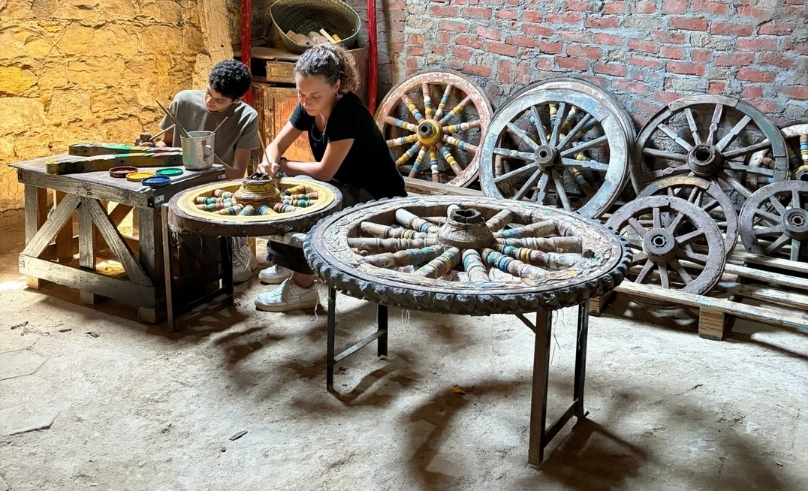
Abouheif tracked them down by speaking to owners, moving from one person to the next and asking after pieces no longer in use. Motorised tricycles and small trucks have made many of the old carts impractical, and wooden wheels are routinely swapped out for rubber ones.
The more she looked, the more she realised these weren't objects waiting to be thrown away. They were records of the life of their users.
"It's not just a piece of furniture, or just a cart that he works on, like his office," Abouheif says. "He puts his heart into it. He expresses himself, he expresses his hopes, and he may even put the names of his children."
That realisation became the foundation for HodHod. Rather than imitating the look of old Egyptian carts, the brand works with the originals.
Some "karros" turn up in good enough condition to need only minor restoration before being sold as they are. Others are broken down into individual parts and given a second life. "Every time you take a karro, you find that you can make a hundred pieces out of it," Abouheif says.
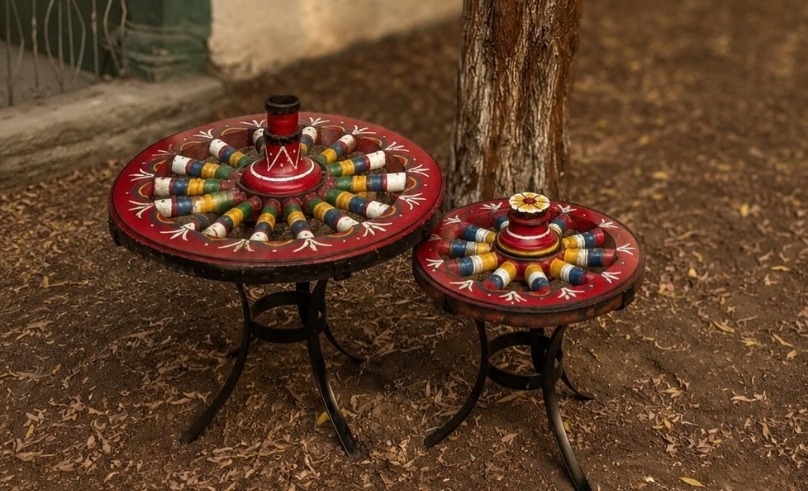
A wooden wheel becomes a tea or garden table. Fragments of a cart become chairs, mirrors, towel hangers.
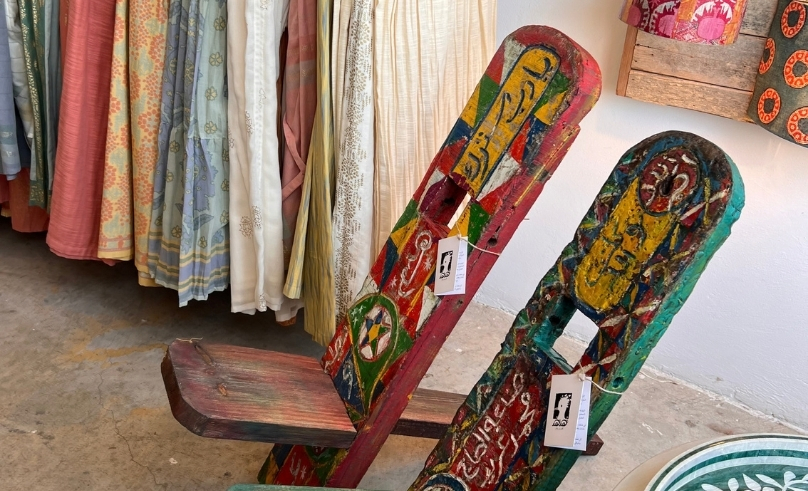
She's already looking beyond the "karro", with plans to work with objects that carry the same character, including old fuul carts, Alexandria's ice cream carts and Nile rowing boats. The goal, in every case, is to keep the original pieces and the marks they already carry, not to erase where they came from.
HodHod pieces are sold through a handful of Cairo and North Coast retailers.
Abouheif sees a natural connection between her colourful pieces and the relaxed interiors of beach homes, but doesn't think they belong only there. "You can have a very simple home in Sahel, whitewashed, with everything in organic wood, very relaxed and simple," she says. "But you can have a piece that's colourful and joyful. I consider what I'm doing not as furniture, but it's like putting a painting up."
Ultimately, Abouheif hopes HodHod will encourage a willingness to experiment with the colours, shapes and traditions that already surround us, rather than always looking elsewhere for ideas about what counts as contemporary.
"We're so conditioned to be modern, to look one way, buy the same things, and be very influenced by the Western standard of what's cool now, what's fashionable and what's in," she says. "It's okay, but in the process, sometimes we lose touch with what's meaningful to us and what truly represents us."
HodHod is still in its earliest days, but its premise is simple: the objects that have always been part of Egypt's streets do not need to be reinvented to become meaningful.
They already carry the colours, markings, beliefs and stories of the people who made and used them. HodHod is giving them a place to be seen again.
- Previous Article Test 2026-10-27
- Next Article This 1940s Bahraini Home Finds New Life as a Stylish Boutique Hotel