

Karima Borhan Redesigns Cairo Restaurant Norma Around Sicily
Architect Karima Borhan redesigned Cairo’s Norma restaurant around its Sicilian food, extending the concept across its interiors, branding, menus and uniforms.
Every memorable restaurant has a story that begins way before the food reaches the table. It's told through the colours that greet you at the entrance, the materials beneath your feet, the music in the background and the details that make up the whole experience before you've even opened the menu.
At Norma, a Sicilian restaurant in Park St, west of Cairo, that story is unmistakably Sicilian.
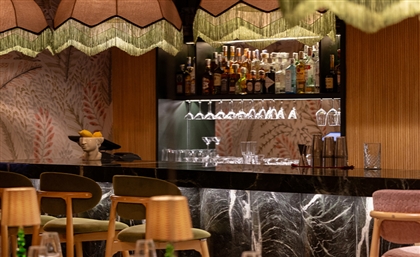
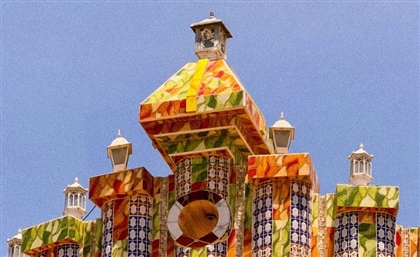
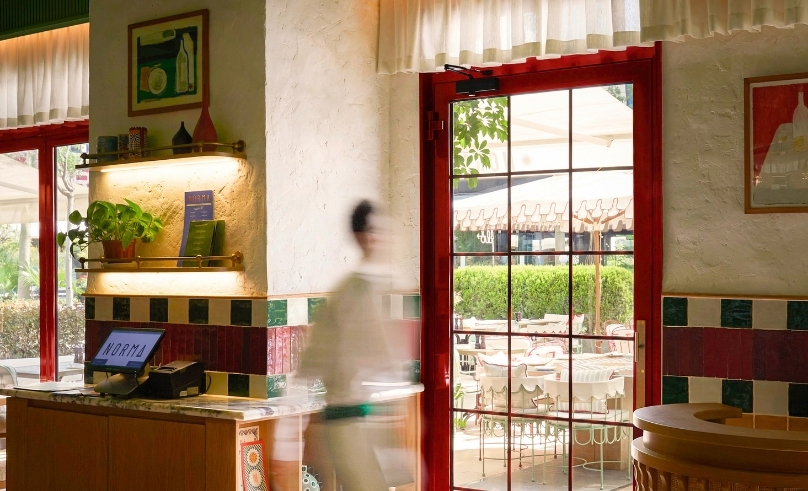
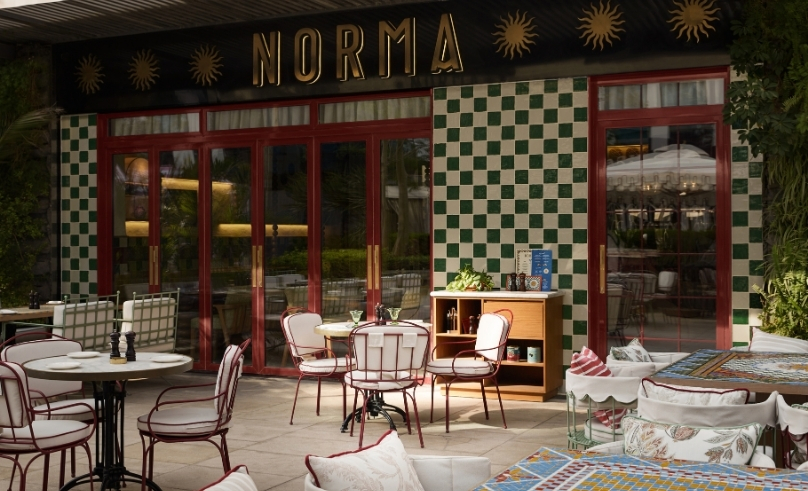
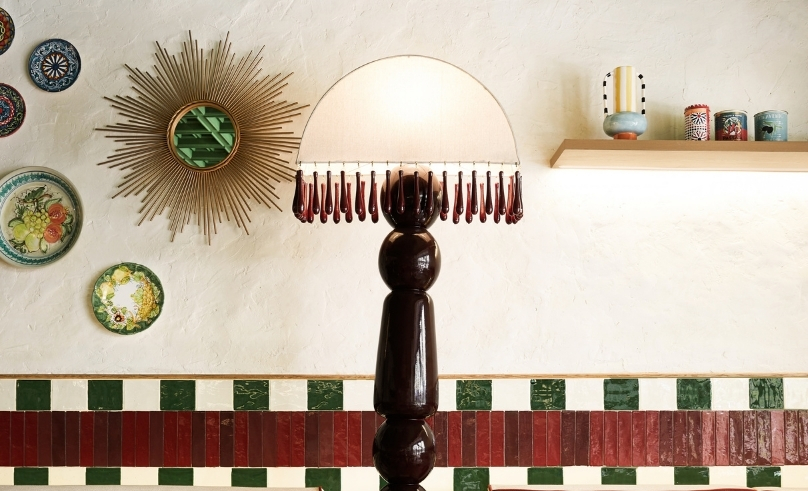
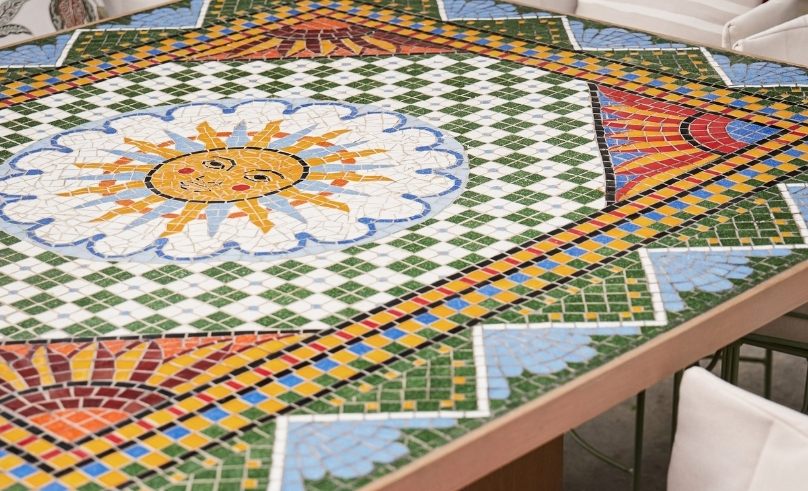
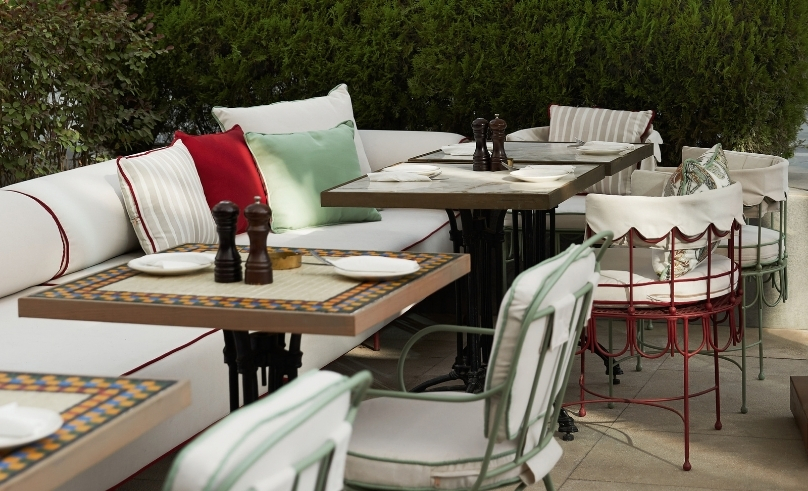
A tiled storefront in green, white and red opens into a dining room filled with colourful ceramic tiles and mosaic-topped tables. Above is a green coffered ceiling and a statement chandelier, finished with long red tassels, with pendant lights casting a warm glow over the bar.
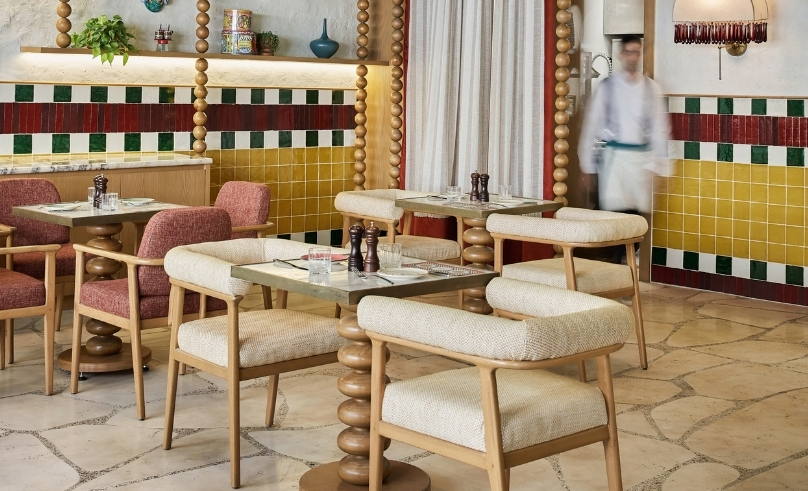
Rough plaster walls are broken up by shelving units suspended from the ceiling with spherical supports. That sense of softness is repeated throughout the space in rounded table legs, curved furniture and gently softened edges.
The restaurant wasn't always like this.
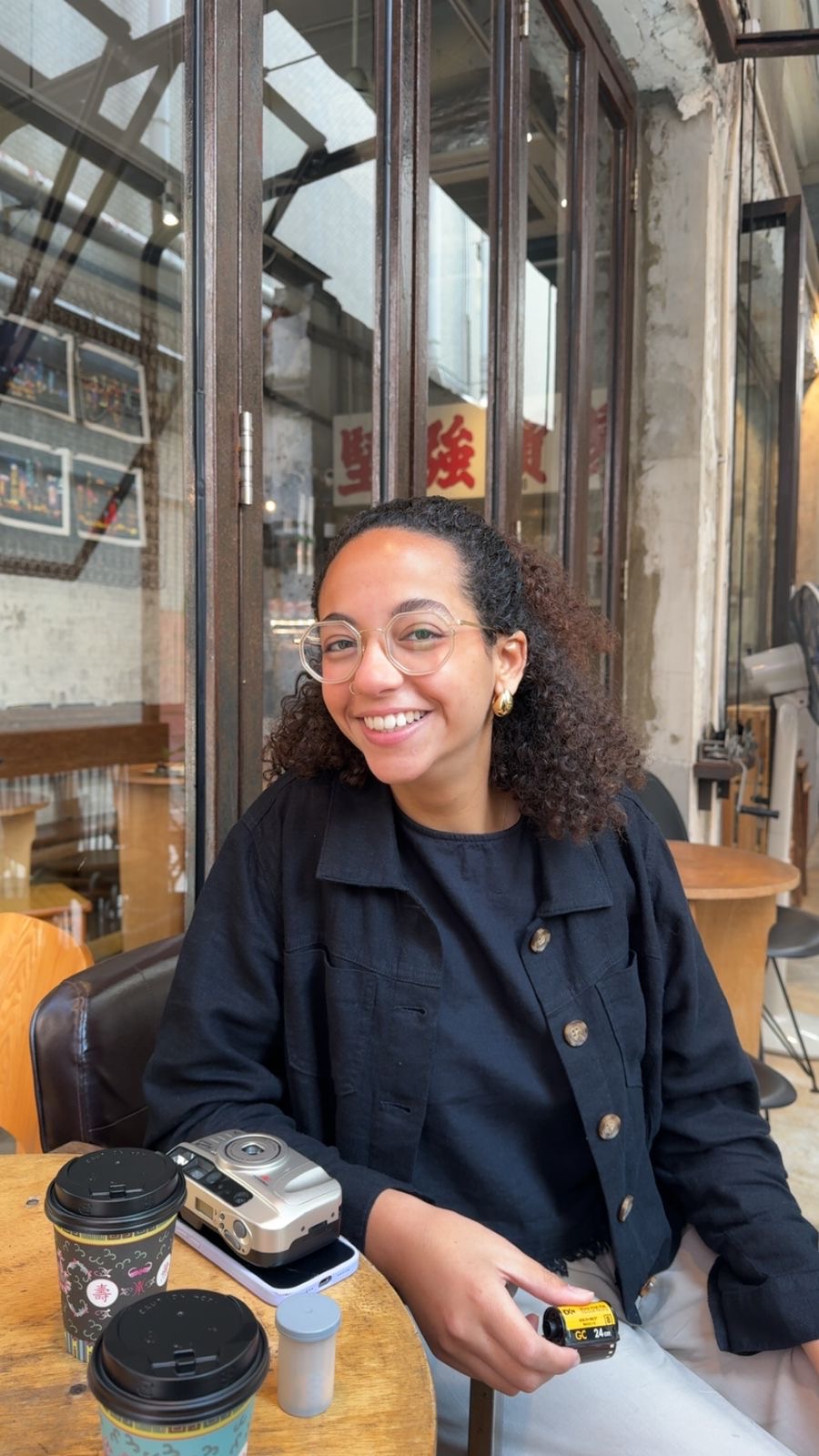
Norma first operated in Arkan Plaza before moving to Park St. It was at the original Cairo location that architect and interior designer Karima Borhan first encountered it.
During that visit, she immediately felt a disconnect between the Sicilian cuisine and the space itself.
"It felt like a steakhouse," Borhan tells SceneHome. "It didn't feel vibrant. It didn't feel colourful. It didn't feel like an Italian Sicilian restaurant."
For Borhan, the problem extended beyond the interiors. The menu, she says, "was like a blank sheet of paper", the waiters were dressed in black from head to toe and the overall atmosphere felt at odds with the restaurant's identity.
"In F&B especially, the food, the menu, the waiters, the vibe and the atmosphere all have to come together," she says.
Before accepting the project, Borhan made one thing clear to the client.
"I told them, if I'm going to take this project, I need to change the branding. We have to come up with a new concept."
Working alongside branding designer Yasmine El Sawi, Borhan led the creative direction for the Cairo restaurant. Her work covered the interiors, branding, menus and staff uniforms.
Norma first opened in London's Fitzrovia, with Cairo later becoming its second location.
For the Cairo space, Borhan looked to Sicily itself. She drew on the island's colours, brightly painted horse carts, Moorish heads, lemons, chillies and volcanic landscapes.
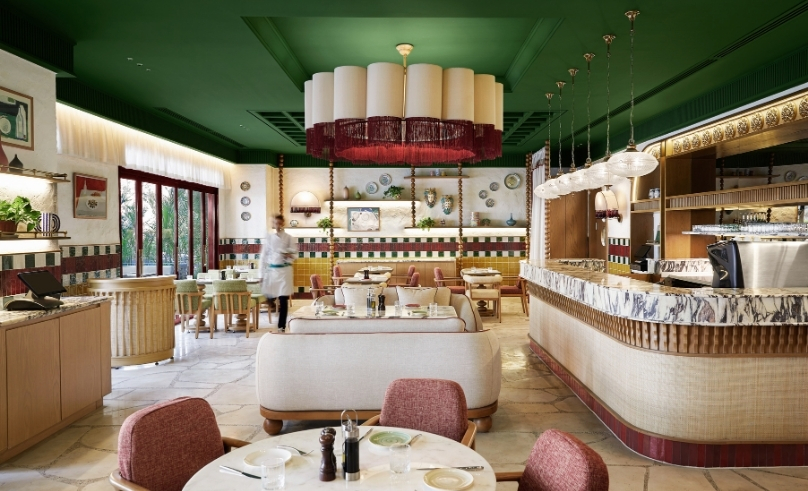
"I really wanted to bring out the culture of Sicily," she says. "That's why you'll see that I used a lot of tiles. I used a lot of colours. I used a lot of patterns and prints. Every corner you look, I wanted there to be something for the guest to discover."
Beyond its material palette, Borhan treated the layout as an integral part of the dining experience. She carefully choreographed the movement of both guests and servers through the restaurant.
She introduced a small serving window concealed behind a curtain, allowing guests to catch glimpses of the chefs at work without making the kitchen the focal point.
The opening creates a connection between diners and the back of house while preserving the intimacy of the dining room.
She also refined the restaurant's circulation. Borhan planned the flow from the entrance to the dining area, the movement between the kitchen and the tables and the placement of service stations so they function efficiently without disrupting the space.
One of the project's biggest challenges was deciding what to keep from the previous Norma.
The client encouraged Borhan to take as much as possible from the original space and give existing elements a second life. The approach aligned with her own design philosophy of preserving pieces that carry character and history.
The timber ceiling from the previous restaurant was dismantled, expanded and reinstalled in the new space.
Existing dining chairs were reshaped, recoloured and reupholstered, with selected rugs and other elements adapted to fit the new concept.
"Old things have heritage, memory and a certain essence," she says. "I really like to incorporate this into my work. Even in residential projects, I always ask clients what they already have and want to bring in with them. We change an object’s purpose, change the fabric, and give it a new life."
Each accessory was intentionally chosen to reinforce the Sicilian identity of the space.
Borhan looked for objects that carried cultural meaning, from patterned ceramic plates and traditional Moorish heads to Mediterranean-inspired patterns that reflected the island's history and craft traditions.
"I wanted to create a feeling," she says. "I wanted a story behind it. I wanted the experience to be one where you walk in and immediately feel a connection."
Norma's colourful tilework, handcrafted furniture and repurposed architectural elements now sit alongside the food as part of the same experience.
For Borhan, the work extended across the room, the branding and the way guests and staff move through the restaurant.
- Previous Article HodHod Is Bringing Egypt's Street Culture Into The Home