

Carl Gerges Designs a Villa in Lebanon That Emerges From the Mountains
This residence follows the slope, weaving stone, concrete and light into Lebanon’s rugged mountain landscape.

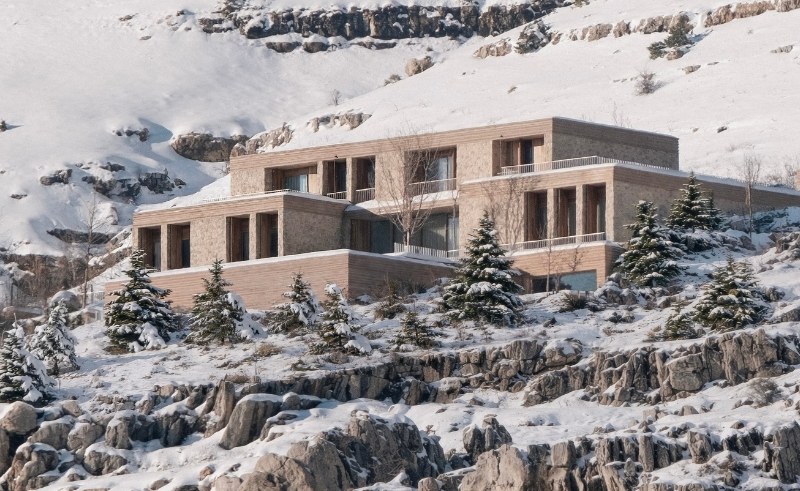
Villa A perches on the heights of Faraya in Keserwan, Lebanon, where limestone cliffs fall sharply into rugged ravines. It rises from the landscape, volumes stepping along the natural slope and anchoring into rocky outcrops. Designed by Carl Gerges Architects, the house responds to the terrain with precision, producing an architectural language shaped directly by the site’s geology.
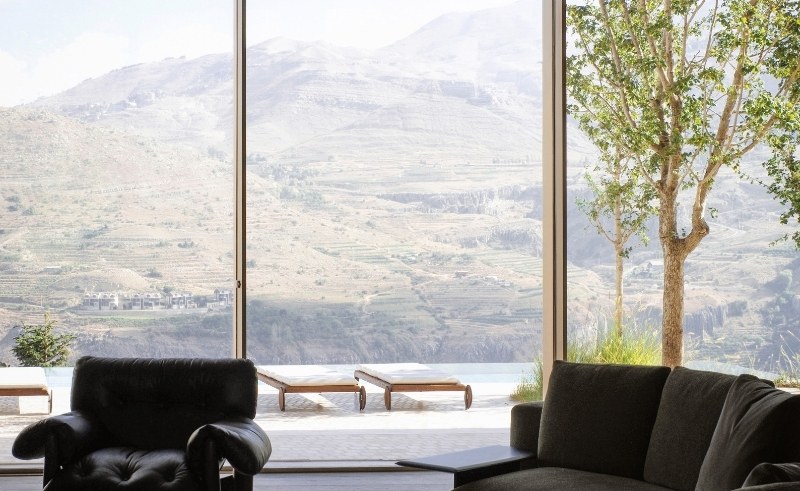
“The starting point was the land itself,” architect Carl Gerges says. “The site is extremely raw, almost mineral, shaped by rocks, slopes, and the contrasts of the Lebanese seasons. Rather than imposing a form, the project emerged from a careful reading of this terrain.” The material palette emphasises continuity with the surroundings: raw concrete defines the structure, local stone connects to regional memory, and expanses of glass integrate the interior with the mountains. Mineral tones allow the house to coexist with the landscape.
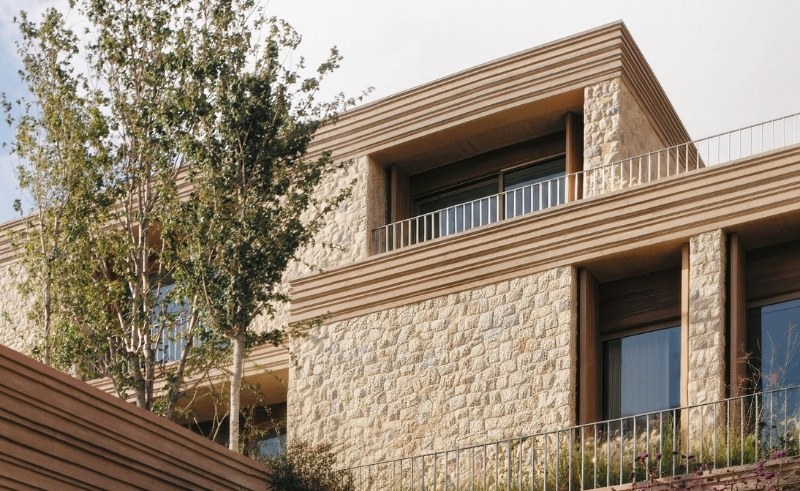
The residence unfolds over three levels. At the entrance, a stone-and-concrete foyer framed by large wooden doors introduces the house, leading to landscaped courtyards and a panoramic glass façade that opens toward the pool. In spring, flowering plants soften the rock, introducing seasonal texture against the restrained surfaces. From a distance, the three volumes align with the pool’s ribbed concrete shell, creating a rhythm that follows the slope. Aluminium windows vanish when open, while wooden shutters provide closure in the off-season. The pool mirrors the columns, reinforcing cadence across the site and allowing the panorama to remain the focus.
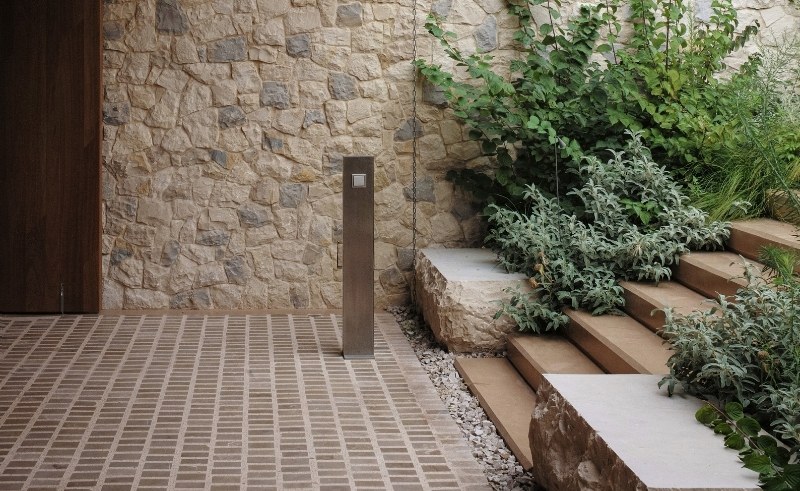
Stone recurs throughout: in external walls, hand-cut tiles, interior mosaics, terraces, and gravel. Concrete is ribbed and hand-finished, recalling fair-faced structural ceilings while reinforcing linearity. “Existing rocks were not removed but integrated, sometimes becoming part of the interior spaces,” Gerges explains. Floor-to-ceiling glass ensures the interior remains in dialogue with light, views, and seasonal change. Warm timber punctuates the stone and concrete, bringing intimacy to the material palette.
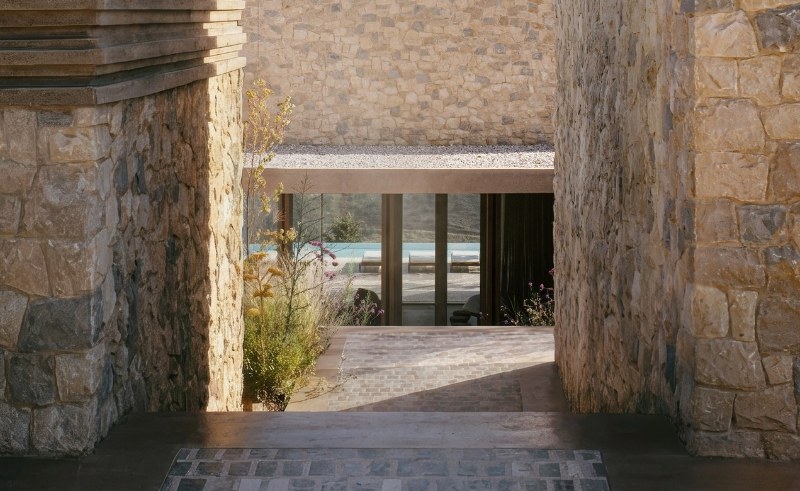
The client brief called for a residence rooted in its landscape while offering contemporary comfort. The terrain, cliffs, and fault lines dictated the architectural strategy: the house steps along the slope, preserving rocks and distributing spaces across multiple levels. Excavated earth was reused in concrete, local aggregates informed terrazzo surfaces, and native rocks were integrated throughout, both inside and out.
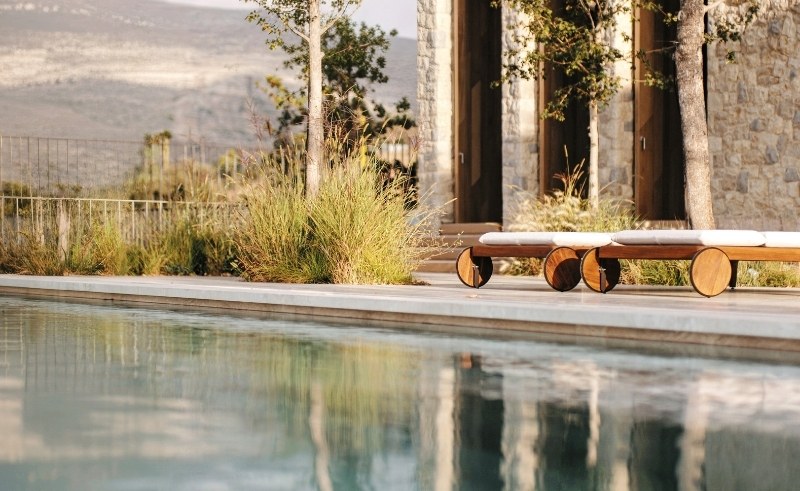
“The structure is grounded, almost silent, built in concrete and local stone, while the interiors open generously toward the horizon,” Gerges says. “From the beginning, the intention was to create a dialogue between permanence and change. The concept evolved through this tension, between something deeply rooted and something constantly transforming.”
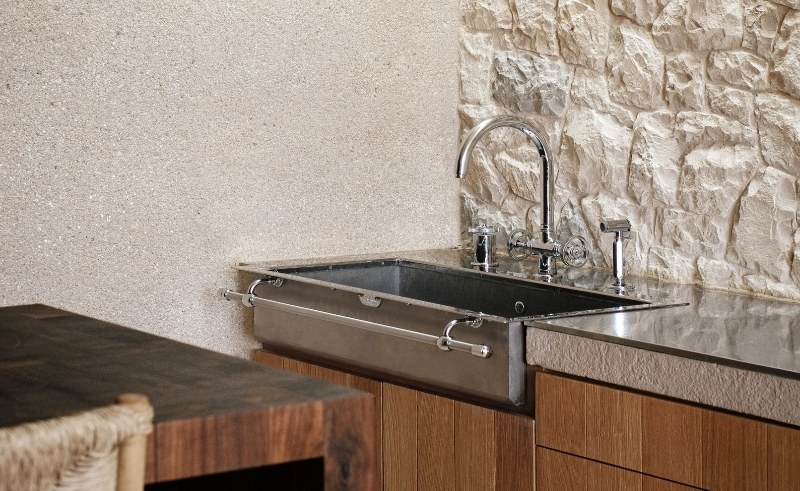
A fully motorised floor-to-ceiling glass façade transforms the interior into a continuous stage, dissolving the boundary between house and landscape. Light, shadow, and seasonal change animate the spaces. Inside, existing rocks appear as walls or backdrops, blurring the distinction between built and found.
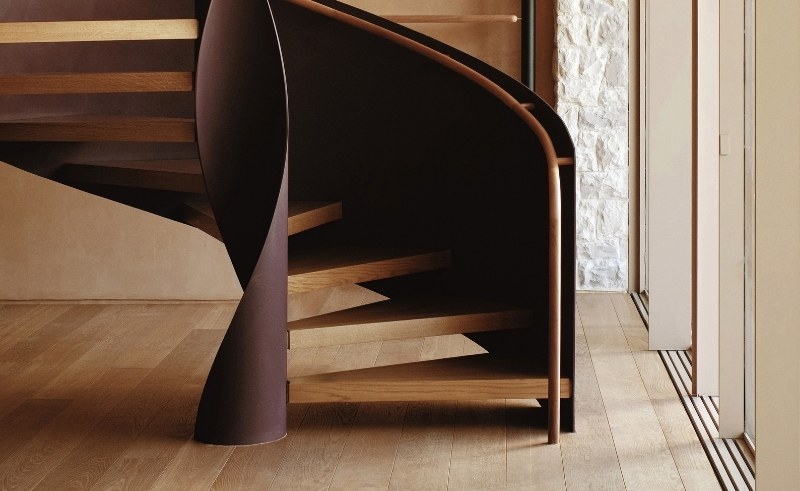
The project engages local artisans and uses resources responsibly, embedding social and environmental considerations into its execution. Excavated earth and local aggregates reduce external dependence, while passive strategies lower operational energy use. By working closely with skilled craftsmen, the house supports cultural continuity and collaborative design practices.
- Previous Article Cairo-Based RKN Translates Geometric Principles Into Furniture
- Next Article The Ancestral Resilience of Omar El Farouk’s Fayoum Home