

A Journey Through Egyptian Designer Mariam Al Kady’s Material Dialogue
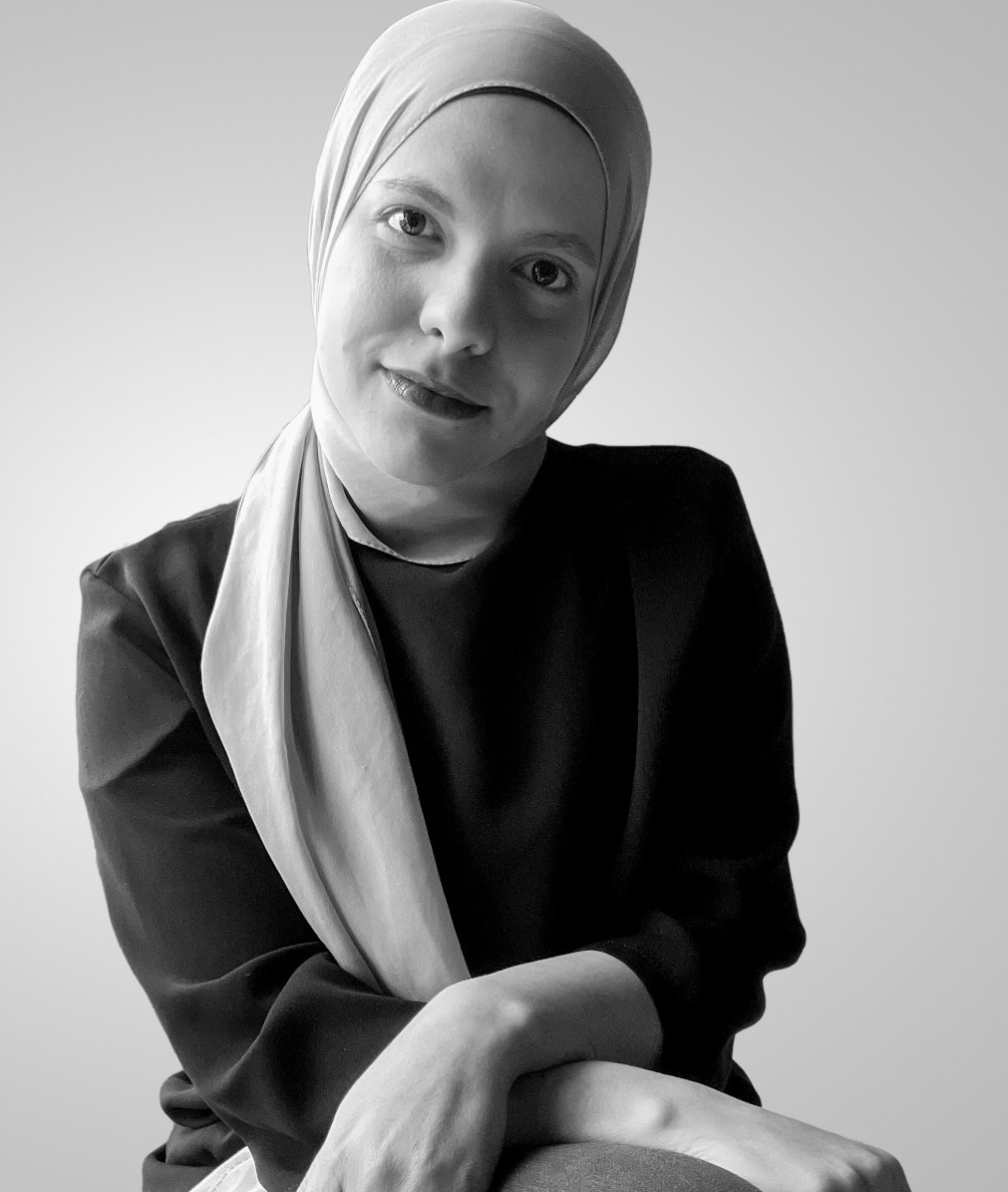
Mariam Al Kady, co-founder of Amber Living, welcomes SceneHome into Maison Pierre, a coastal residence that explores the dialogue between stone, craftsmanship and the art of slow-made design.
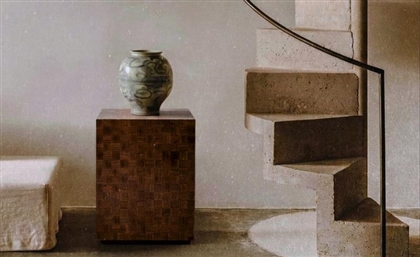
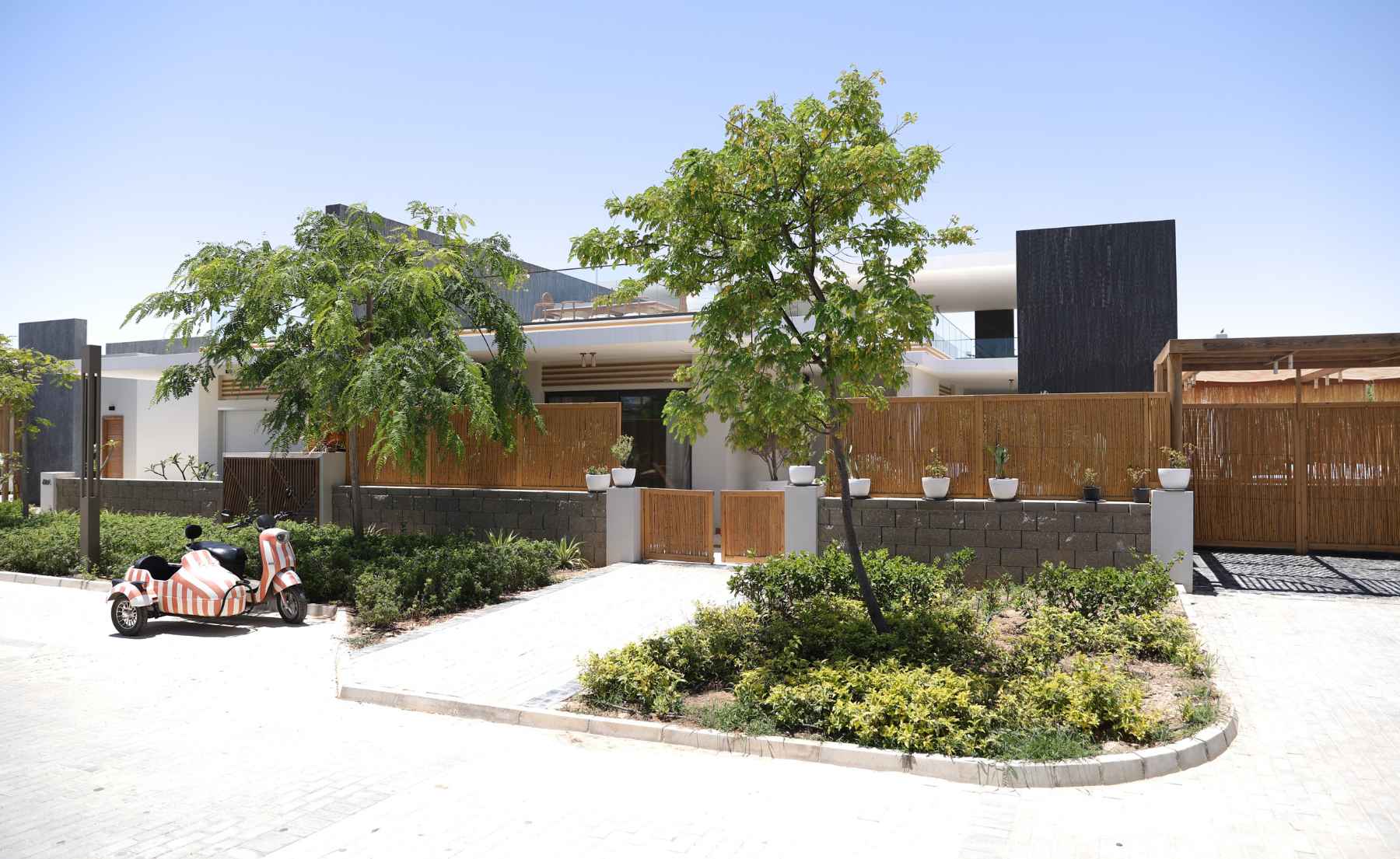
The first thing you notice at Maison Pierre is the conversation between its materials. Translating to “Stone House,” the name reveals itself through the many expressions of stone throughout the home: from its roughest, most natural forms to its smoothest, most refined finishes, set against each other in a contrast that feels like a feast for the eyes.
Mariam Al Kady, co-founder of Egyptian design studio Amber Living, welcomes us into Maison Pierre with the enthusiasm of someone opening a family album, pointing out the details that might otherwise go unnoticed. She walks us through the home like a storyteller retracing the chapters of its making, revealing the decisions behind each element: the handmade furniture, the carefully layered materials, the objects that carry the marks of human hands. Because a home by the sea is never only about the season spent inside it. It becomes the setting for rituals repeated every year, the backdrop to every family’s favourite salty conversations, meals that become traditions, and memories that attach themselves to a place.
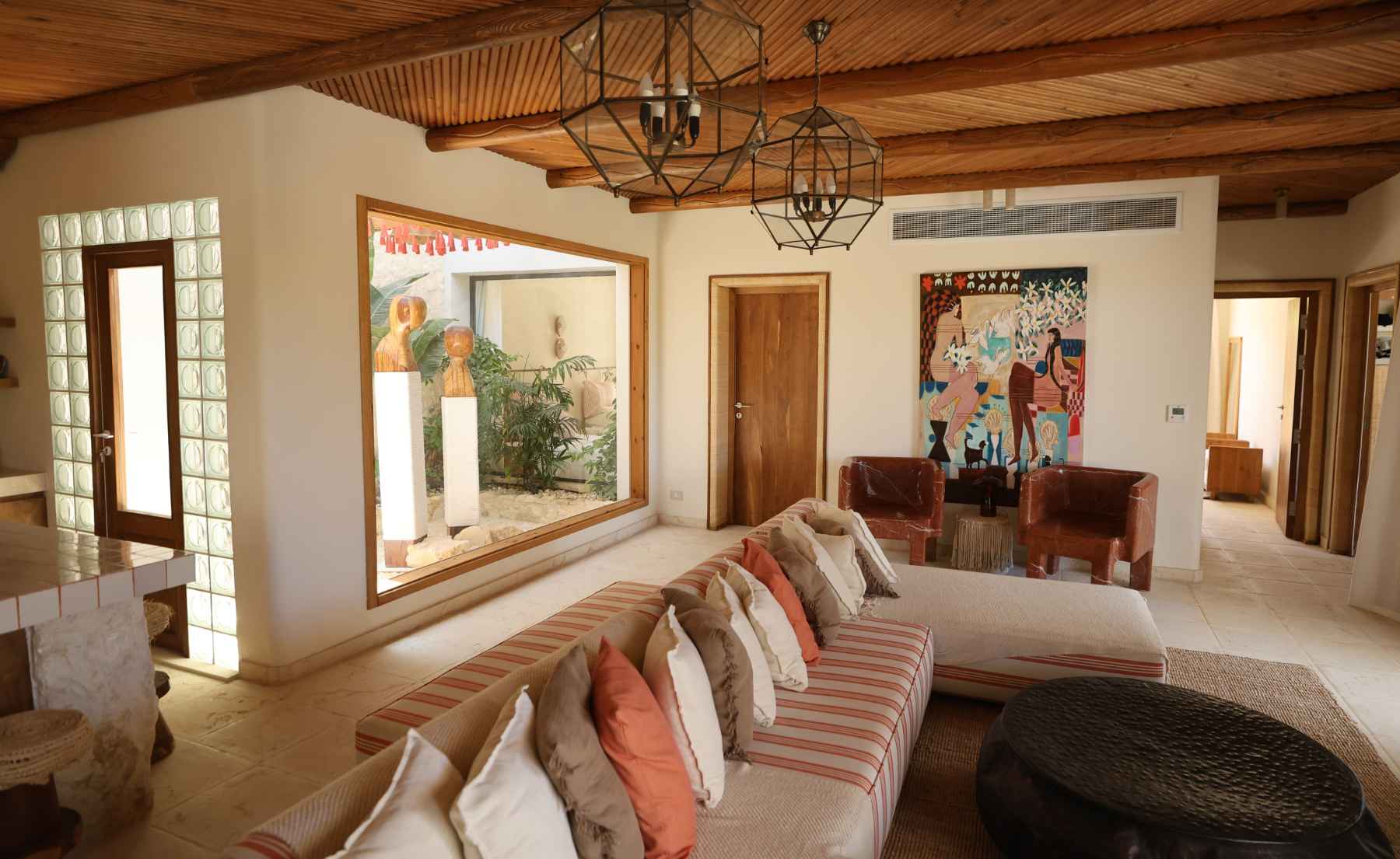
“We always use sustainable materials, and that is something we are very proud of,” Al Kady tells SceneHome. But at Maison Pierre, sustainability extends beyond the choice of materials themselves. It lives in the decision to preserve the character of each one: the irregularity of stone, the warmth of wood, the patina of copper, and the disappearing crafts that require patience, skill, and generations of knowledge. In a world increasingly shaped by speed and repetition, the house becomes a quiet celebration of things made slowly, of materials allowed to age, and of craftsmanship that deserves to remain visible.
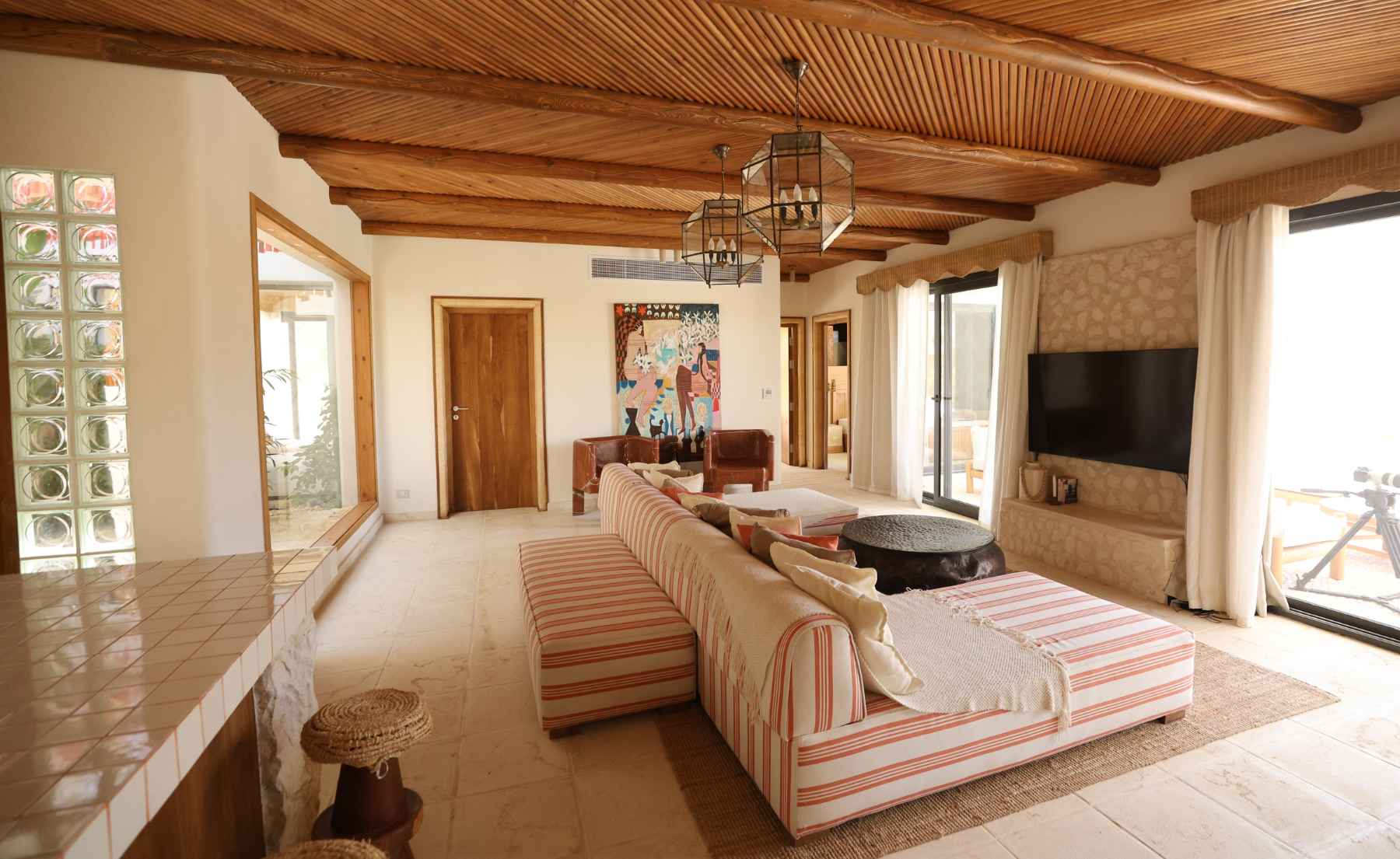
Amber Living's design philosophy begins long before moodboards are curated or finishes are sampled. It begins with the belief that every house deserves its own language. “Each and every house has a completely different personality and needs,” Al Kady explains. You begin to understand what she means as the furniture reveals itself as a series of one-offs. A copper table whose softly dimpled surface bears the imprint of thousands of careful hammer strikes. A chair carved from a single block of marble, impossibly solid yet unexpectedly light in appearance. Nothing feels selected from a catalogue. Everything feels imagined for this exact corner, this exact shaft of light, this exact house.
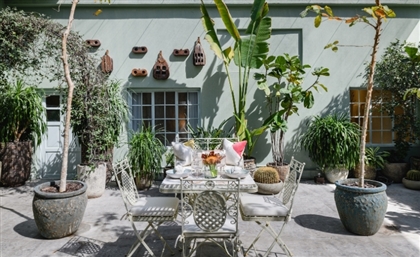
Step into the courtyard and architecture gives way to art without ever quite drawing the line between the two. Sculptures by an Egyptian artist rise from the landscape, anchoring the space while quietly guiding your gaze towards the kitchen beyond. From inside, the courtyard never disappears. It remains part of the room, another reminder that Maison Pierre resists the notion of enclosed spaces, preferring instead to let one moment dissolve into the next.
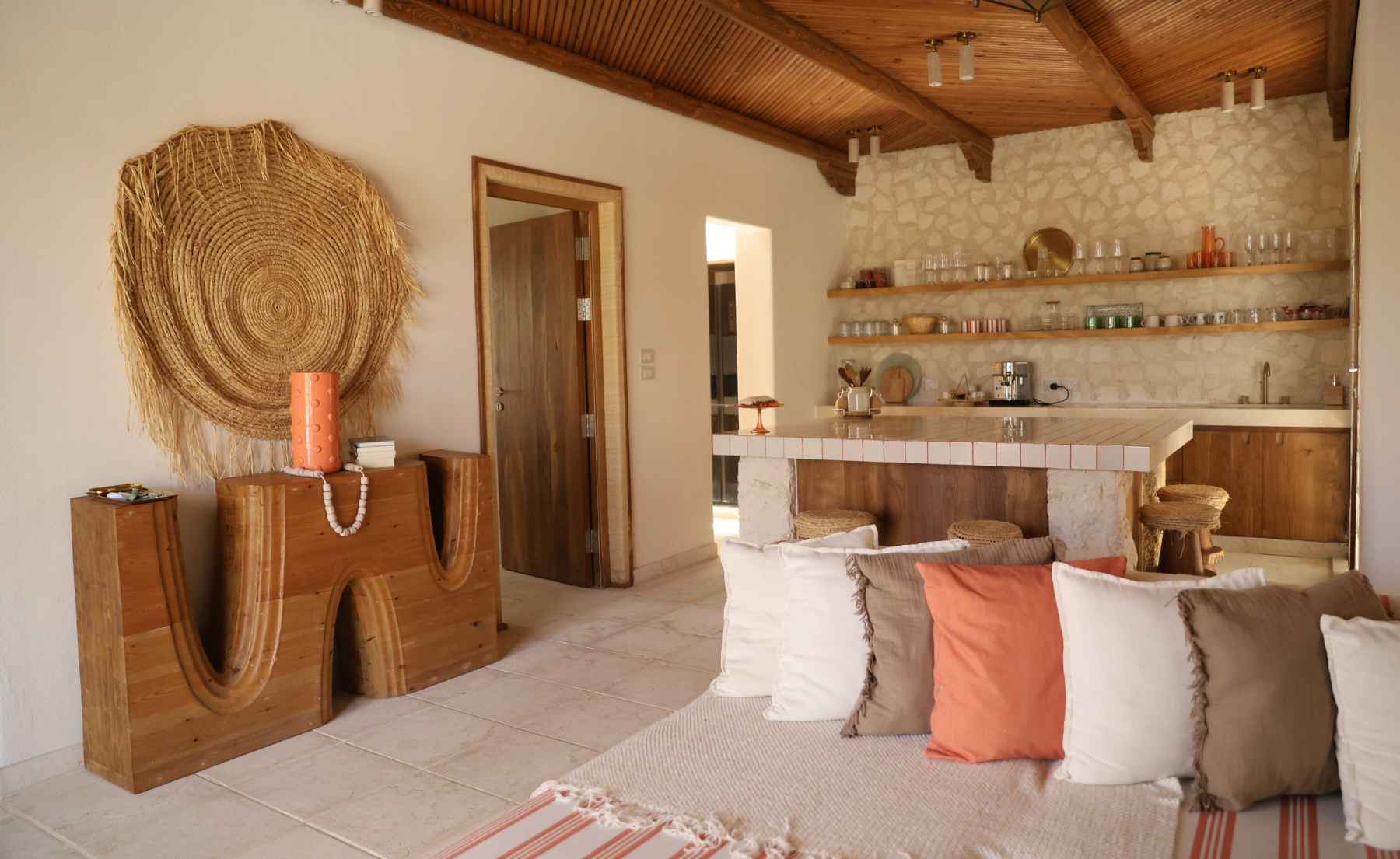
For Al Kady, creating a connection between spaces was essential. “We are always concerned about creating a good view for you, wherever you are,” she says. The kitchen, one of her favourite areas of the home, reflects this idea through its careful material composition and its visual connection to the courtyard and the rest of the space.
One of the most distinctive pieces in the house is the carved wooden console, which Al Kady describes as “art.” Made from a solid block of wood, the piece highlights what she calls “the artisanal side of Egyptian hands.” Nearby, wooden columns frame the wall while creating a conversation between hand-carved wood and stone, two materials that appear throughout the home in different forms.
The living spaces follow the same logic. Rather than treating rooms as separate areas, Al Kady focuses on continuity, ensuring that the journey from the entrance to the kitchen feels connected. The sofa, positioned between these spaces, was chosen to maintain this flow and preserve the relationship between each part of the house.
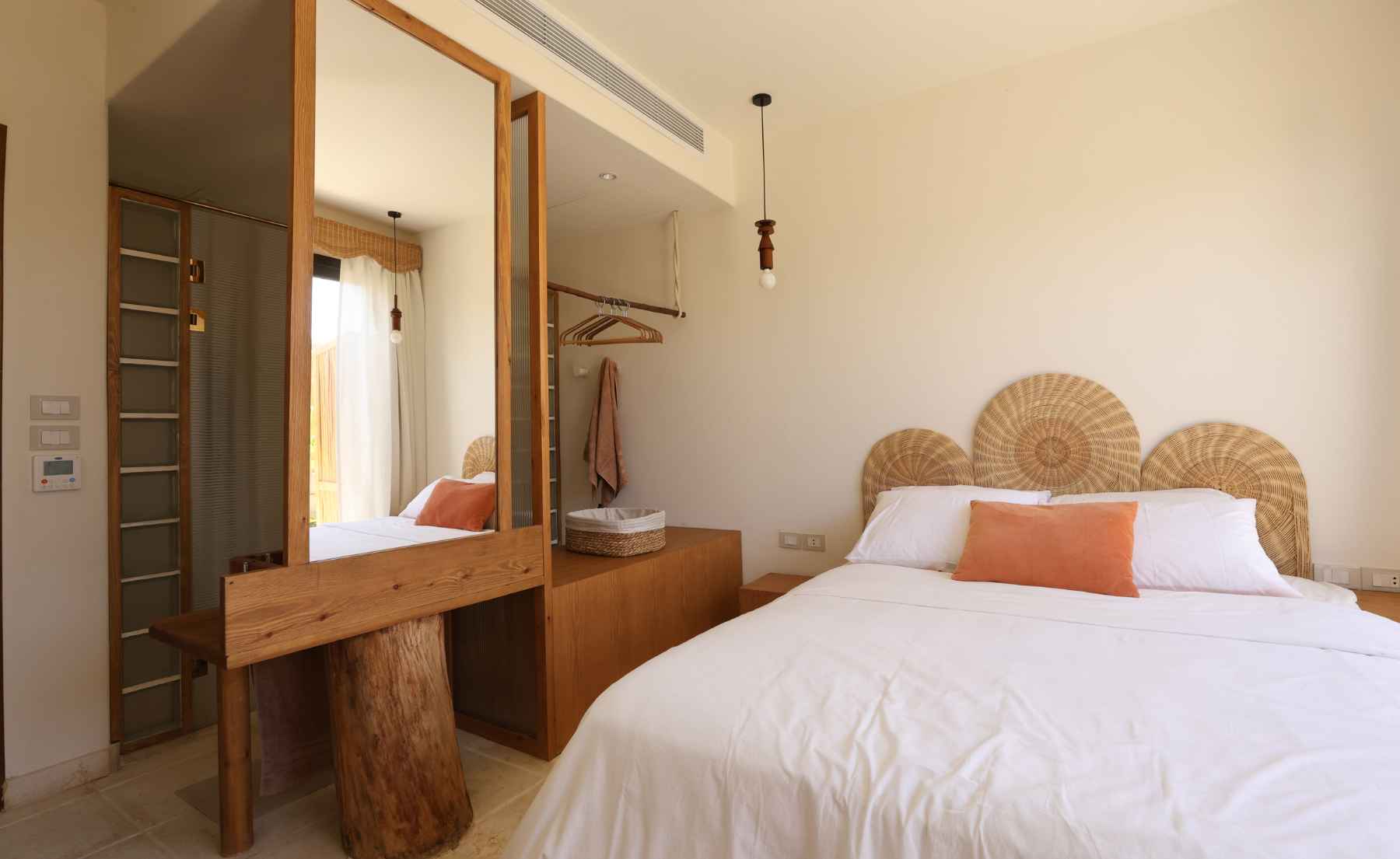
Even the smaller rooms carry the same attention to detail. The guest bedrooms transform compact spaces into complete experiences, with bathrooms integrated into the movement around the rooms. A door crafted from mulberry wood, pebble-covered surfaces, and marble details continue the material story throughout the home.
Some of the most personal elements come through objects with their own histories. A lighting fixture made from a handmade basket technique that is rarely practised today brings an older form of craftsmanship into the contemporary setting. The piece, more than 100 years old, became a reminder of the value of handmade work and techniques worth preserving.
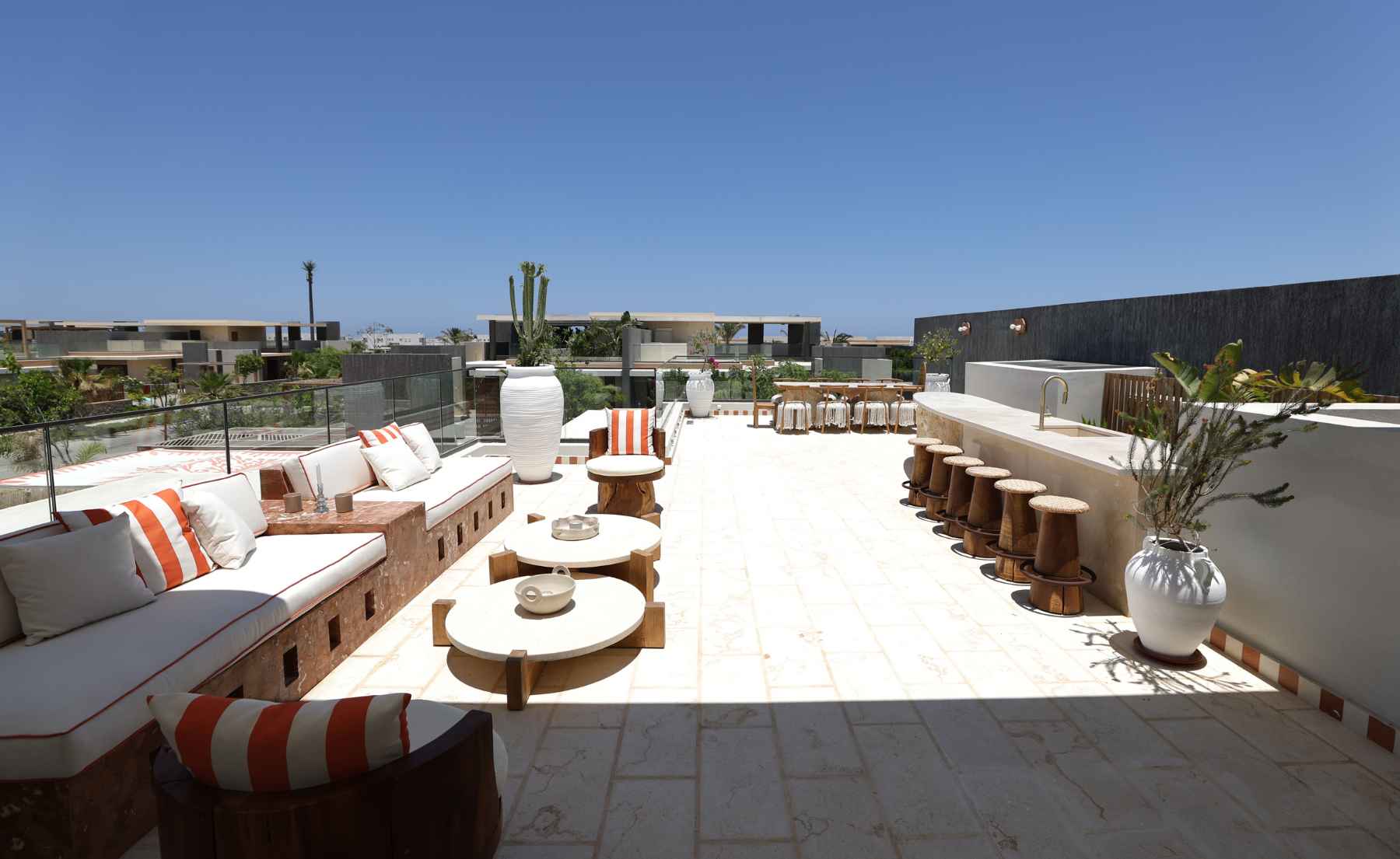
Beyond interiors, Maison Pierre extends its philosophy into spaces dedicated to wellbeing and gathering. A home gym continues the language of hospitality through the same natural materials used throughout the house, creating a seamless connection between comfort and wellness.
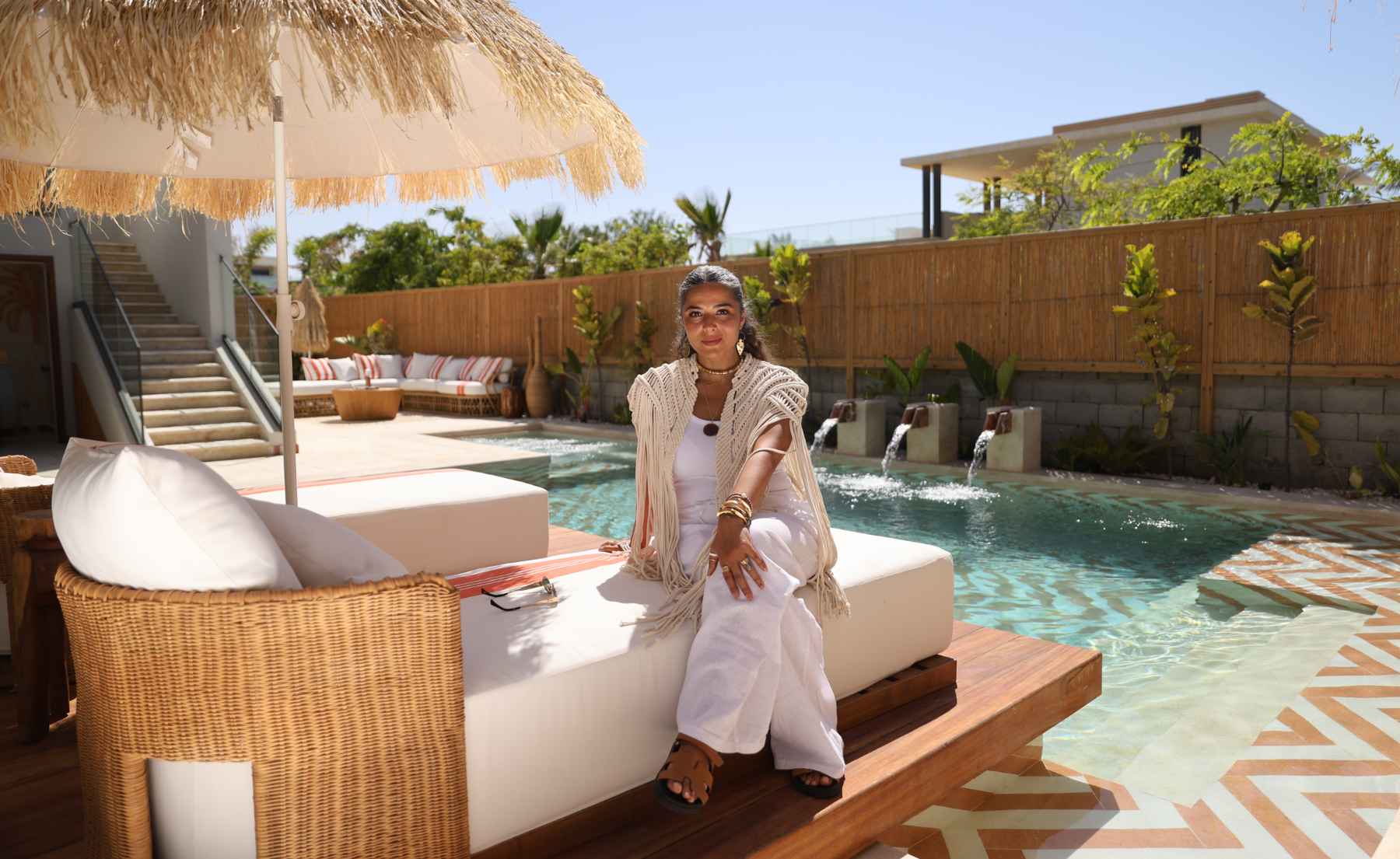
Yet the heart of the home lies outdoors. “The outdoor area is always my favourite space because it’s where we gather the most,” Al Kady says. Water becomes a central element here, with cascading waterfalls creating a sense of calm and movement. The pool’s chevron pattern reinforces the flow of water. At the same time, the surrounding seating areas create different moments throughout the day, from morning gatherings by the pool to evening conversations at the bar.
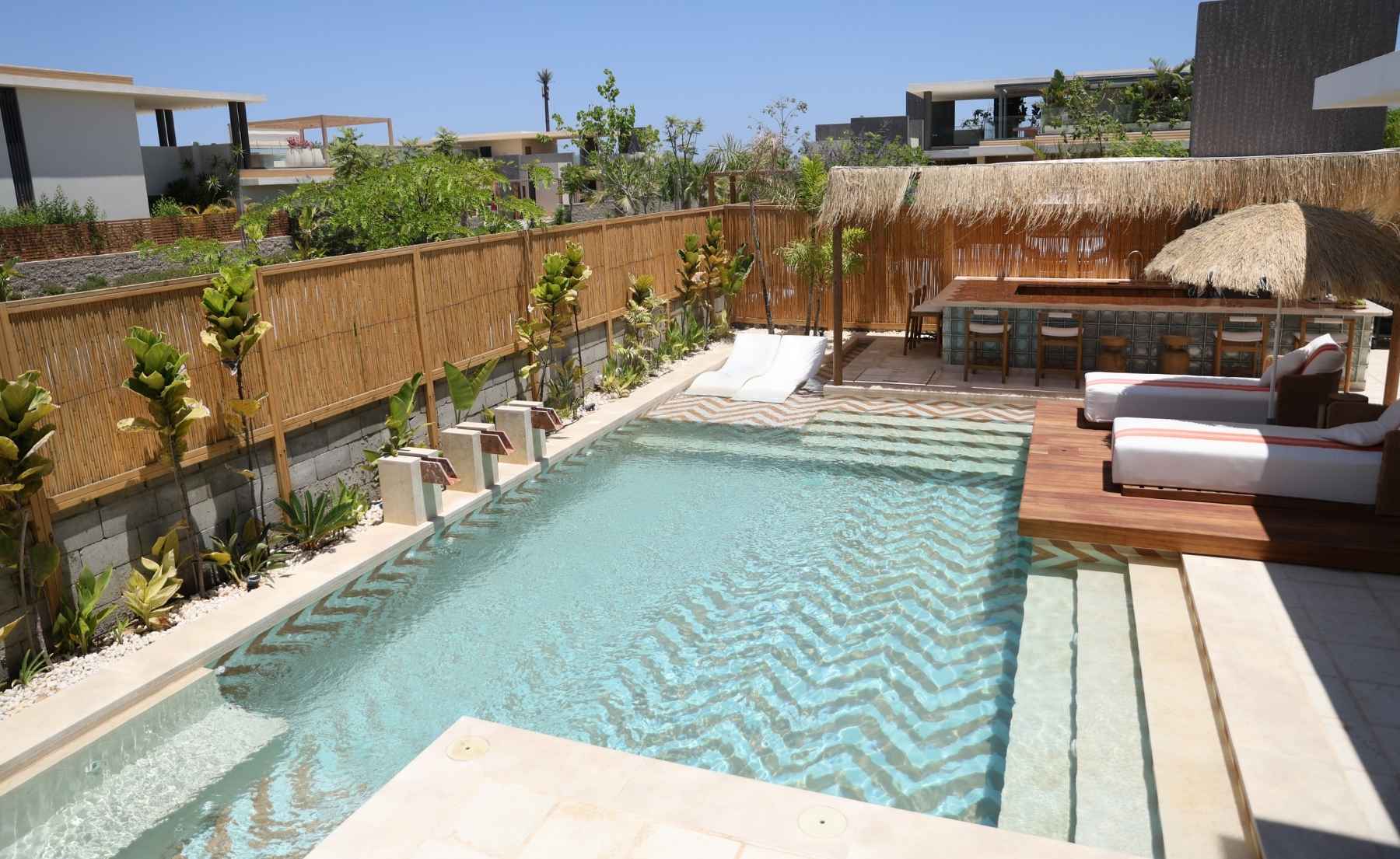
The upstairs bar brings together the full palette of Maison Pierre. Stone, bamboo, copper, and wood come together in one space, almost like a summary of the materials used throughout the house. Rough stone surfaces are paired with smoother textures, creating contrast through touch as much as through appearance.
- Previous Article MENA Projects Take the Spotlight on the WAF 2026 Shortlist
- Next Article Badih Ghanem's Remember Love? Explores Memory Through Objects