

Egyptian Anthropologist Marwa Sabah’s Home Reads as an Archive of Self
Stepping into Marwa Sabah's apartment feels less like entering a static residence and more like leafing through a thoughtfully assembled archive.
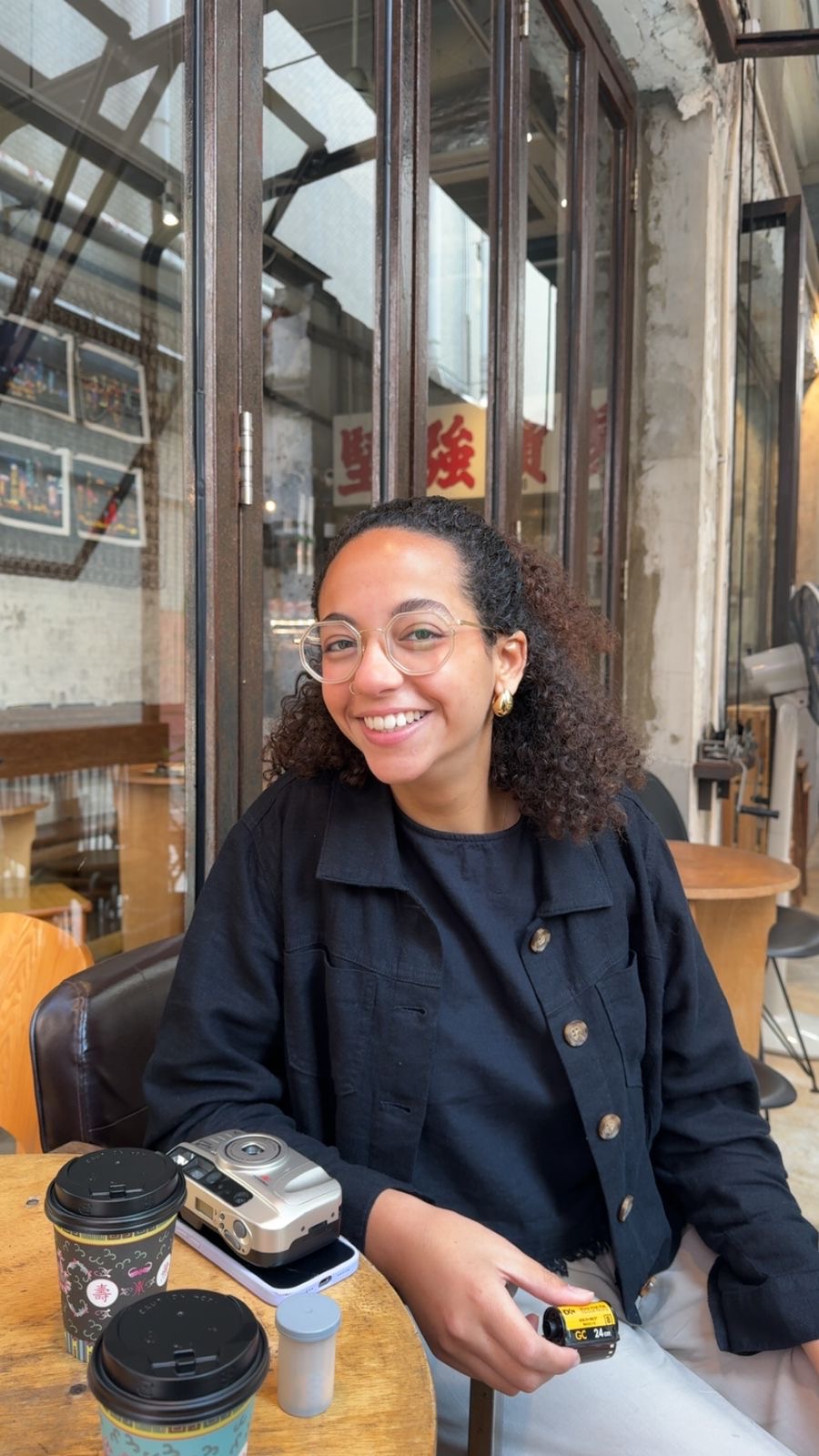
Every wall, photograph, and object carries a story: a childhood memory, a family legacy, a friendship, a moment of discovery. The founder of Communitas and a trained anthropologist, Marwa Sabah approaches her home much like she approaches her work – with curiosity, attention, and an instinct for uncovering meaning in the details.
"My space is all about many stories, because narratives are at the core of everything I do. I’m constantly unpacking them and interpreting them so it only makes sense that my home becomes an extension of my storytelling," Sabah tells SceneHome. As she welcomes us in, that becomes immediately clear. Her home reads as a personal archive, where objects carry traces of stories that have, over time, shaped who she is.
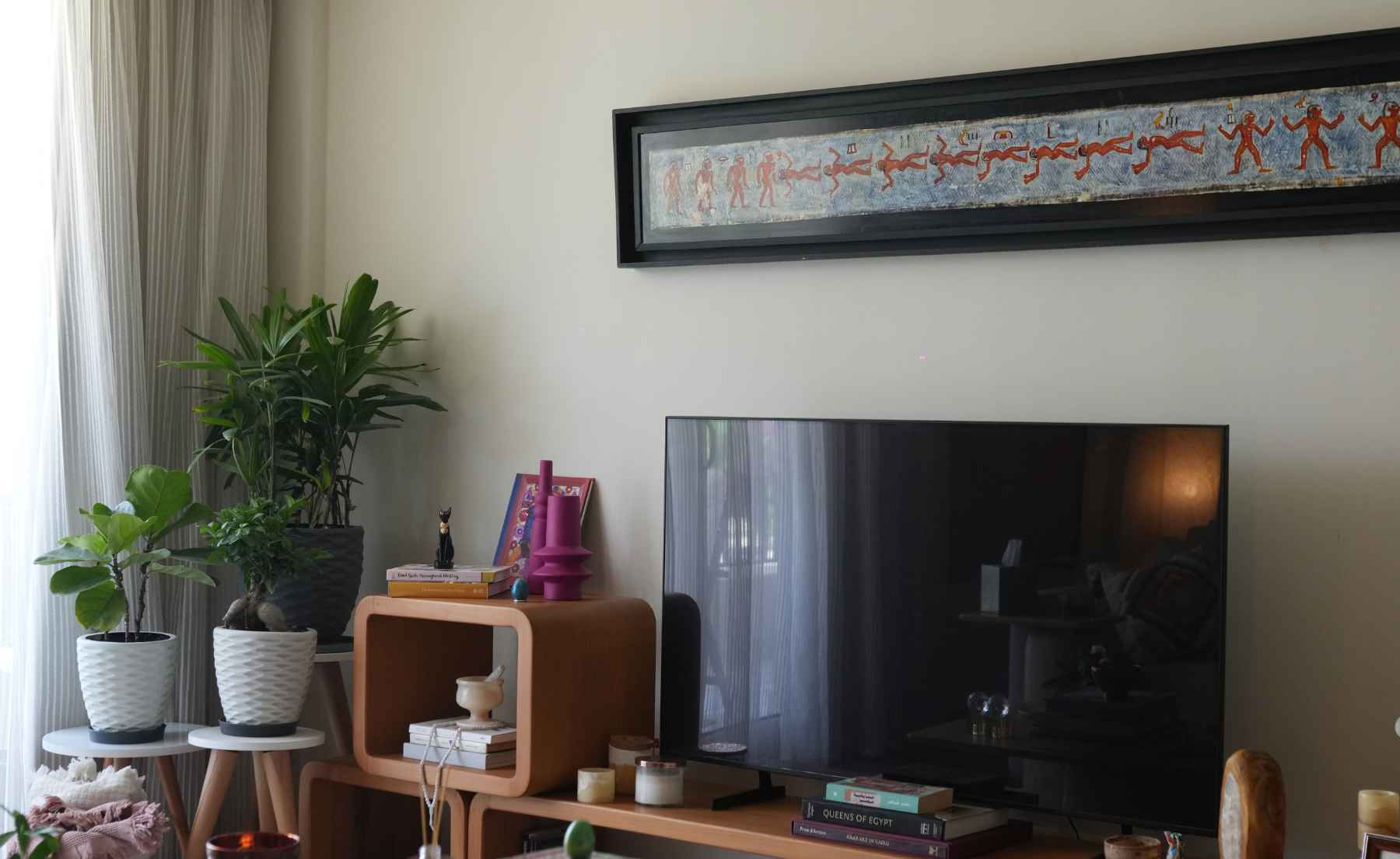
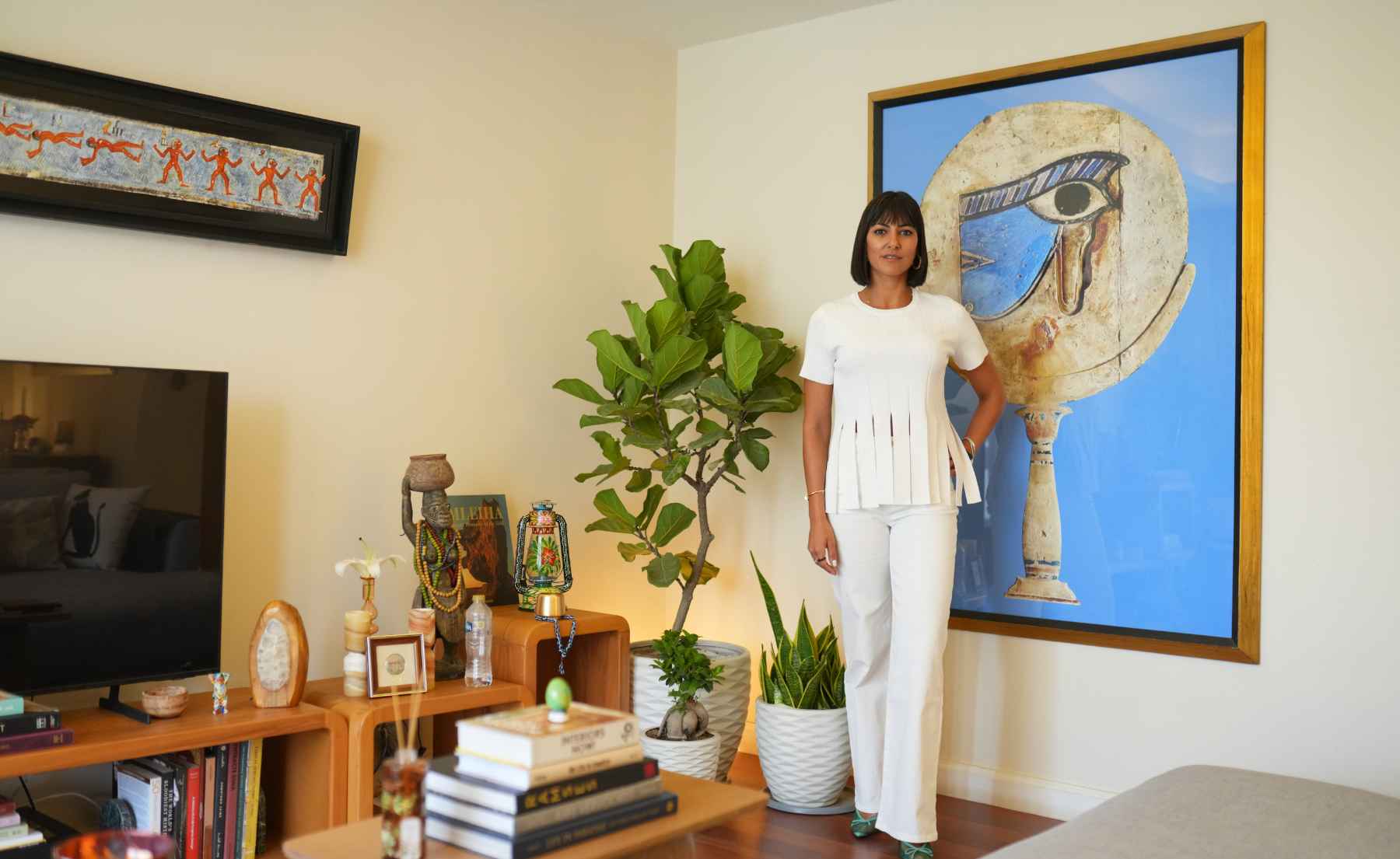
The journey begins in a tiny, intimate entrance. The air immediately carries a dense trail of incense, an intentional ritual of filling the space with the scent that grounds Sabah and brings her closer to memories of her family home on Friday mornings. The curation begins with Sandro Vannini’s photographs of ancient Egypt, establishing an early reference point to the past and to her connection with her heritage. As we move through the house, his work surfaces again and again, a recurring presence that hints at an ongoing fascination. “I love everything that is old and new, and everything that speaks of Egypt,” she says.
Just beyond the entrance is what Sabah calls her “history wall.” Written across it is “Ward Sabah,” the nickname she inherited during her fieldwork as an anthropologist, alongside a photograph of her grandmother’s fashion boutique, one of the early women-led fashion businesses in Cairo during the late 1960s that also features her mother as a kid, and a memento from her late father. “This is a part of me that is so important for me, the female figures in my life,” she adds.
The dining room becomes the point where the professional and the personal meet. Knowing her own working habits, she never felt the need for a dedicated desk - she has rarely worked from one throughout her life. Instead, she chose not to allocate space to a traditional office setup, and made the dining table her primary workstation. A solid piece from C-Reality anchors the room, which functions as the center of her daily practice rather than a formally designated workspace.
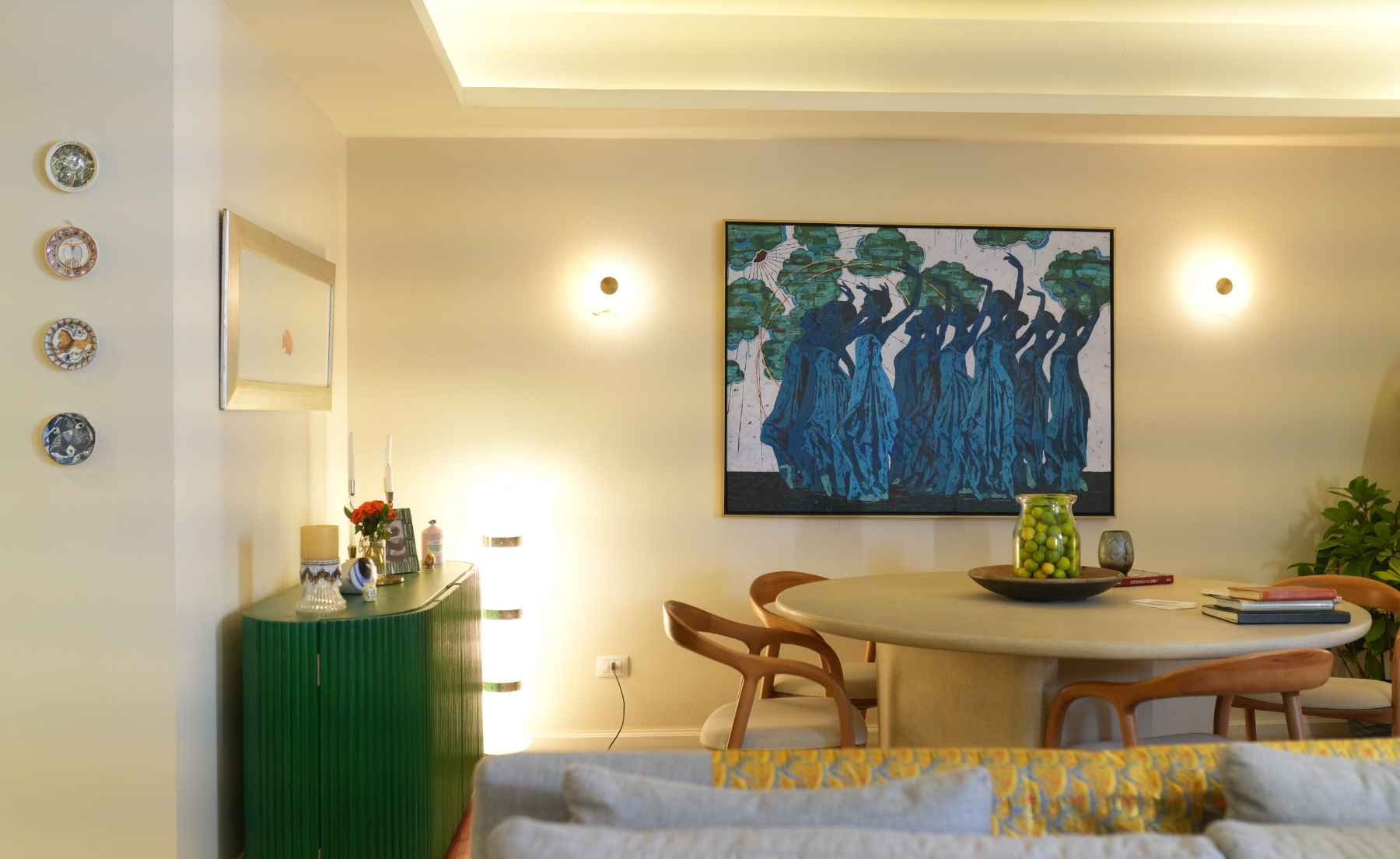
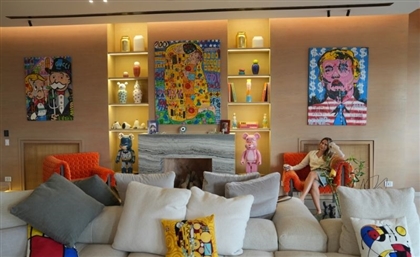
In the living room, Marwa’s sensitivity to movement and colour comes into focus. She approaches her home as she does her work - zooming in with a kind of conceptual “macro lens,” guided by the question: what do I want to feel here? This way of looking led her to a painting by artist Jamal Bassiouni, whose fluid composition and palette speak to her sense of looking forward, toward light and possibility.
The sofa from Kahhal Looms is layered with cushions collected over time from the weavers of Siwa to artisans in Fayoum, each carrying its own material memory. Together, they reflect how the room has been built gradually, through encounters, travels, and relationships rather than instant composition.
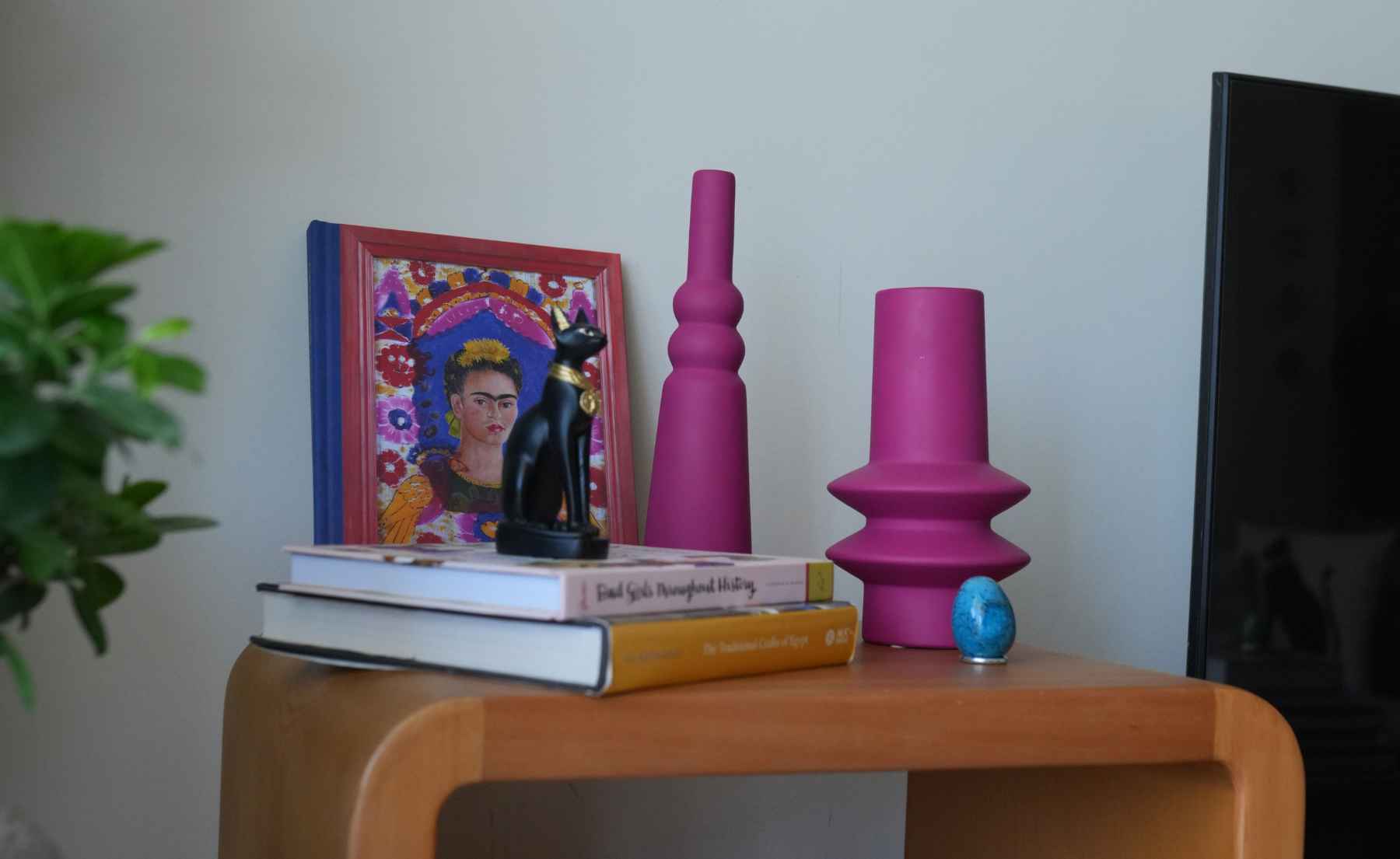
As we move into the hallway leading to her bedroom, she describes it saying, “this hallway is an entry into my heart and my soul.” Here, a photograph hangs by architect and photographer Karim El Hayawan. She recalls the story behind it with a smile: “I sort of stole it from him. He was exhibiting at the Portuguese ambassador’s house, and I took the pieces to return them - but I never did. And eventually, he agreed.”
Her bedroom also doubles as her reading corner. A simple footstool taken from her mother’s home sits within the space, alongside layers of art placed intentionally within the room. On the wall, fragments and broken pieces are deliberately composed. As she explains, “the fragments and broken pieces on the wall symbolise to me that things can be incomplete. They don’t have to be perfect.”
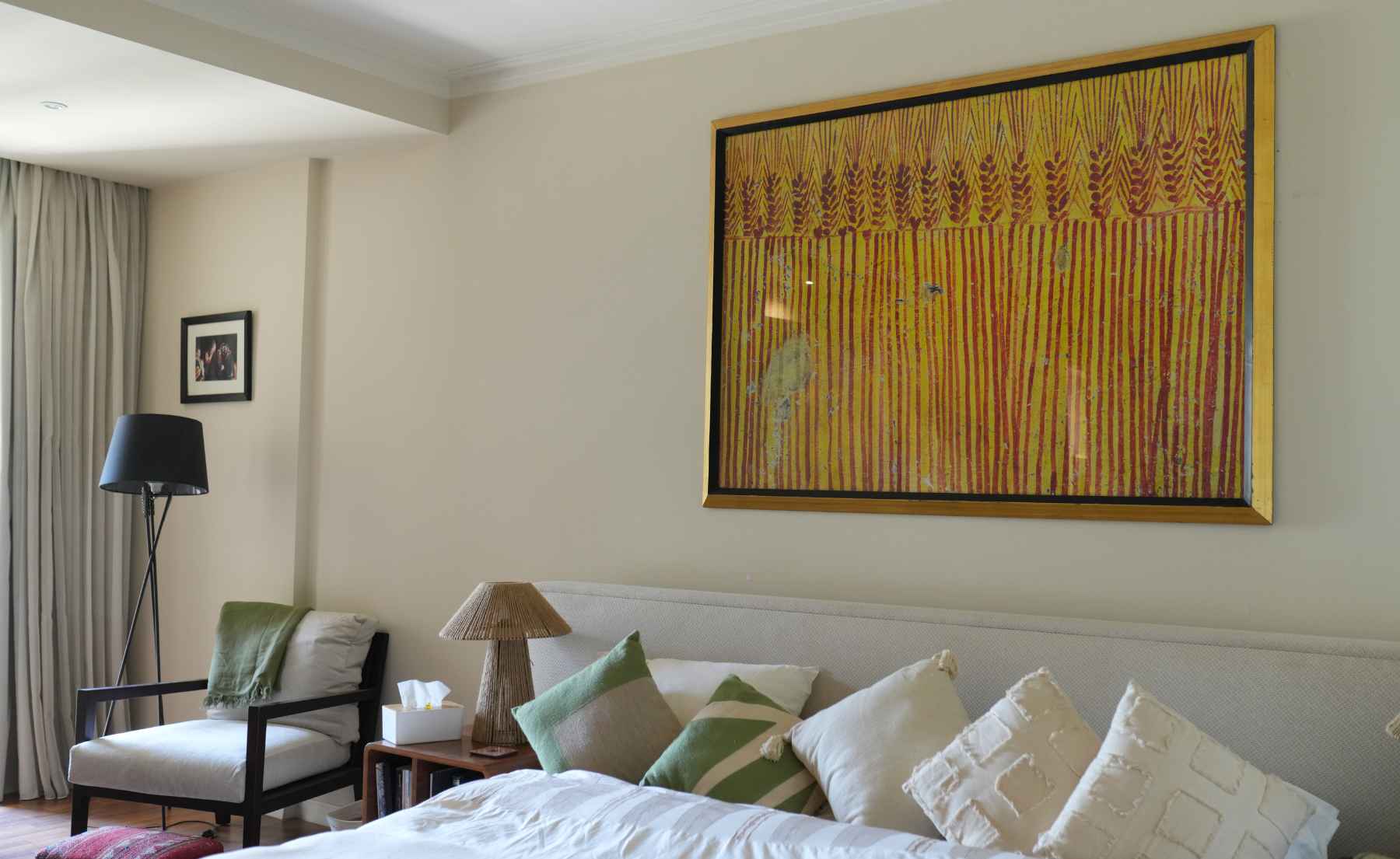
For someone whose professional life revolves around documenting human stories, it feels fitting that her home tells one too through its fragments. As she walks us out, she reflects, “A home is like a person’s inner world. It is a way of seeing someone’s soul translated onto a canvas.”
- Previous Article AD: Lynks Brings Four Interconnected Districts to New Cairo
- Next Article The Intricate Beauty of Ben Youssef Madrasa