

Mario Rossi & the Mosques That Rewrote Two Skylines
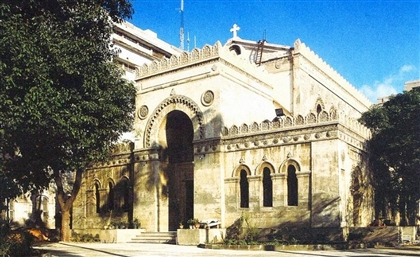
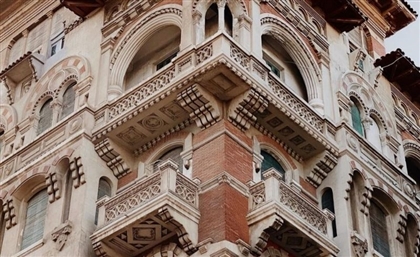
Arriving in Egypt in the 1920s, Mario Rossi fused reinforced concrete with Ottoman and Mamluk vocabularies, leaving behind a chain of spectacular mosques.
Originally published March 16th, 2026
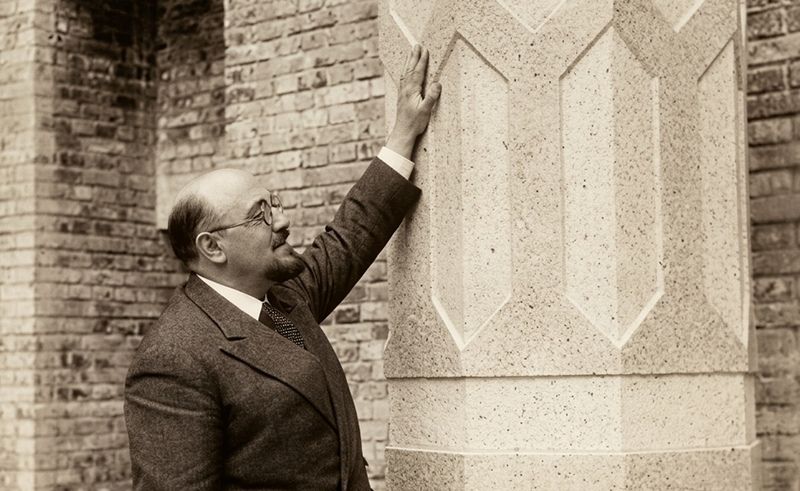
In 1921, a young Roman architect stepped off a ship into a country that was still deliberating over its modern identity. Mario Rossi had trained at the Accademia di Belle Arti in Rome, absorbing classical discipline and European revivalism. Egypt, meanwhile, was redefining itself after formal independence from Britain. Its cities were expanding, its institutions were consolidating, and its architecture was searching for a language that felt rooted and current.
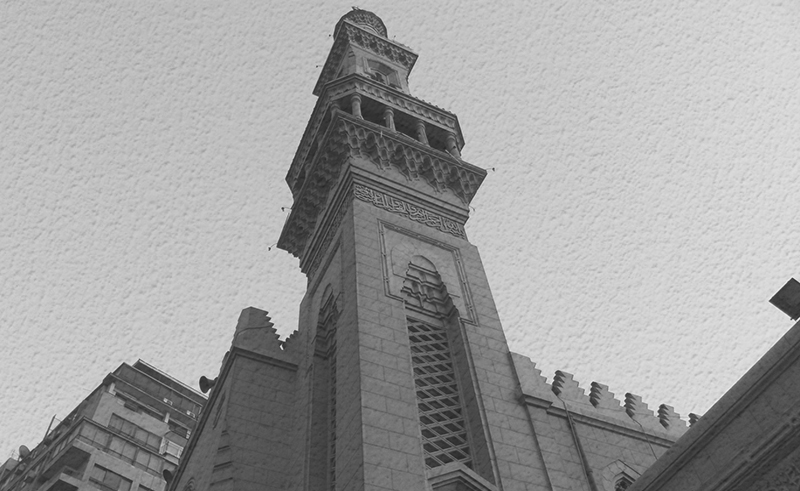
Amid this landscape, Rossi found his footing inside the Ministry of Awqaf, eventually becoming its chief architect. The assignment was politically delicate: design mosques that felt authentically Egyptian without copying the past stone for stone. His solution—reinforcing concrete—allowed him to reinterpret Mamluk domes and Ottoman minarets at new scales, with cleaner lines and wider spans.
Then history intervened. During World War II, as an Italian national in British-controlled Egypt, Rossi was interned. His career stalled, then resumed. By the time he died in Cairo in 1961, he had redrawn key nodes of both Cairo and Alexandria.
Omar Makram Mosque, Cairo
Tahrir Square has never been neutral ground. Into this charged civic arena, Rossi inserted a mosque that had to hold its own against ministries, museums and mass politics. The building keeps a low, disciplined profile, its central dome firm rather than flamboyant. The minaret rises with Mamluk clarity, stripped of excess. Over time, the mosque became the stage for state funerals and national ceremonies, absorbing the square’s turbulence into ritual form.
Al-Tabbakh Mosque, Cairo
Downtown Cairo leaves little room for architectural grand gestures. Hemmed in by shops and traffic, Al-Tabbakh Mosque finds a pleasant compromise between tight streets with composure. Rossi organised its façade like a measured argument: arched openings, carved bands, huge dome. Inside, modern concrete carries the weight, freeing the prayer hall from heavy columns.
Zamalek Mosque, Cairo
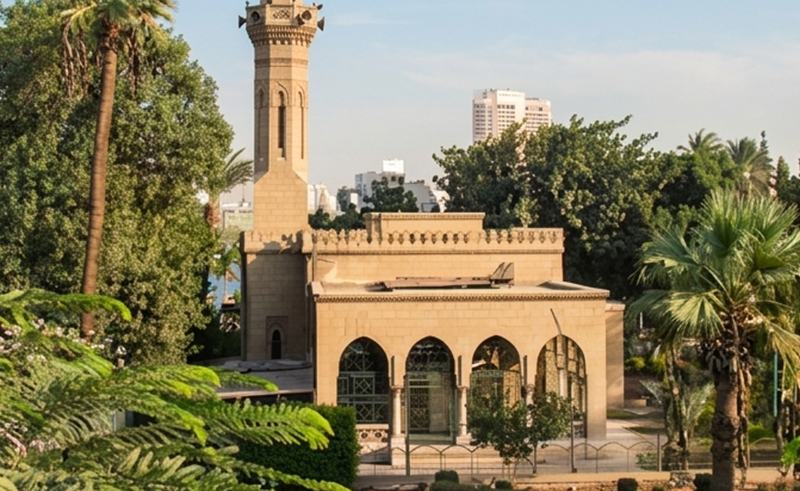
Zamalek’s streets are shaded, residential, almost discreet. Here, monumentality would have felt misplaced. Rossi responded with restraint. The dome sits comfortably among apartment roofs; the minaret signals presence without dominating the skyline. Decorative references to Ottoman and Mamluk precedents are pared back and refined.
Abu al-Abbas al-Mursi Mosque, Alexandria
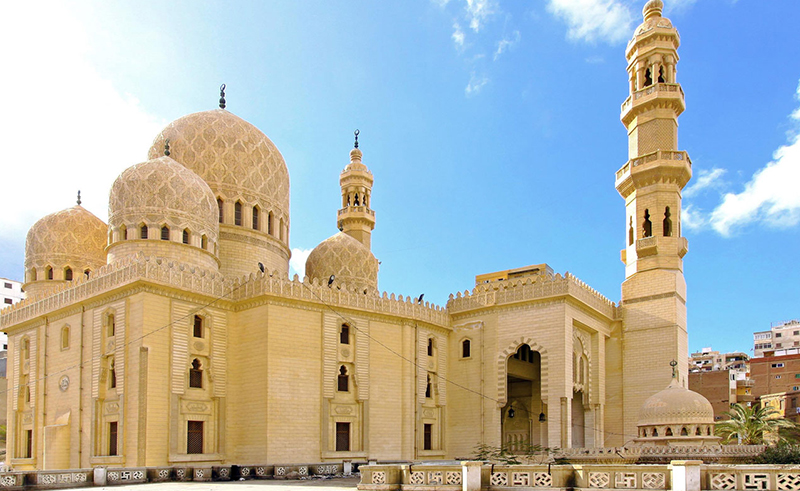
In Anfoushi, the tomb of a 13th-century Sufi saint had long drawn devotion. Rossi was tasked with transforming the site into something commensurate with its spiritual gravity. The result unfolds as a sequence: forecourt, arcades, a vast prayer hall resting on granite columns and marble floors. Multiple domes gather overhead, while a tall minaret commands the Mediterranean horizon. The project did more than rebuild a shrine. It reorganised an entire district around a single axis of faith.
Al-Qaed Ibrahim Mosque, Alexandria
On the Corniche near Raml Station, visibility is everything. The sea stretches out on one side; tramlines and crowds press in on the other. Rossi answered with vertical emphasis: a slender minaret crowned with a clock, a single dome poised above the prayer hall. Ottoman symmetry meets Neo-Mamluk detailing. The mosque became a reference point — geographically and socially — a place where civic life and worship intersect.
Sidi Yaqut Al-Arsh Mosque, Alexandria
In the dense Anfoushi quarter, shrines and mosques accumulate over centuries, often without cohesion. Rossi’s intervention around the tomb of Yaqut Al-Arsh sought order. He aligned domes and flanking minarets to converse with neighbouring structures, shaping what is now known as Alexandria’s “mosque square.”
Muhammad Kurayyim Mosque, Alexandria
Near Ras El Tin Palace, architecture carries political overtones. The mosque attributed to Muhammad Kurayyim occupies this ceremonial terrain with deliberate massing and pointed arches drawn from Neo-Mamluk vocabulary. Its dome rises along a coastal axis historically associated with authority and procession. In this setting, Rossi’s familiar language of revival becomes strategic, positioning religious architecture within the theatre of the state.