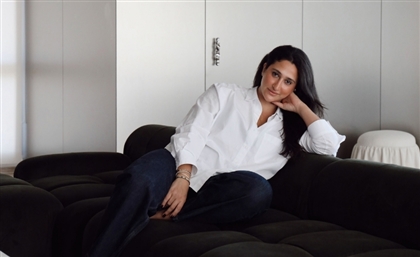


Dubai-based Chafic Mekawi Reframes Objects Through Memory & Time
Carpets, balconies, plastic chairs and frames appear across Chafic Mekawi’s work, carrying new meanings shaped by memory, identity and time.
While studying in Oxford, designer Chafic Mekawi became more aware of how the region he comes from was represented in the West. With his Lebanese and Emirati background, his perspective shifted during the years he spent living in the UK. Being away from the region changed the way he encountered its portrayal. The images and narratives he came across often felt reduced compared to the complexity he associated with his lived experience in the Arab world. “It was bil ghorba (abroad) that I actually fell in love with my Arabness,” he says. That experience became a turning point in how he later approached his work, leading him to return to familiar cultural elements and reinterpret them in unexpected contexts, rather than representing them directly.
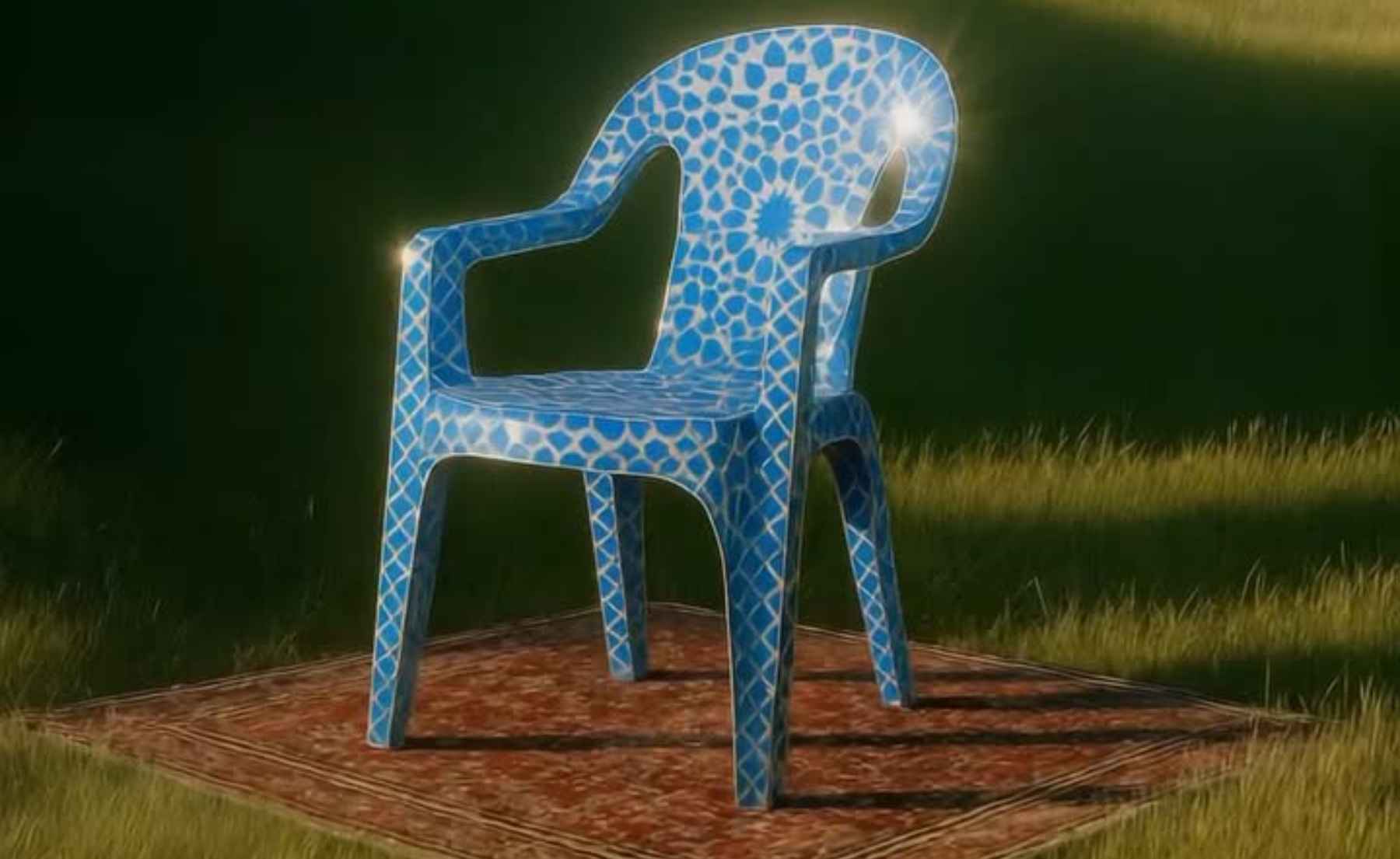
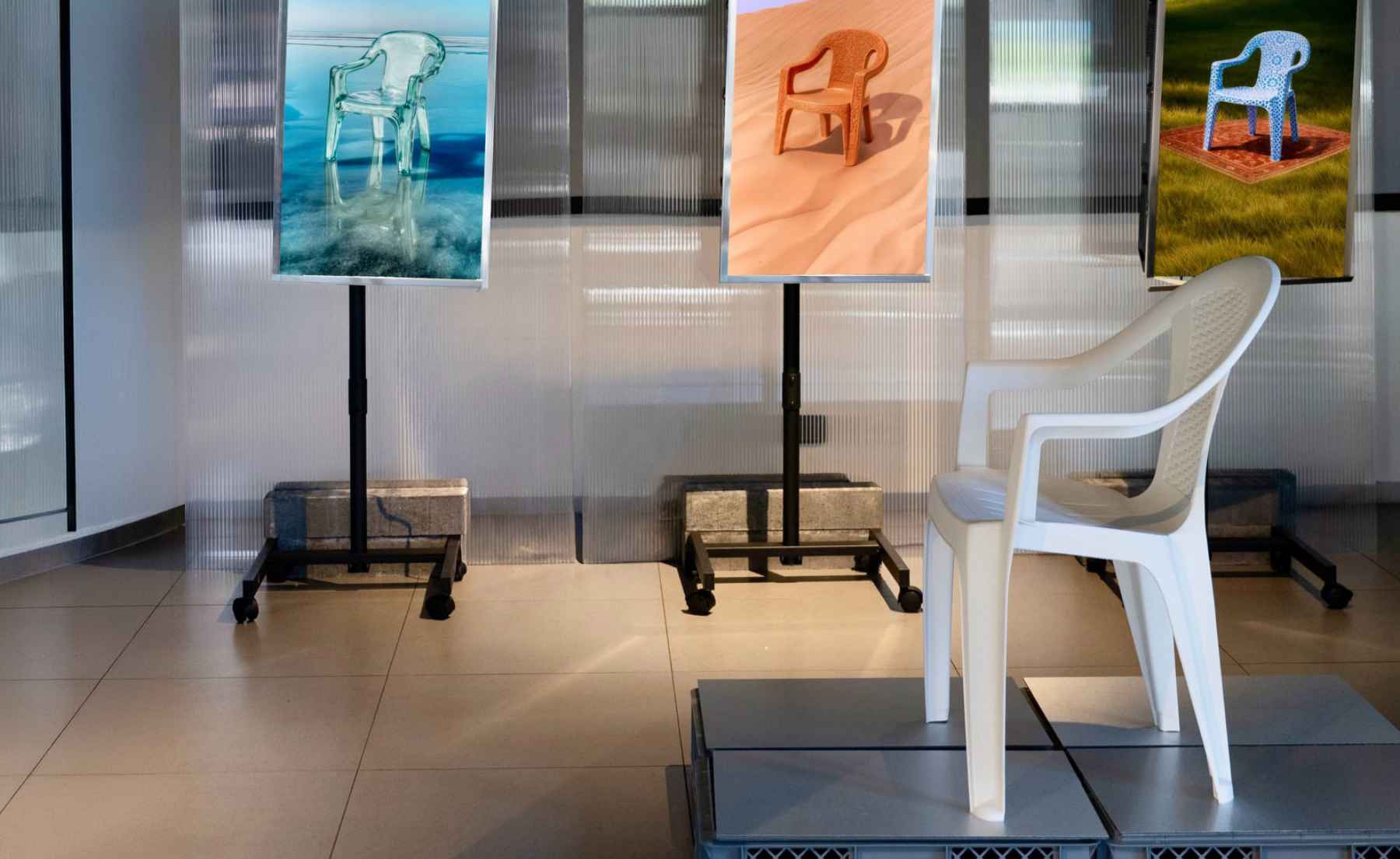
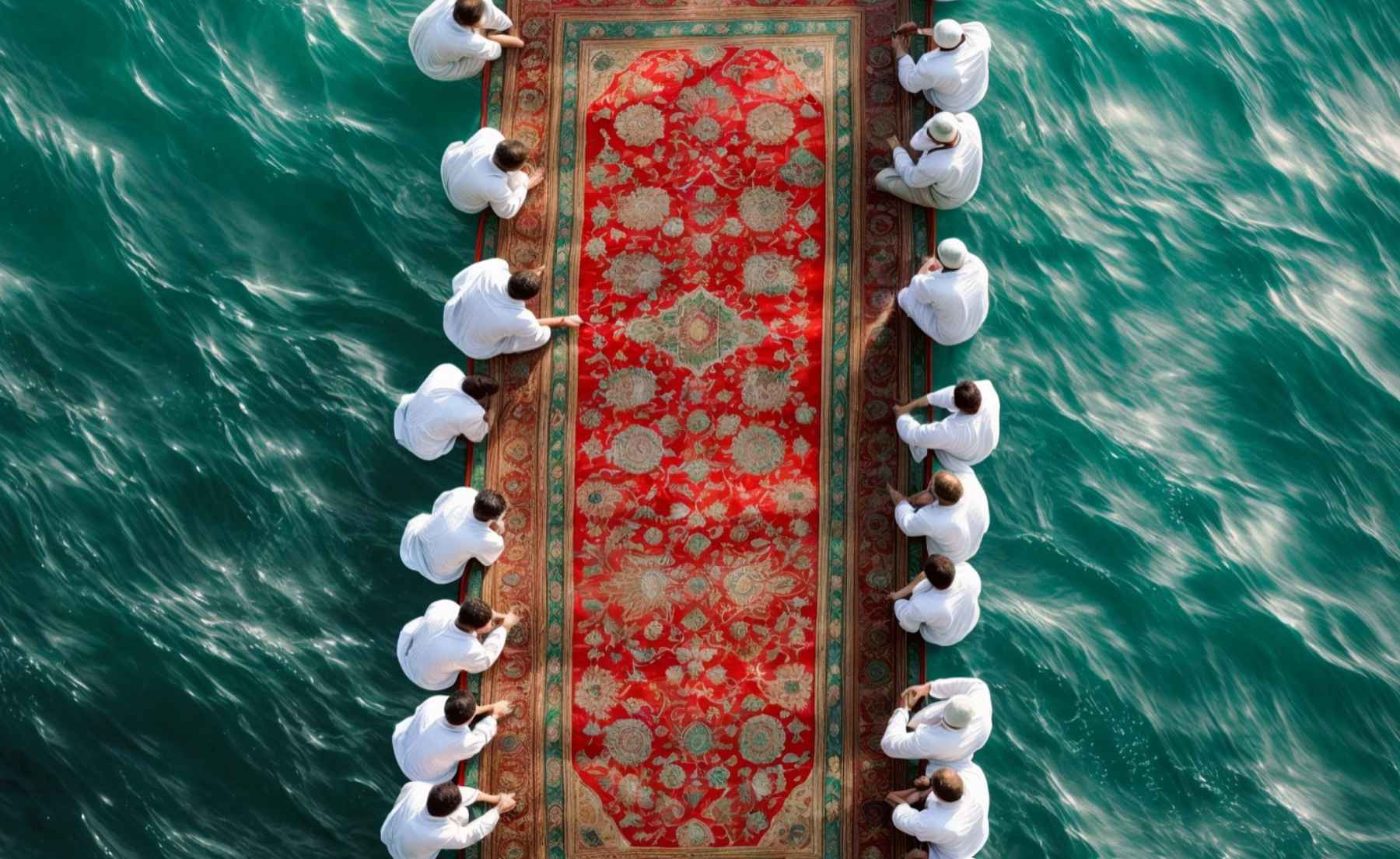
The objects Chafic Mekawi chooses are common to the Arab world. His ‘Carpet Court’, a striking juxtaposition of a tennis court embellished with rug patterns, served as a primary catalyst for his practice. It was here he defined his signature: a tension between rigid symmetry and cultural playfulness. In addition, the ‘Zellige Monobloc Chair’, exhibited at Milan Design Week 2026, confronts the ubiquity of the mass-produced plastic chair with the exclusivity of traditional Moroccan tile craft. By contrasting the cheapness of the plastic with the high-value craft of Zellige, he forces a reassessment of how we assign value to objects.
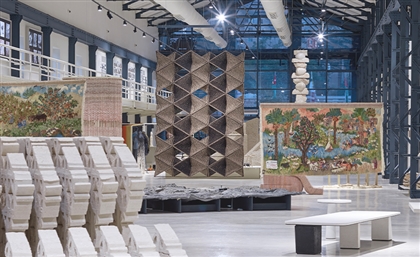
His latest exhibition, 'In Time', recently hosted at Kanvas Dubai and curated by Project22, creates a dialogue on transformation by juxtaposing his ‘Beirut Balconies’ series with the work of artist duo Ryan Koopmans and Alice Wexell. In this collection, Mekawi transforms architectural remnants into vessels of memory. He treats the balcony as a witness to Ottoman and French colonial influences that have remained throughout the instability that has long defined Lebanon. By positioning these structures as spaces that are neither fully public nor fully private, Mekawi explores how architecture serves as a living record of its inhabitants, even when abandoned. In these works, metal appears as a recurring material choice to signify endurance, creating a sharp contrast against more ephemeral elements to suggest that, as Mekawi puts it, "just like the balcony has been here, we’re also here to stay."
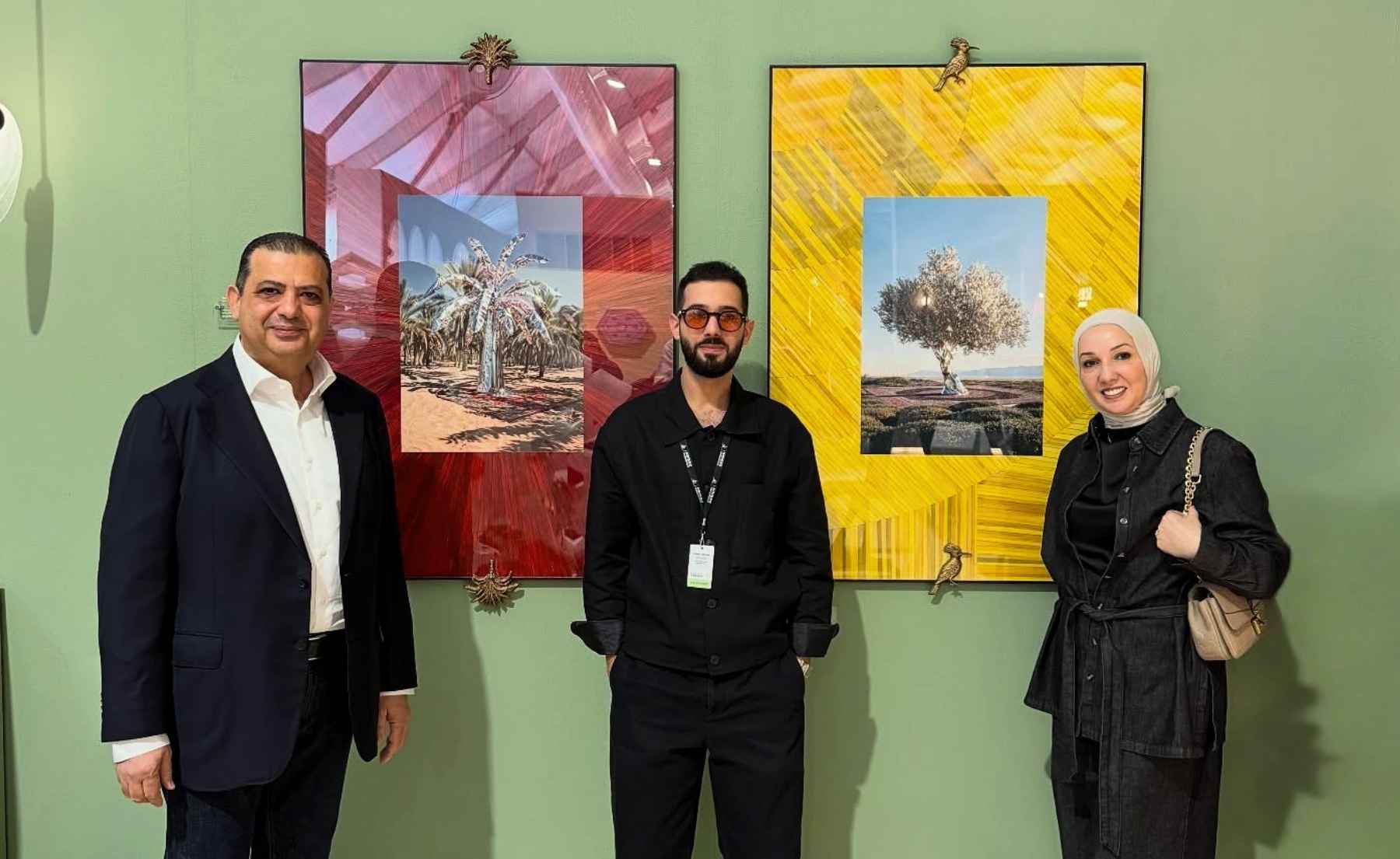
While his previous work looks backward to reclaim heritage, his latest design, the Dar Frame, looks at the future of how we frame things in interior spaces. Developed in partnership with the Emirati-based One Third Studio, the Dar Frame is a direct response to a gap in the market for thoughtful and intentional display. Mekawi believes that while art is always admired, the frame is often overlooked. He asks why the frame cannot become art in itself, much like the intricate, handmade frames of the Art Deco era. He describes his product as a "deliberate art and design statement." The piece employs the marquetry technique using local palm leaves. The design acknowledges the dynamism of the modern user. By utilizing interchangeable brass knobs inspired by local Emirati flora like the palm tree, the fig, and the hoopoe bird, the frame becomes an adaptable object. “It is a tailored solution for the user whose taste shifts as often as the seasons, proving that framing no longer needs to be a last-minute secondary thought,” Mekawi tells SceneHome.
Mekawi remains unbothered by the boundaries between mediums, viewing his practice across architecture, digital art, and product design as an interconnected system. He speaks of artificial intelligence with the pragmatism of a craftsman, comparing its emergence to the arrival of the camera in the art world. "I don't think AI should be used as a source of emotion," he clarifies. He treats technology strictly as a tool rather than an engine, stating, "I think it is your duty as an artist to use it as a collaborator and as a tool, not as an enabler." To maintain his own creative fingerprint, he feeds the algorithm his own sketches and photographs to ensure a distinctly human outcome.
Ultimately, Chafic Mekawi does not seek to dictate the viewer's response. He creates from a place of beauty, believing that it acts as a first layer that feels familiar enough to enter, before gradually revealing more complex ideas beneath it. He strives to offer a mirror to the region, capturing the beauty of the culture and the weight of history. "If my work somehow elicits some emotional connection to the viewer," he says, "that's really the ultimate goal."