

Sahel AlHiyari Designs Buildings as Chapters in an Ongoing Story
From Ottoman villages to modern homes, Sahel AlHiyari shapes architecture that tells a continuous story.

Jordanian architect Sahel AlHiyari designs buildings as chapters in his ongoing story. Each structure communicates through light, texture, and the way it holds time and does not necessarily rely on bold statements of form. As AlHiyari, founder of the Office of Sahel AlHiyari (OSAA) for Architecture, tells SceneHome, “I can’t really single out any one project, because I see all of them as part of one continuous work, unfolding in segments.” Every building becomes a piece of a bigger narrative, evolving on its own terms.
AlHiyari studied in Jordan and later earned degrees in Fine Arts and Architecture at the Rhode Island School of Design, followed by a Master of Architecture in Urban Design at Harvard. He continued post-graduate work in Venice, Italy, auditing classes with scholars like Manfredo Tafuri and Francesco D’Alco. “The whole idea of getting a PhD wasn’t what I wanted. What I loved most was seeing how things were composed,” AlHiyari tells SceneHome.
When he returned to the Middle East and worked in Jordan and Egypt, AlHiyari began to notice how different contexts shape architecture. “Sometimes you face a problem not only because of the cultural difference, but also in terms of how things are made, technology, and resources,” he explains. In Jordan he gradually shaped a small experimental practice, learning how to bring design rigor into conversations with local conditions, materials, and ways of building.
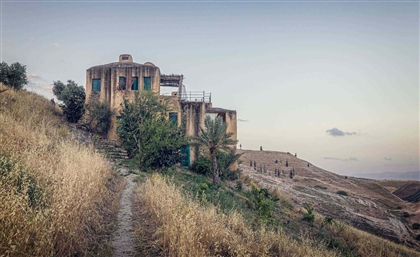
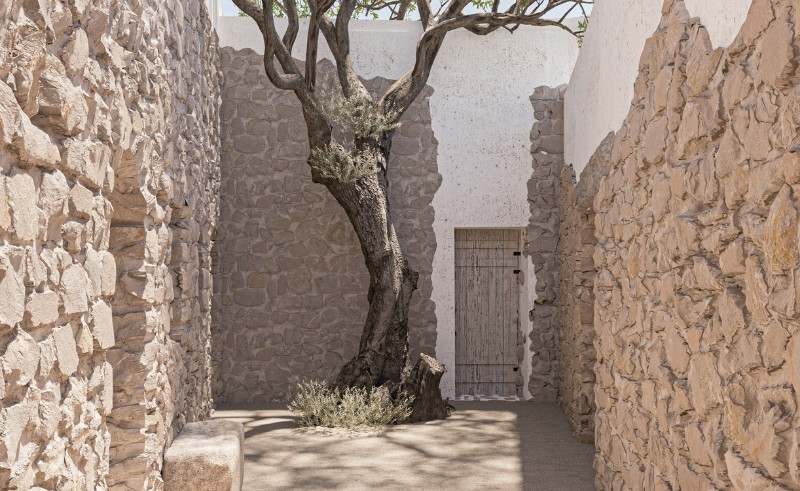
OSAA’s latest project, Al Busiera, restores an Ottoman-era village in southern Jordan. The team focused on reconstructing two ruined houses and completing drawings to guide the rebuilding. One of the main challenges was that the original juniper wood roofs had been stripped and sold as firewood. AlHiyari wanted to rethink the roof system to prevent it from being easily removed while integrating the project into a broader environmental and landscape strategy, including potentially reforesting the area with endangered juniper trees. “Rebuilding these houses is about preserving the way people lived," AlHiyari says. "It is a tapestry of habitation and a glimpse into a lost world.”
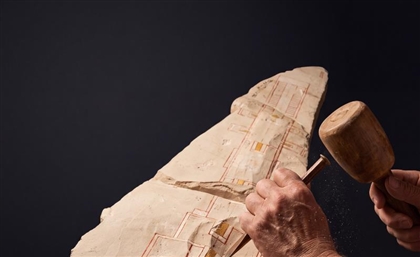
Some of AlHiyari's other projects include residential buildings in Jordan, such as the B. Kanaan Residence and a house in Dabouq. The B. Kanaan Residence spans 1,000 square metres on a busy urban corner, separating functions across three levels with the ground floor as the heart of the home. Skylights filter light into the double-height living space while other rooms open discreetly onto the garden, and the exterior uses hand-chiselled barrel stone referencing Jordan’s early modernist architecture.
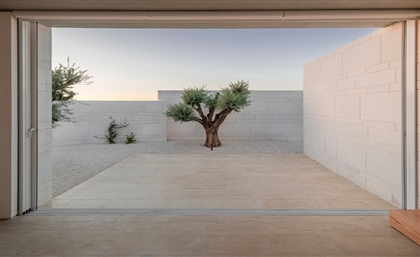
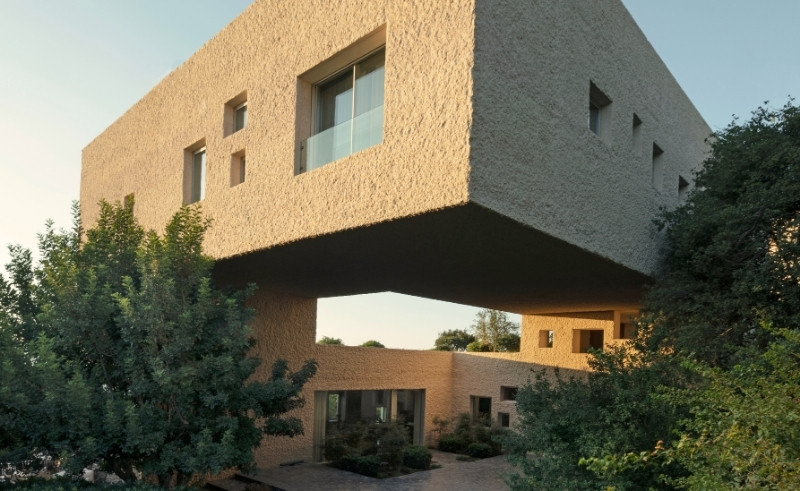
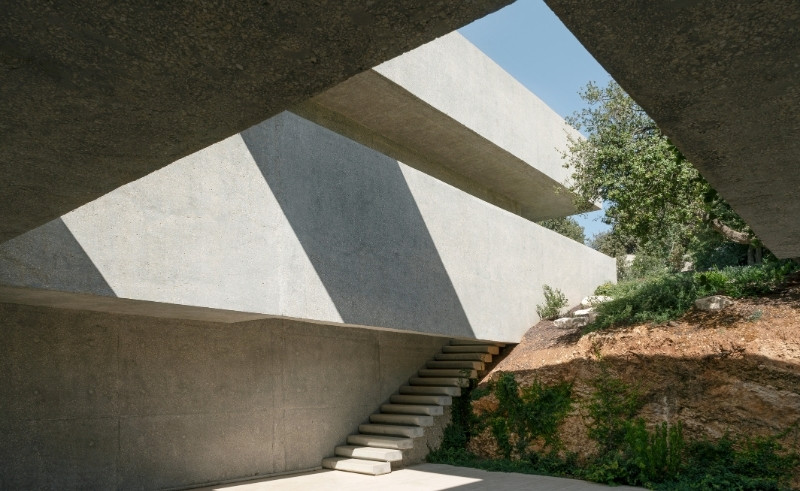
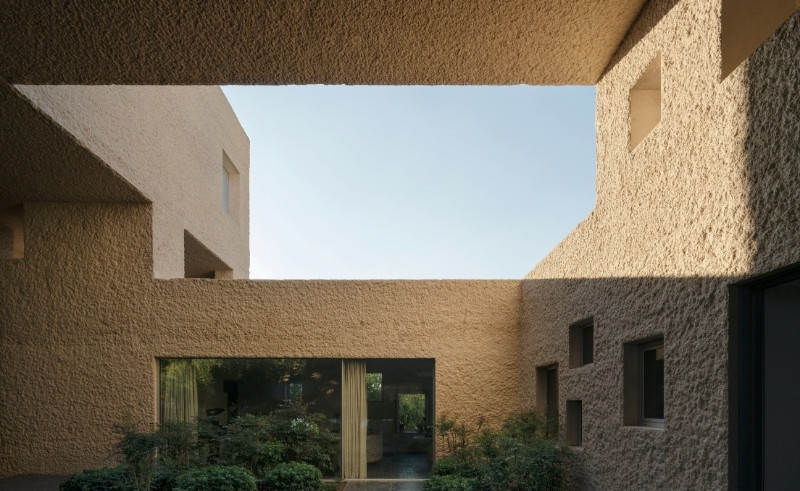
Meanwhile, a home in Dabouq negotiates a sloping oak-covered site, wrapping around a central courtyard with one wing grounded and the other suspended over the slope. The design channels natural airflow, frames views of the surrounding greenery, and creates intimate outdoor spaces sheltered from the street, with skylights and large openings bringing light into the interior, and materials and textures from stone walls to timber finishes connecting the building to its environment.
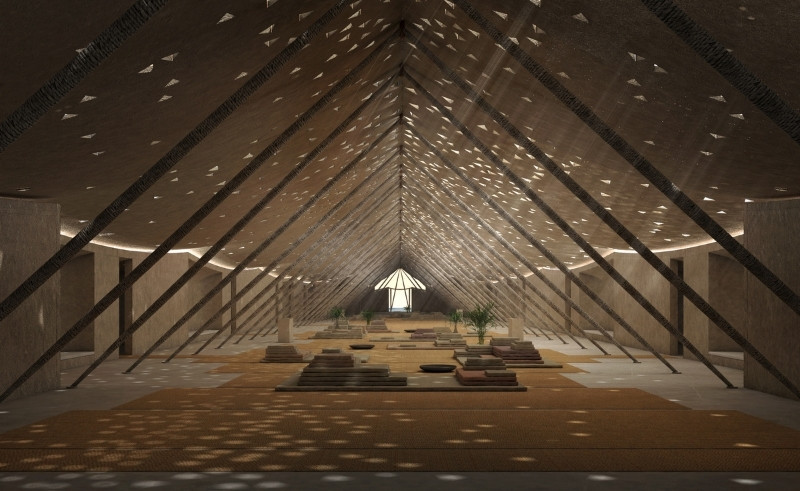
In AlUla, AlHiyari worked on resort projects that respond to the desert terrain, using natural contours, rock formations, and microclimates to shape buildings, pathways, and open spaces. The structures are positioned to take advantage of prevailing winds, provide shaded areas, and maintain a dialogue with the landscape. Natural stone and locally inspired finishes ground the resorts in their context, while courtyards and terraces create moments of retreat and contemplation. Sahel explains, “Structure and material are inseparable here. The mass and texture give it weight, but the spaces in between, the trees, the light, the rock formations, that’s where life happens.”
AlHiyari has received several awards throughout his career. In 2002, he was chosen as the first architect to receive the Rolex Mentor and Protégé Arts Initiative, becoming a protégé of architect Álvaro Siza of Portugal. In 2024, he was the winner of the Great Arab Minds Award in the Architecture and Design Category. His experience has allowed him to stand out in a world saturated with designers.
“I’m not chasing a style or a signature," AlHiyari says. "That feels limiting. The work has a certain visual identity, sure, but it’s more about responding to the client, the site, the history, and even the smell of a place. Every project is a negotiation of these factors.”
In his lectures to younger generations, AlHiyari emphasises the importance of passion and patience: “If you don’t love what you’re doing, don’t do it. Stop trying to make a difference for the sake of it. Architecture takes time. You have to challenge yourself and dig into history and context beyond what’s trending. Five years in school isn’t enough.”
- Previous Article Don Tanani’s Nakhl Collection Reimagines Egypt's Timeless Palm Chair
- Next Article The Ancestral Resilience of Omar El Farouk’s Fayoum Home