

Egyptian Designer Hasan Fikry’s Home Behaves Like Its Designer
Inside Hasan Fikry’s Cairo home, architecture and layered personality overlap, unfolding a space shaped by openness and mystery.
Homes are continuously shaped by the people inside them, and over time they begin to behave less like fixed, curated rooms and more like extensions of the lives unfolding within them. When the person living there is also the designer, a different kind of overlap emerges. Walking through such spaces can feel like moving through a sketchbook, where lines and curves sit alongside habits, preferences, and references to personal muses.
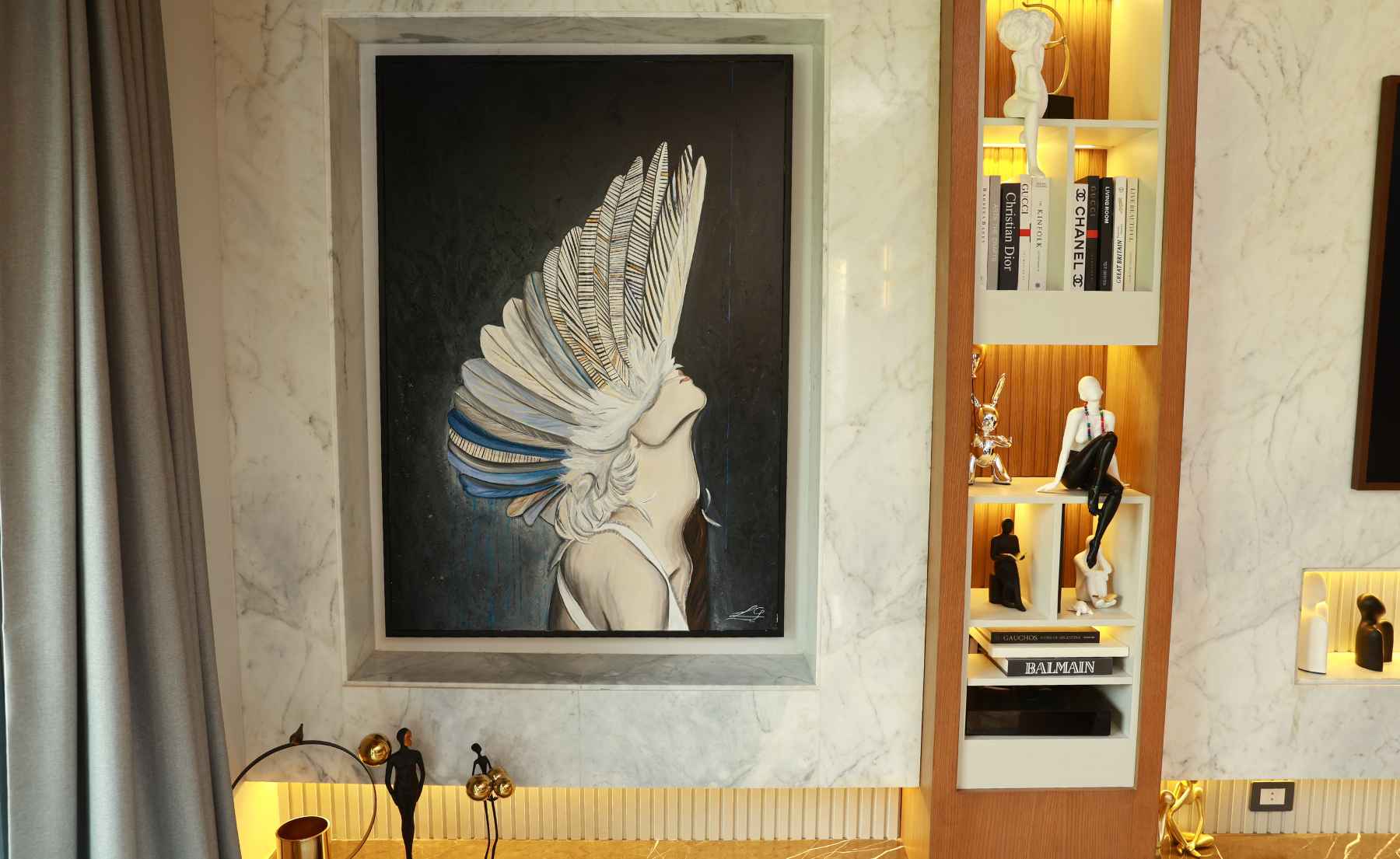
Hasan Fikry does not speak about his home as something he simply inhabits, but as something he has authored. An architect, interior designer, and founder of Dabs Egypt, he approaches the house as an ongoing extension of the way he thinks, sees, and edits space. “For me, a house is a reflection, not a shelter,” he tells SceneHome early on. The idea lands as a principle that shapes everything that follows. "When you’re both the designer and the person living in the space, the process becomes much less linear. There’s no real separation between the person creating the house and the person inhabiting it,” he explains.
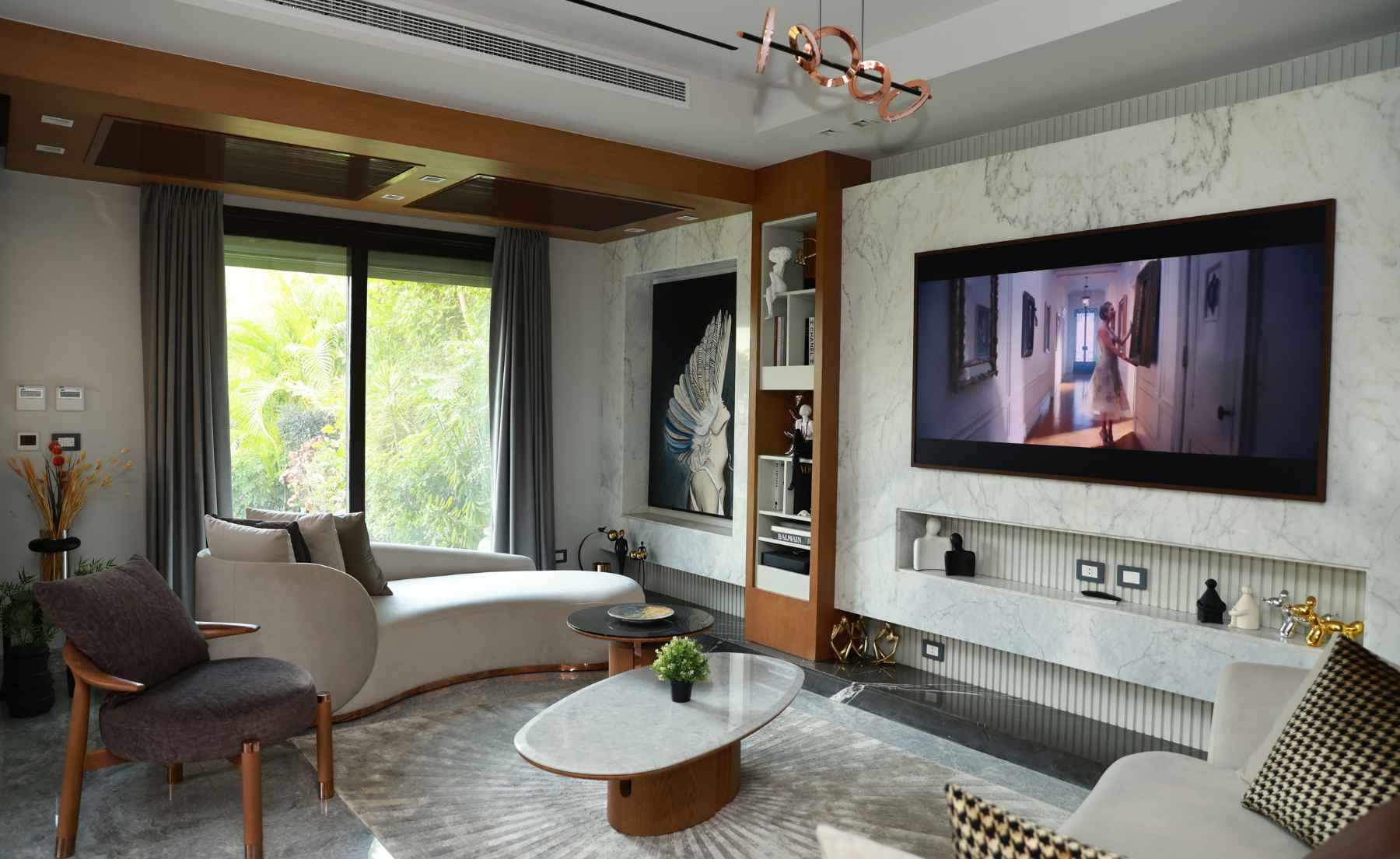
The first decision is also the most structural. Walls are removed, and the house becomes a continuous field rather than a sequence of rooms. “I don’t like confined spaces,” he says, explaining why functions overlap, sightlines extend, and the plan is read as a single gesture. That decision sets the logic for everything else.
The entrance is not treated as a threshold in the traditional sense, but as a playful compositional device. A triangular floor pattern, built in two tones, introduces rhythm. Grey, wood, and reflective metals define the entire palette. Nothing is left to excess, but nothing is neutral either.
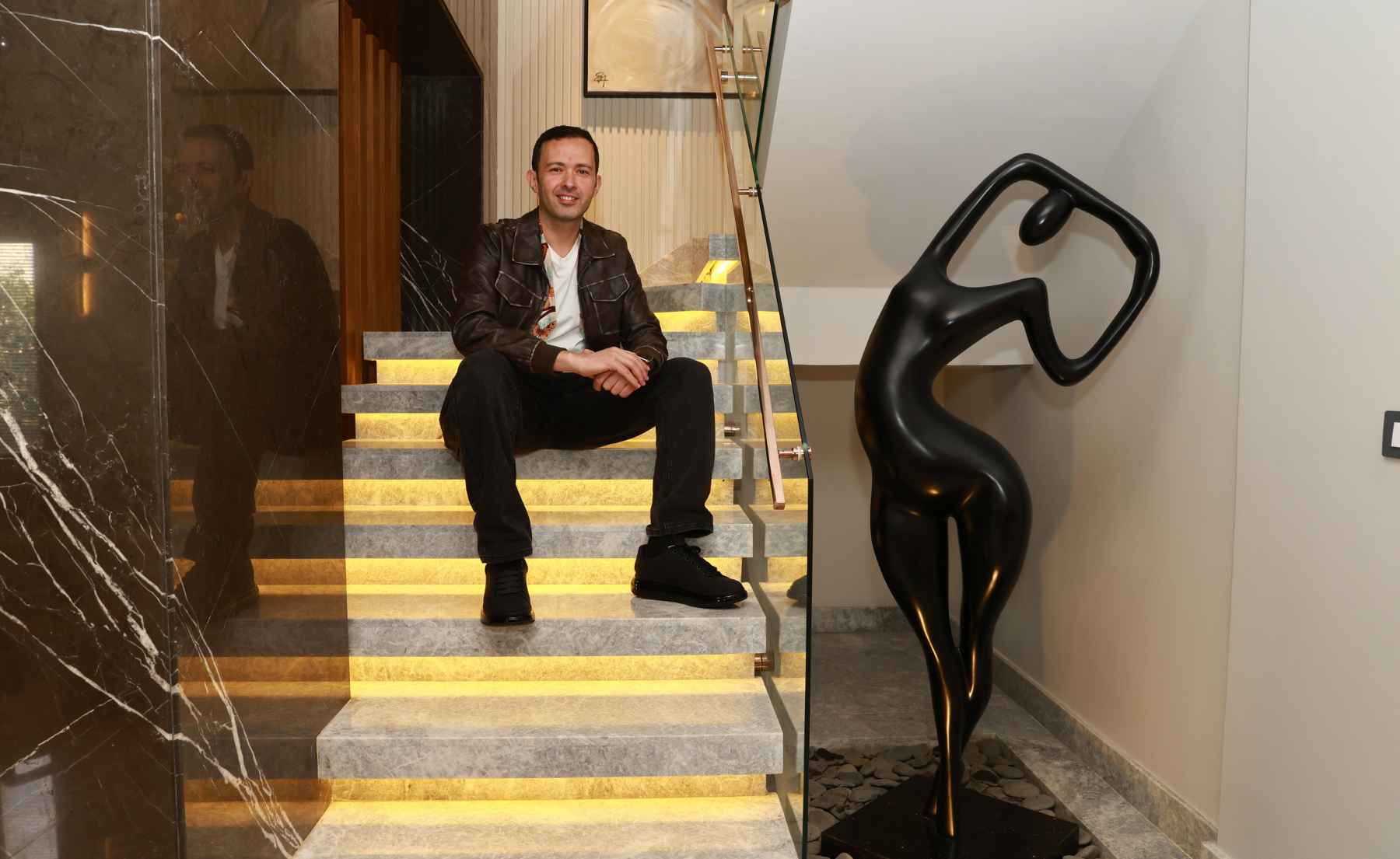
The staircase, carved in Tundra grey marble, is framed by a sculpture and a painting: two abstract female figures in motion that introduce a counter-rhythm to the rigidity of the geometry. “I don’t like to define the artwork,” Fikry says, explaining his preference for ambiguity and forms that remain slightly unresolved.
That same logic extends to the way the house is experienced on entry. Rotating mirrored panels replace a conventional lobby, shifting perception. “It feels like a game,” he says, referring to how the house reveals itself in fragments depending on position and movement.
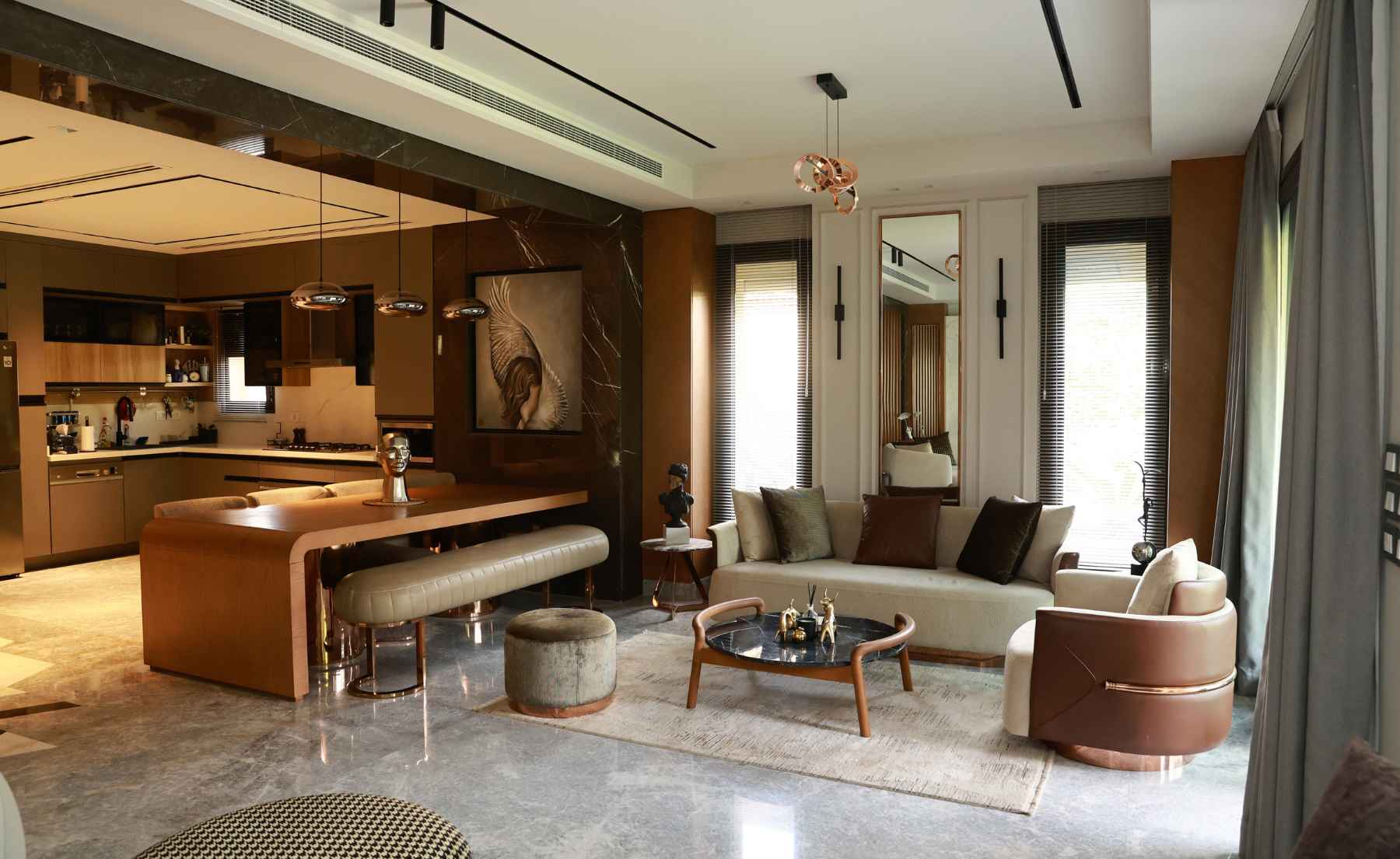
The dining area is one of the few moments where the house briefly gathers itself. A custom table, designed with the visual language of a bar but the ergonomics of a dining table, anchors the space beneath suspended lighting that distributes weight evenly across its surface, creating a composition that feels considered from every angle. Even here, however, function seems secondary to arrangement. Objects are placed less for utility than for the role they play within the atmosphere of the room, each one contributing to a larger visual rhythm.
That same logic extends into the kitchen, though in an even more stripped-back way. Rather than revolving around routine or domestic activity, the space feels curated almost as a display, with accessories occupying shelves and surfaces where everyday clutter might normally collect. “I don’t cook much,” Fikry says casually, explaining why the kitchen functions more as part of the home’s visual language than as a heavily used space.
Across the open plan, the TV wall becomes the centre, acting as an organising surface around which other views orient themselves. Even when not engaged, it operates as a reference point, pulling the surrounding spaces into alignment.
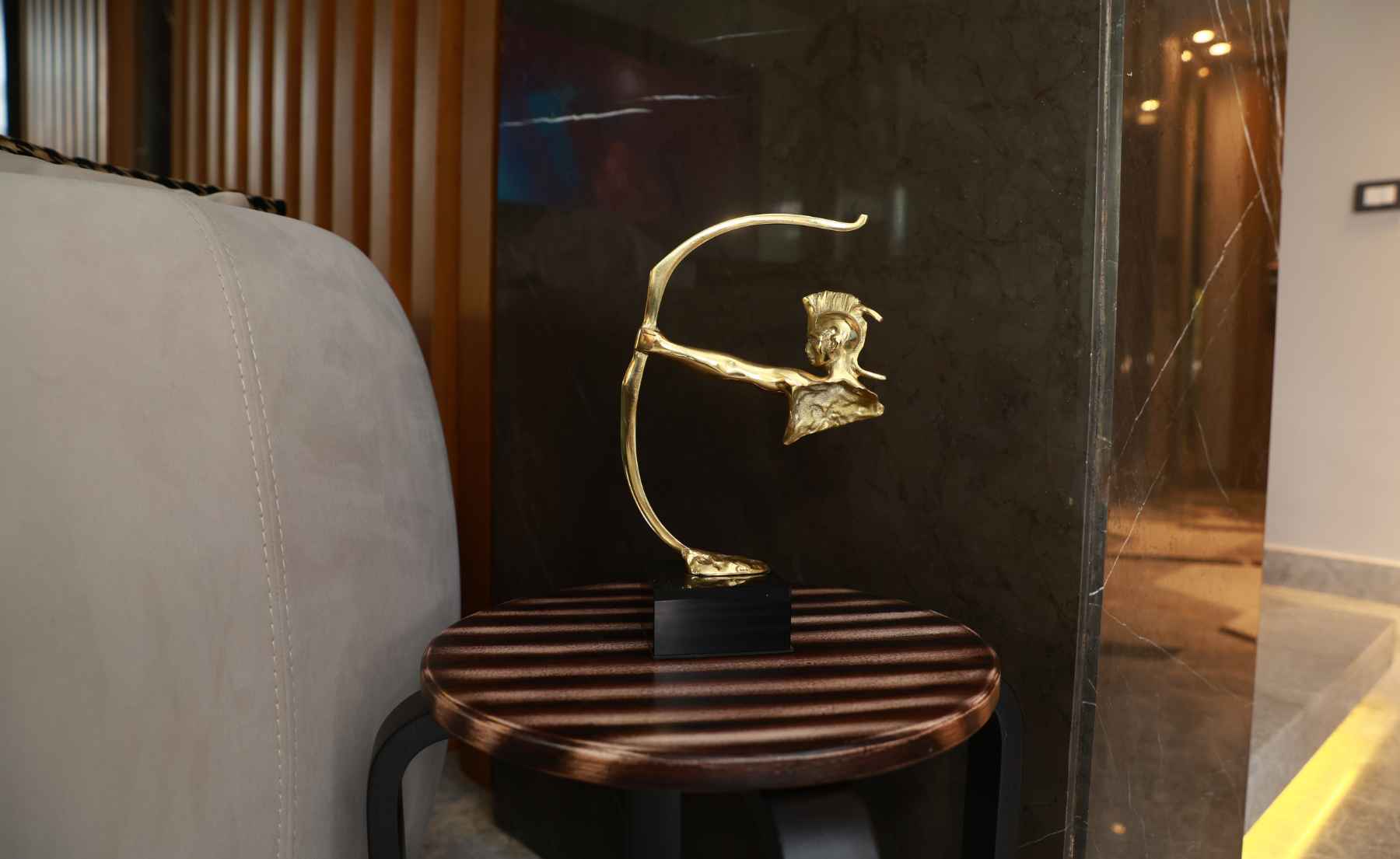
What becomes clear over time is that objects in the house are rarely treated individually. Side tables, sculptures, lighting, and frames operate as repetitions of form. A small group of tables, for example, reads as structural rhythm - “three pillars” within a composition, as Fikry describes them.
The salon introduces the most formal register. Even here, however, lines remain the dominant language. Frames, curtains, and edges intersect or run parallel, but never break from the system of linear continuity that governs the rest of the house.
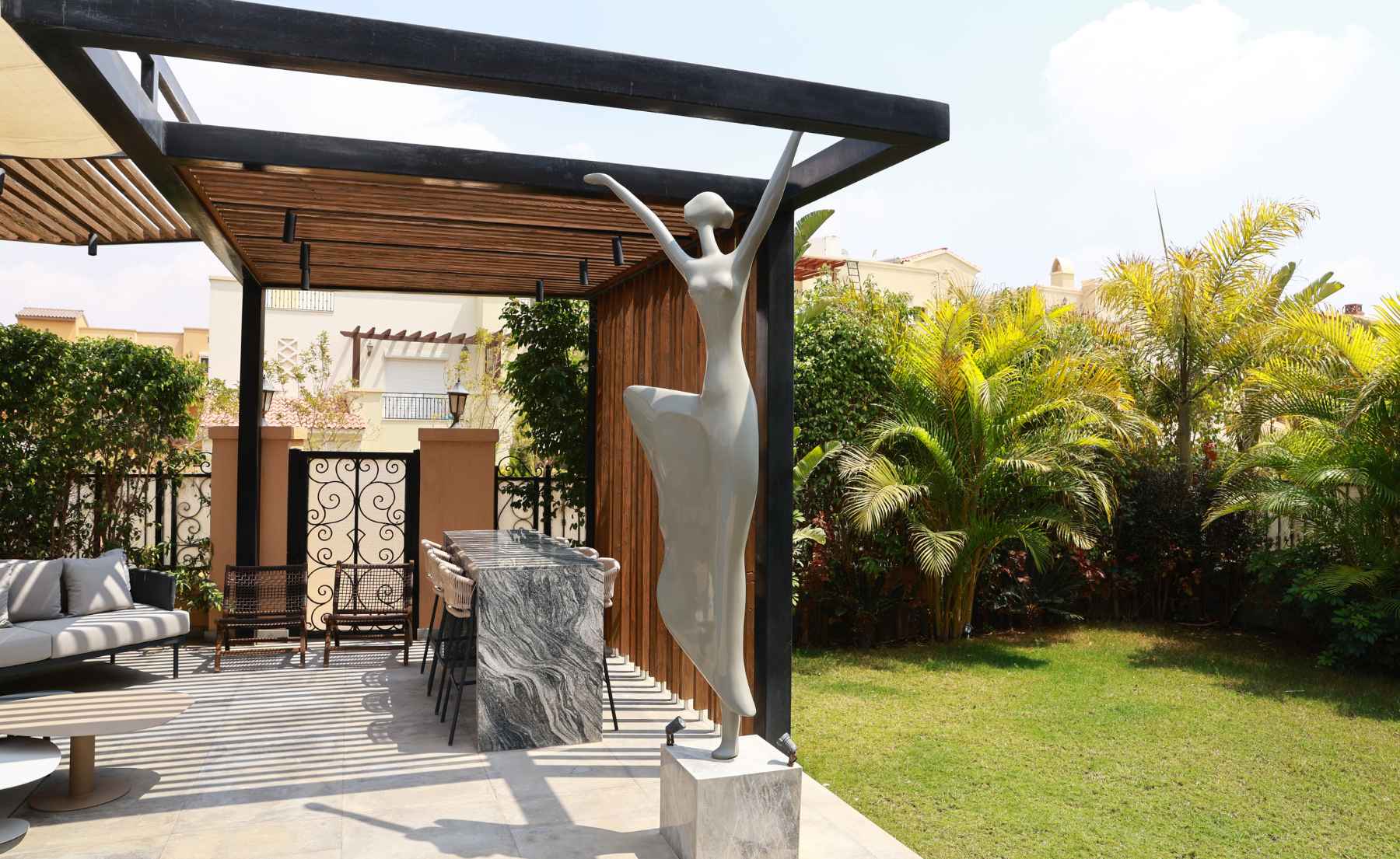
Outside, the structure loosens but does not change direction. The garden is organised around a central sculpture, extending the same motif of movement introduced indoors. A bar acts as both threshold and divider, separating seating from greenery while maintaining visual continuity. Even the swimming pool is placed away from the main axis, not to isolate it, but to prevent it from becoming the dominant reading of the exterior. From inside, the eye is directed instead towards greenery and layered planting, allowing nature rather than the pool to become the primary view.
As the house moves between sculpture, mirrored surfaces, greenery, and uninterrupted sightlines, it becomes difficult to separate the space from the person shaping it. The result is an interior that reads less like a series of rooms and more like a continuous way of thinking.
- Previous Article A Rocket-Shaped Skyscraper is Now Morocco's Tallest Building
- Next Article The Abandoned Architecture of Villa Badran by Gamal Bakry