

This Contemporary Amman Home is Shaped Around Salvaged Olive Trees
A quiet Amman home unfolds around salvaged olive trees, where light, material and space merge in harmony.

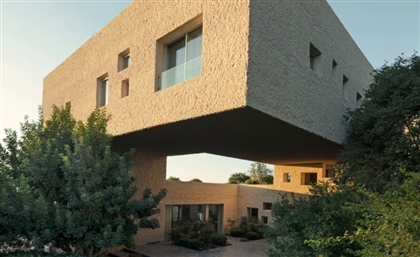
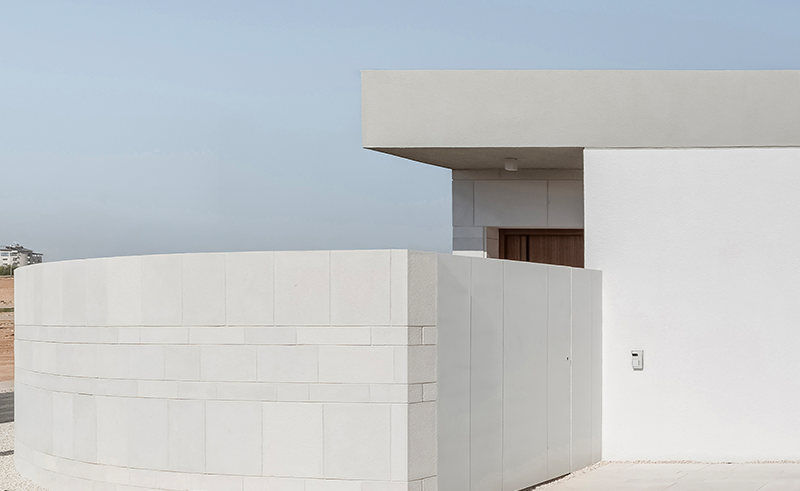
Domestic architecture often begins with a dialogue between exposure and retreat. In Amman, Jordan, this house resolves that tension by choosing restraint. It withholds itself from the street, presenting a composed sequence of low stone walls and quiet masses gathered beneath a continuous horizontal concrete plane. There is no attempt at announcement. Instead, the architecture establishes distance, allowing daily life to remain protected from the public realm. As Abdel Qadr Tarabiah, founder of Abdel Qadr Tarabiah Architecture, explains, the house is conceived as “an inward looking refuge, turning away from the street and revealing itself gradually from within.”
This gradual revelation shapes the project. From the outside, the composition reads as weight and continuity, stone resting firmly beneath the concrete plane that binds the volumes together. Inverted structural beams are embedded within it, spanning the main living space and allowing the interior to remain open and uninterrupted.
The stone walls act as a threshold rather than a façade. “These walls do not announce the interior; they establish a calm threshold,” Tarabiah saus, framing a moment of pause between outside and inside. Architecture here resists immediacy. The life of the house is allowed, in his words, “to unfold in measured silence.”
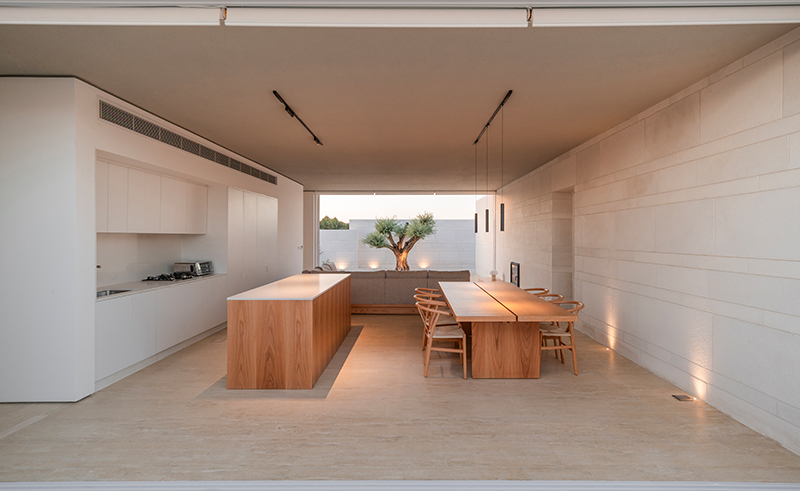
Internally, the plan is organised with clarity. Two solid volumes anchor the house, one containing private spaces, the other services. Between them, the central living area emerges as a void, open and composed, defined by proportion rather than enclosure. It operates as the spatial and social core, holding daily life without hierarchy.
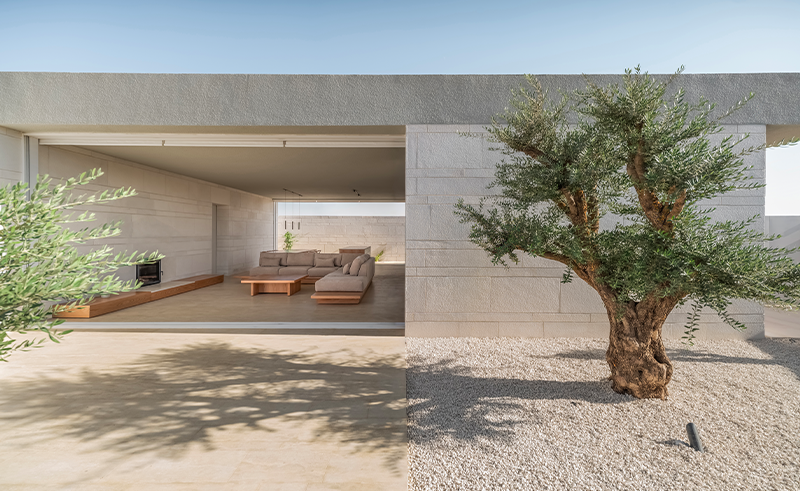
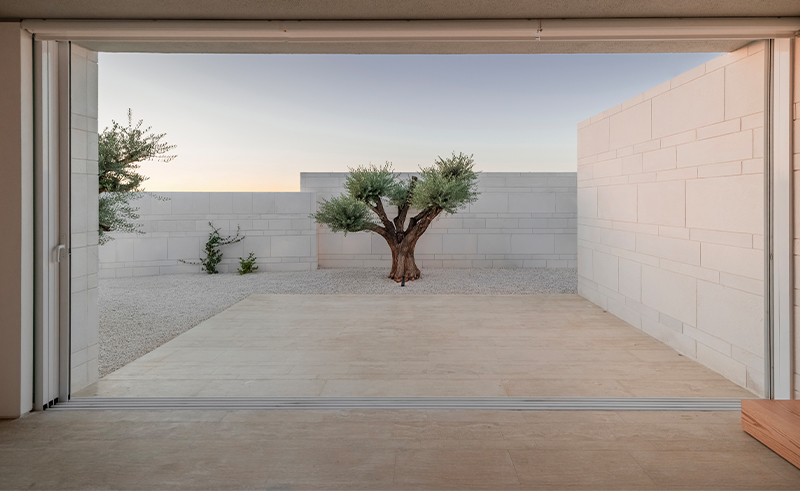
The boundary between inside and outside is carefully dissolved. Sliding glass doors retract fully into the stone walls, extending the living space beneath a shaded concrete canopy into the courtyard. Enclosure gives way to openness, yet the sense of refuge remains intact. The architecture gathers inward rather than projecting outward.
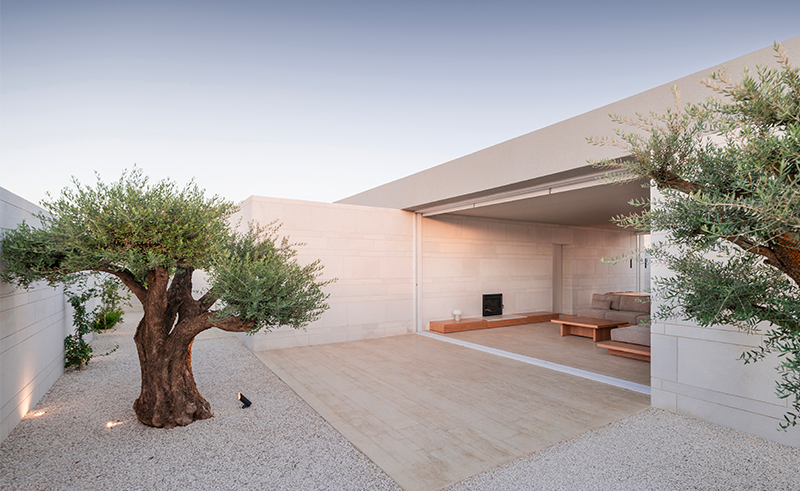
At the centre of the courtyard stand salvaged olive trees. “They act not as landscape features, but as anchors of memory,” Tarabiah tells SceneHome, grounding the house in continuity rather than novelty. Light and air move around them, reinforcing the courtyard as a lived space.
Material choices are deliberate and restrained. Exterior walls are built from locally sourced white chiselled stone, laid in a subtle horizontal rhythm that reinforces stillness. Inside, natural wood and muted finishes temper the density of the stone. The heavy enclosure provides shelter and shade," Tarabiah says, "while the courtyard introduces light, air, and a quiet connection to nature.”