

Dar Arafa Architecture’s Siwa Retreat Shapes a Central Oasis
Kazazian Siwa Hotel is organised around an oasis carved between two natural rock hills, blending desert, culture and design.

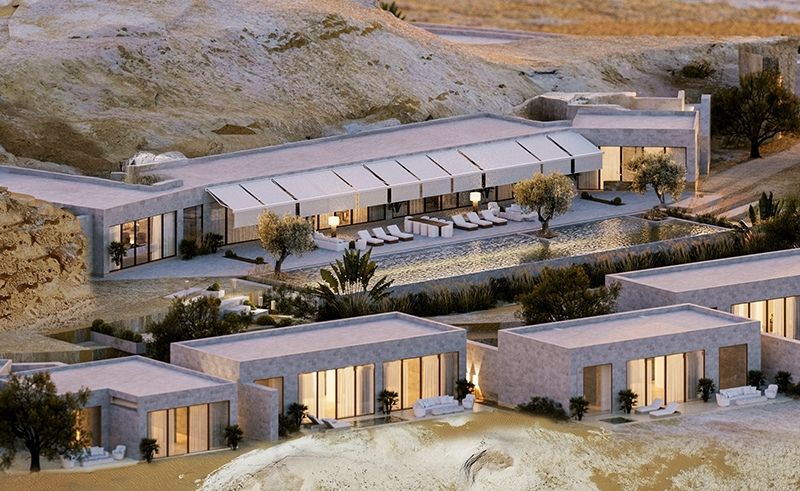
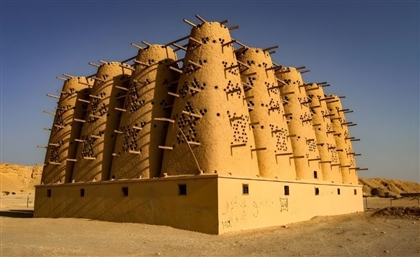
The most compelling desert architecture often comes from careful listening rather than assertion, where buildings take shape through the slow reading of terrain, climate, and cultural memory. In Egypt’s Western Desert, above the Siwa Oasis, Kazazian Siwa Hotel exemplifies this approach through a design developed by Dar Arafa Architecture, in collaboration with experience creators at Kazazian.
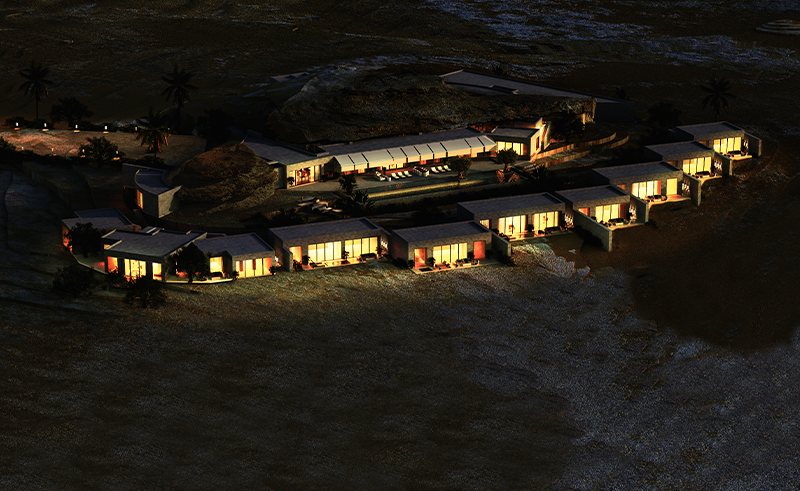
The project is organised around an oasis carved between two natural rock hills. This central void acts as a hinge between the intimate scale of the hotel and the expansive desert beyond, allowing guests to move fluidly between enclosure and openness.
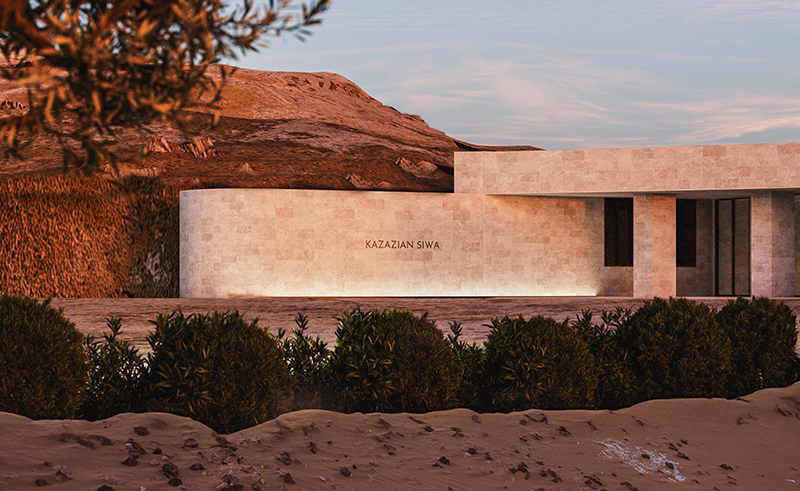
"The property’s design creates spaces that mediate between the three scales of the desert,” Daniel Kaldas, Partner and Design Director at Dar Arafa Architecture, explains. Here, the surrounding terrain actively shapes how spaces are experienced, from shaded passages to elevated viewpoints that frame distant horizons.
The oasis itself operates as both landscape and architecture. “An oasis, carved as an offset between two rock hills, serves as a threshold between the intimate and macro scales, while integrating the micro scale of textures and erosion patterns,” Kaldas tells SceneHome, describing a condition where eroded stone and shifting sand become part of the spatial experience.
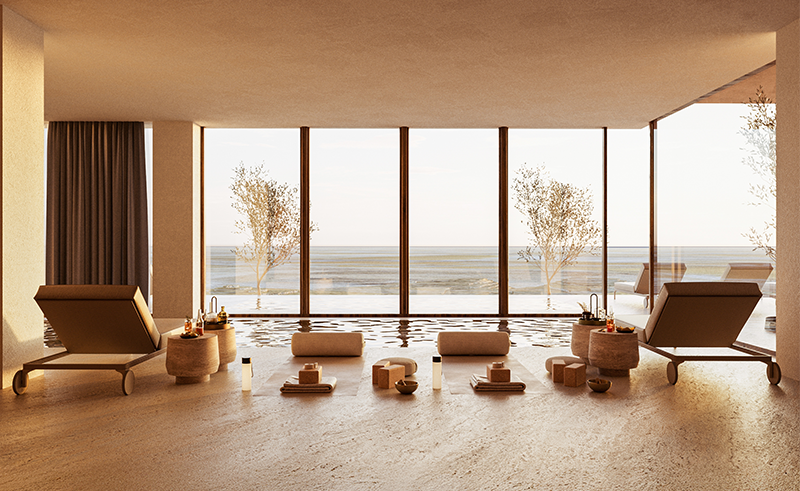
Structurally, the hotel adopts a hybrid system of load-bearing, locally sourced stone walls paired with a jack-arch ceiling construction. The thick masonry tempers the desert climate, while the vaulted ceilings provide both durability and spatial clarity. The approach is grounded in local building traditions, favouring longevity, material efficiency, and a low-maintenance response to an extreme environment. As Kaldas describes it, “This construction approach delivers an environmentally conscious solution that naturally enhances thermal comfort in the desert climate, while ensuring long-term durability, low maintenance requirements, and overall cost efficiency.”
The hotel is conceived as a layered environment where architecture, landscape, and culture intersect. Circulation unfolds gradually, guiding guests through a sequence of interior and exterior spaces that shift between privacy and shared encounter. "Architecture, landscape, and culture come together to form a timeless desert retreat,” Kaldas says. “Every element of the project is shaped by a deep respect for Siwa’s character.”
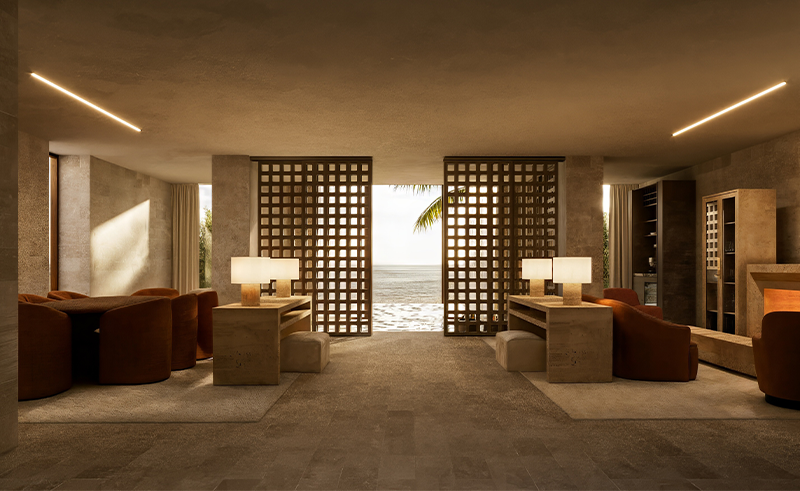
Guest suites follow the natural contours of the land, their layouts shaped by topography rather than fixed geometries. Interiors rely on natural materials, earthy textures, and restrained desert tones. Locally crafted details appear throughout, anchoring the design in Siwa’s cultural context without resorting to decorative pastiche. Light, shade, and wind are allowed to animate the spaces over the course of the day.
Beyond the hotel, views extend towards palm groves, salt lakes, and rolling dunes. Outdoor areas are arranged to balance contemplation with movement, quiet water features, discreet pathways, and shaded gathering spaces that encourage moments of pause.
Wellness and cultural experiences form an integral part of the project. Guests can engage in traditional therapies, mindfulness practices, and guided desert excursions that reveal Siwa’s ecological and historical layers. Dining draws from local produce and culinary traditions, reinforcing the hotel’s connection to its setting.