

Bahraini-Danish Studio's Kinetic Experience in the Desert of AlUla
Bahraini-Danish transforms observation and materials into architecture, art, and kinetic experiences like 'Bloom'.

In a quiet corner of Bahrain, a table began to take shape. Coffee cups lingered on the surface, sketches were scattered across it, and a piece of raw material waited for attention. This modest beginning marked the origin of Bahraini-Danish, the collaborative practice of architects Maitham Almubarak, Christian Vennerstrøm, and Batool Alshaikh. Operating between Bahrain and Denmark, the studio’s work spans architecture, furniture, and art, driven by attentive observation, material exploration, and the conditions of each site.
The practice resists simple definition. Many attempt to describe it as a business model: three architects sharing a studio, producing work together. The collaborators themselves have long struggled with labels. “Our process begins with curiosity. We start with a question, not an answer, and let making guide us. The work often leads us somewhere we did not expect, and those moments shape how we understand both the material and the context,” says Batool Alshaikh.
The studio’s beginnings were humble. A single piece of material became the starting point for a larger inquiry. “If the goal is to make a table, the outcome is never fixed. It could change. A detail we consider early on can transform the whole project,” says Maitham Almubarak.
“Over time we’ve learned to let the process lead. Sometimes we aim for something specific and miss the mark entirely, and that misstep often becomes the most interesting result,” Christian Vennerstrøm shares.
AlUla offered the studio a space to explore this approach fully. During a three-month residency in the Saudi desert, Bahraini-Danish assumed the role of observers. They documented the landscape, the flora, and the textures of the terrain, allowing the environment itself to guide their decisions.
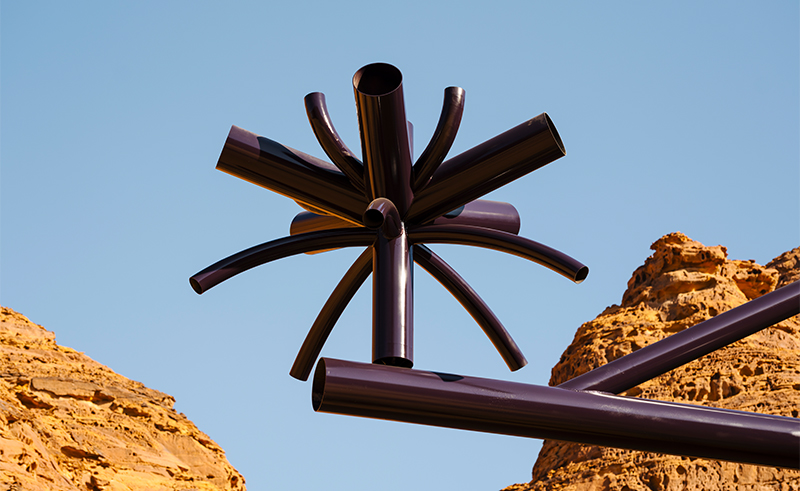
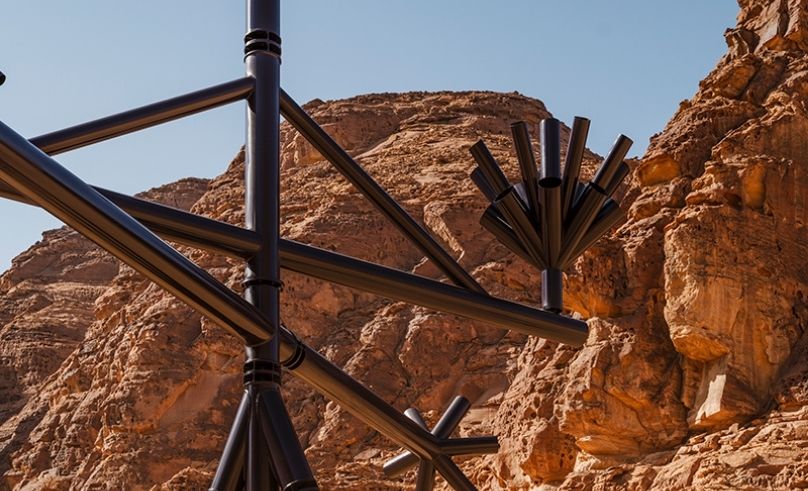
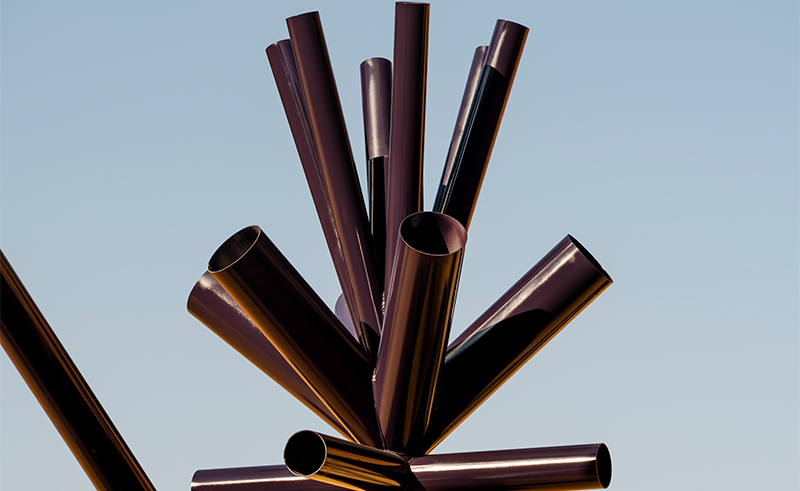
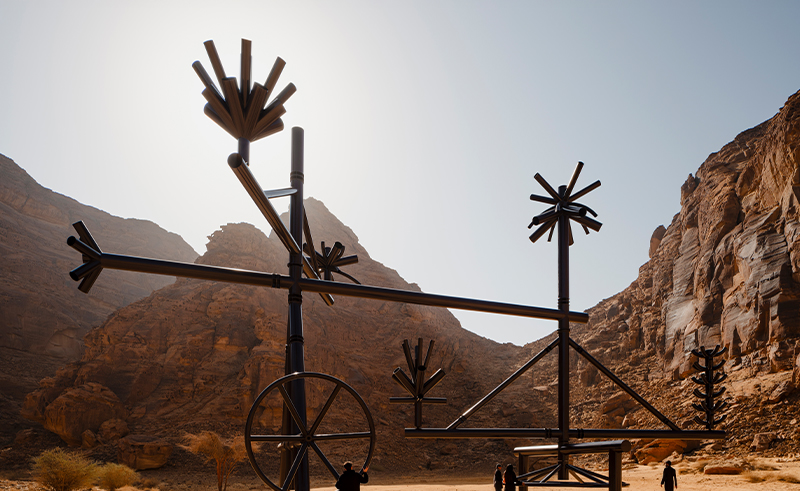
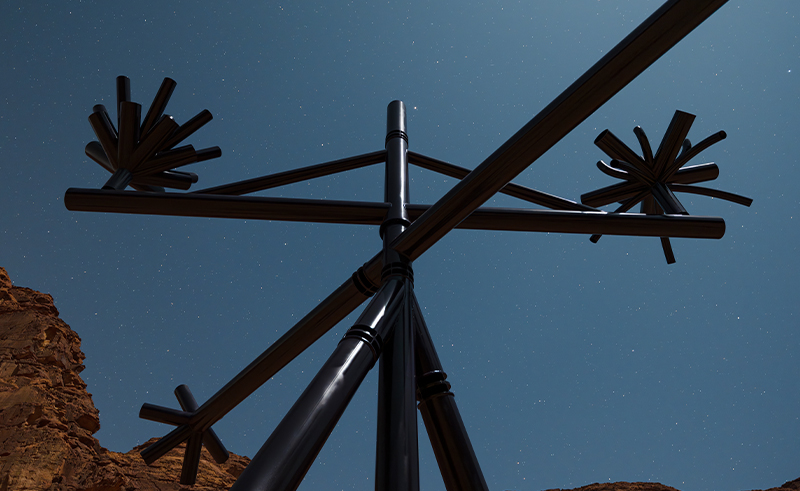
From these observations emerged 'Bloom', a large-scale kinetic installation presented at Desert X AlUla in 2026. The piece responds to wind, light, and shadow, its aluminium tubes echoing the shapes of rock formations and local flora without replicating them. Movement became central to the work: subtle shifts in the sculpture interact with sunlight and airflow, creating a dialogue between stillness and motion that mirrors the desert’s rhythms. Shadows, cast across the sand, layer the landscape and sculpture together, emphasising the perceptual experience of the site.
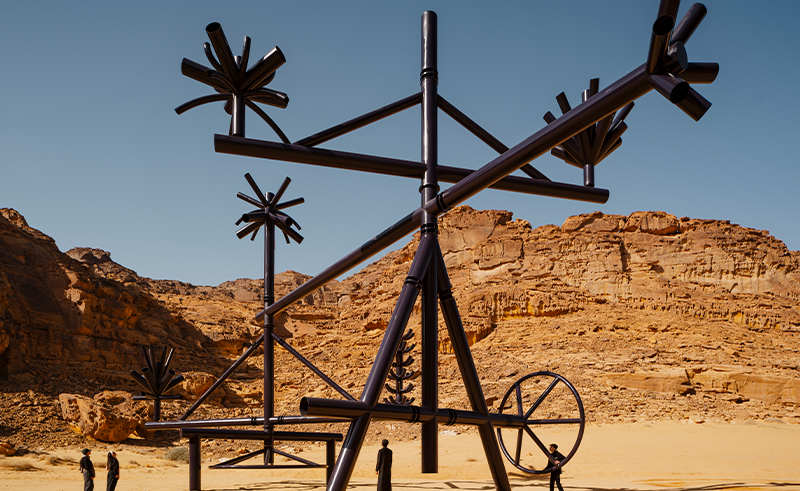
The AlUla project demonstrates the studio’s characteristic openness to adaptation. Batool Alshaikh reflects on the residency: “Being in AlUla required us to pay attention in a way we hadn’t before. The landscape dictates movement, light, and scale, and 'Bloom' emerged from responding to that, rather than imposing a design,” Vennerstrøm adds, “If there is a clear expectation for what we should produce, we always look for a way around it. In AlUla, that led us to kinetic sculpture, a form that challenged us and allowed the work to emerge in a way that was new to us.”
The principles evident in AlUla also extend to Bahraini-Danish’s other work. A modular carved wood piece commissioned by Bottega Veneta was realised with local craftsmen in Bahrain, using traditional techniques in a contemporary configuration. “Working with local craftspeople taught us that the material itself often suggests its own logic," Almubarak notes. "Understanding and listening to it is just as important as designing.” Operating between Bahrain and Denmark, the studio continues to navigate multiple disciplines, carrying the lessons of each context into architecture, furniture and art.
- Previous Article A Sacred Stone Escape Rises in Egypt’s Sinai Mountains
- Next Article May Elghandour's Love Story With Light, Colour & Glass