

Dubai-Based Studio MEAN* Breaks Hierarchies in Design
MEAN* turns observation and material experimentation into bold, boundary-crossing designs for spaces and objects.

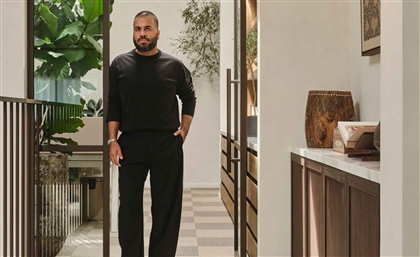
Architecture, for Palestinian designer Riyad Joucka, begins with attention. Attention to how a ceiling carries weight. How clay holds colour. How a room shapes behaviour. These observations form the basis of Middle East Architecture Network (MEAN*), the Dubai-based practice he founded nearly a decade ago as a collaborative platform connecting architects, engineers, and designers across disciplines.
MEAN* was established to expand authorship. Structured as a non-hierarchical network, the studio invites contributors from across disciplines into the design process. This framework allows projects to develop through exchange rather than sequence. “The idea is that it’s a very non-hierarchical, flat organisation where people from different disciplines could weigh in on the design process and enhance it as we go,” Joucka explains.
This approach emerged from Joucka’s experience working across major cities around the globe, including Amman, Ottowa, London, Hong Kong and New York. Moving between these environments revealed a shared architectural language shaped by repetition. Towers of steel and glass appeared across climates with limited variation. Architecture became detached from the conditions that once defined it.
In response, MEAN*’s work centres on re-establishing the relationship between architecture and place. Projects draw from material traditions, construction techniques, and environmental conditions specific to their context. Digital tools form part of this process, yet they are positioned as instruments within a broader architectural framework. “We wanted to create our own architectural language that is tied to the locale of the place that we work in, to draw unique characteristics of the built environment and integrate that within the story of the project,” Joucka says
Research underpins this methodology. Each project is approached as a distinct condition rather than part of a continuous stylistic trajectory. “We look at the project as an individual moment, then we try to cater to that project specifically as much as possible.”
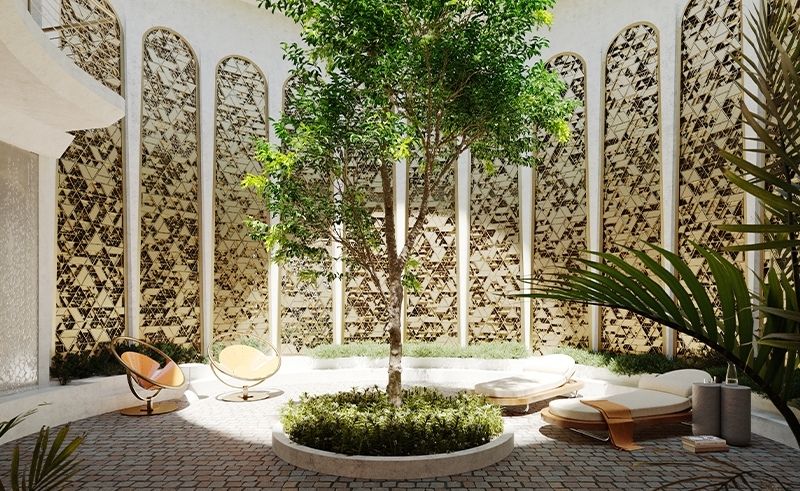
This thinking guided the studio’s recent work on their latest project, Repeat Members Club, a wellness club in Barcelona. Located within a 19th-century structure, the project retained its Catalan brick vaults, documenting their geometry and integrating lighting systems that followed their curvature. Clay surfaces and ceramic elements were introduced in response to local craft traditions, allowing the building’s existing structure and material language to guide the architectural response.
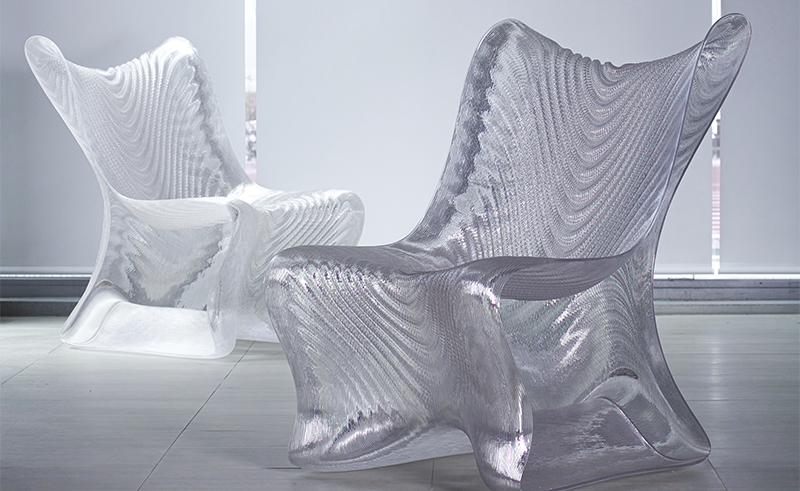
Material investigation also informs the studio’s product design work, including Mawj, a 3D-printed armchair whose aquamarine surface translates the motion of the Arabian Sea into structure. Named after the Arabic word for 'wave', the chair is robotically fabricated as a continuous six-millimetre-thick polymer shell, with proportions referencing the Eames Lounge Chair. Its algorithmically generated geometry integrates structure, texture, and ergonomics, demonstrating how computation can translate environmental observation into physical form.
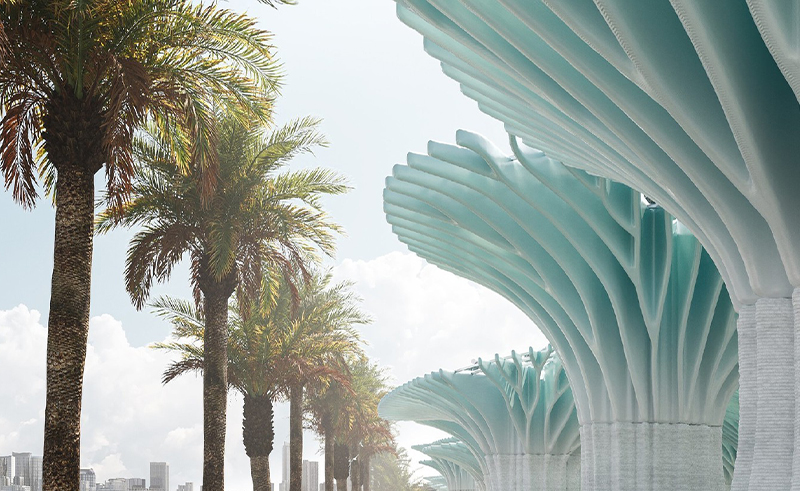
This relationship between computation, material, and environment extends into Lamella, a shading structure developed for NEOM. Composed of a 3D-printed concrete trunk, polymer canopy, and steel frame, the project draws from crown shyness, where tree canopies separate to admit light. Additive manufacturing enables precise material placement and modular assembly, aligning advanced fabrication with natural systems.
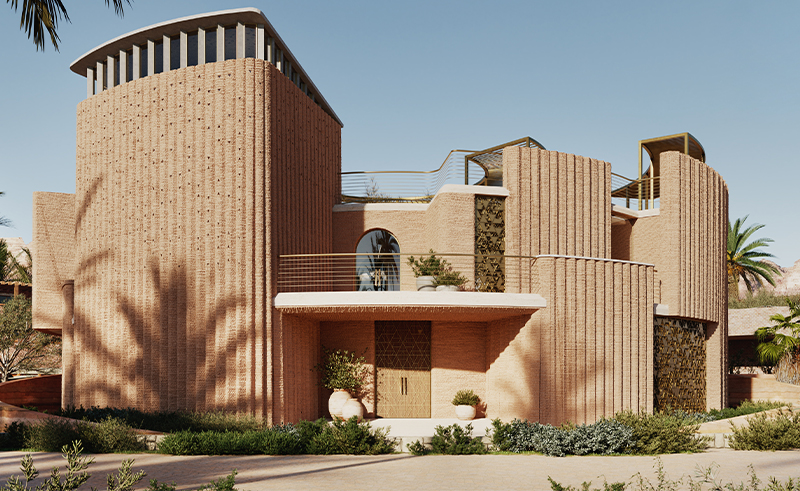
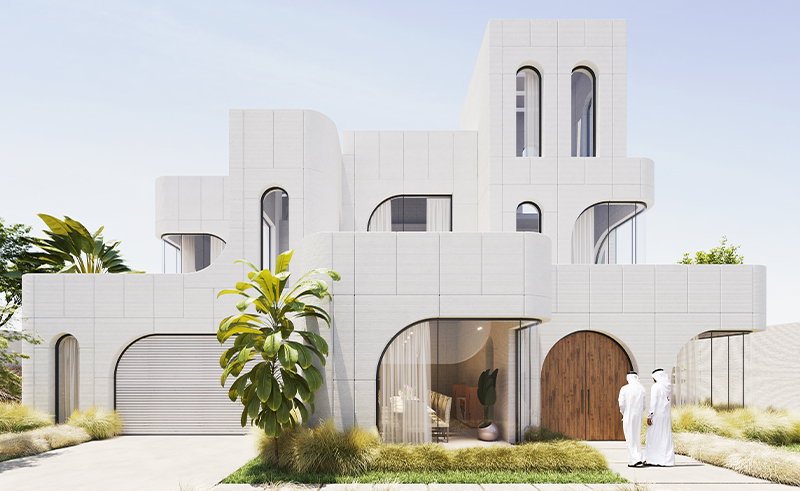
In Dubai, these ideas scale into architecture through the Members Clubhouse and Fashion Incubator, a modular complex organised as interconnected volumes. Precast half-arch, column, and solid modules form retail, hospitality, and workspace functions arranged around a central pool and linked by an elevated bridge. The modular system allows the architecture to expand and adapt while maintaining a clear structural and spatial identity.
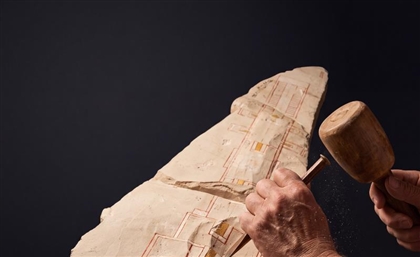
For Joucka, digital tools operate within a longer continuum of architectural making. Their value lies in how they support architectural intent rather than define it. “I’m interested in computation as a tool, whether you used very advanced coding or a hammer and chisel, it’s irrelevant. What matters is what you make with it.”
Joucka’s teaching and research at Zayed University reinforce this perspective. Students often focus on software and technical systems, yet he directs attention towards architectural fundamentals. “The basics are important, If you learn the basics well, then you are on your way to become a better designer.”
- Previous Article Egyptian Designer Mohamed Ali Curates a Home of Style and Influence
- Next Article The Ancestral Resilience of Omar El Farouk’s Fayoum Home