

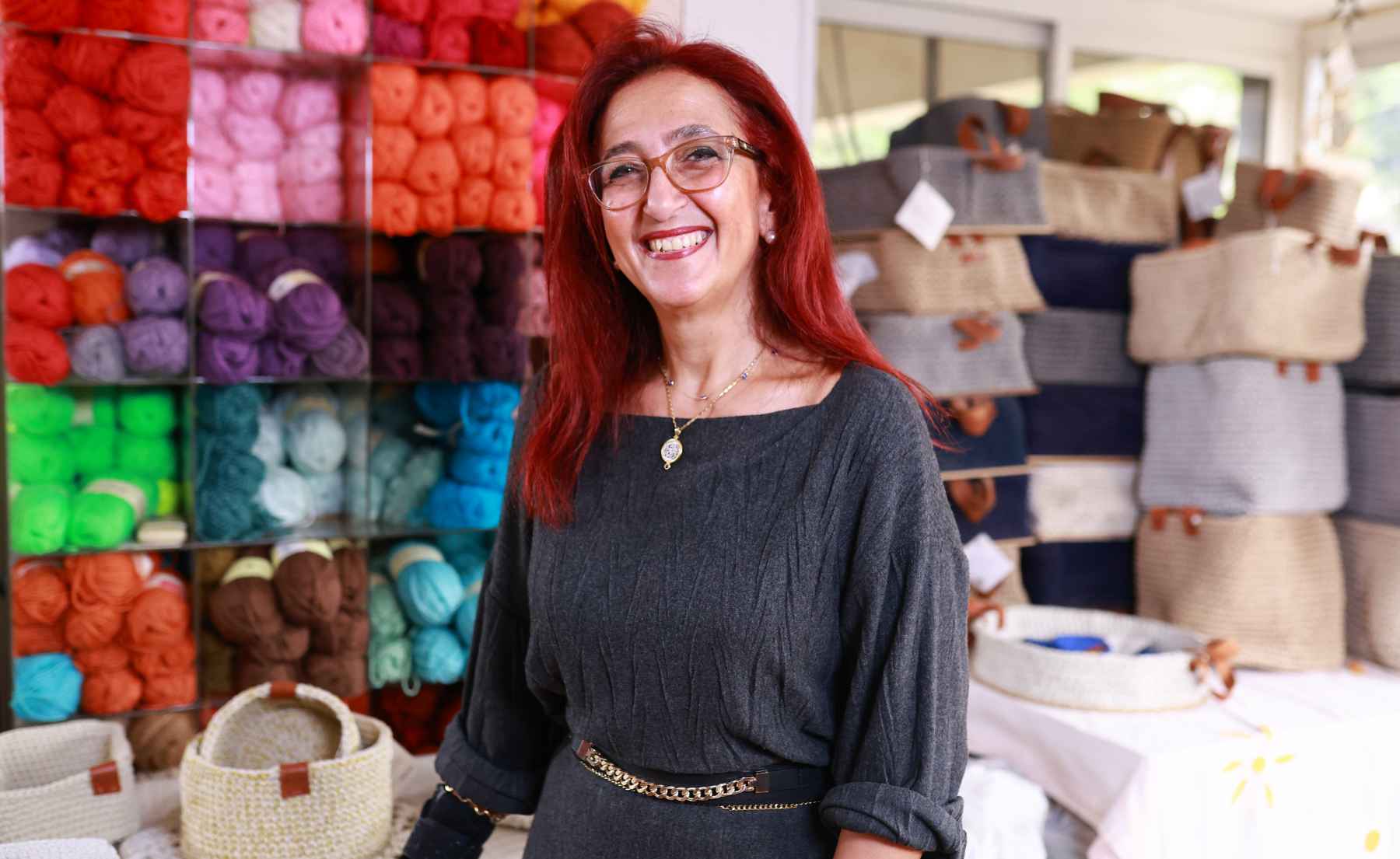
Hala Ashour Stitches Baskets, Swings and Women’s Work in Egypt
From crochet, Hala Ashour creates unexpected products: baskets, swings and furniture, empowering women along the way.

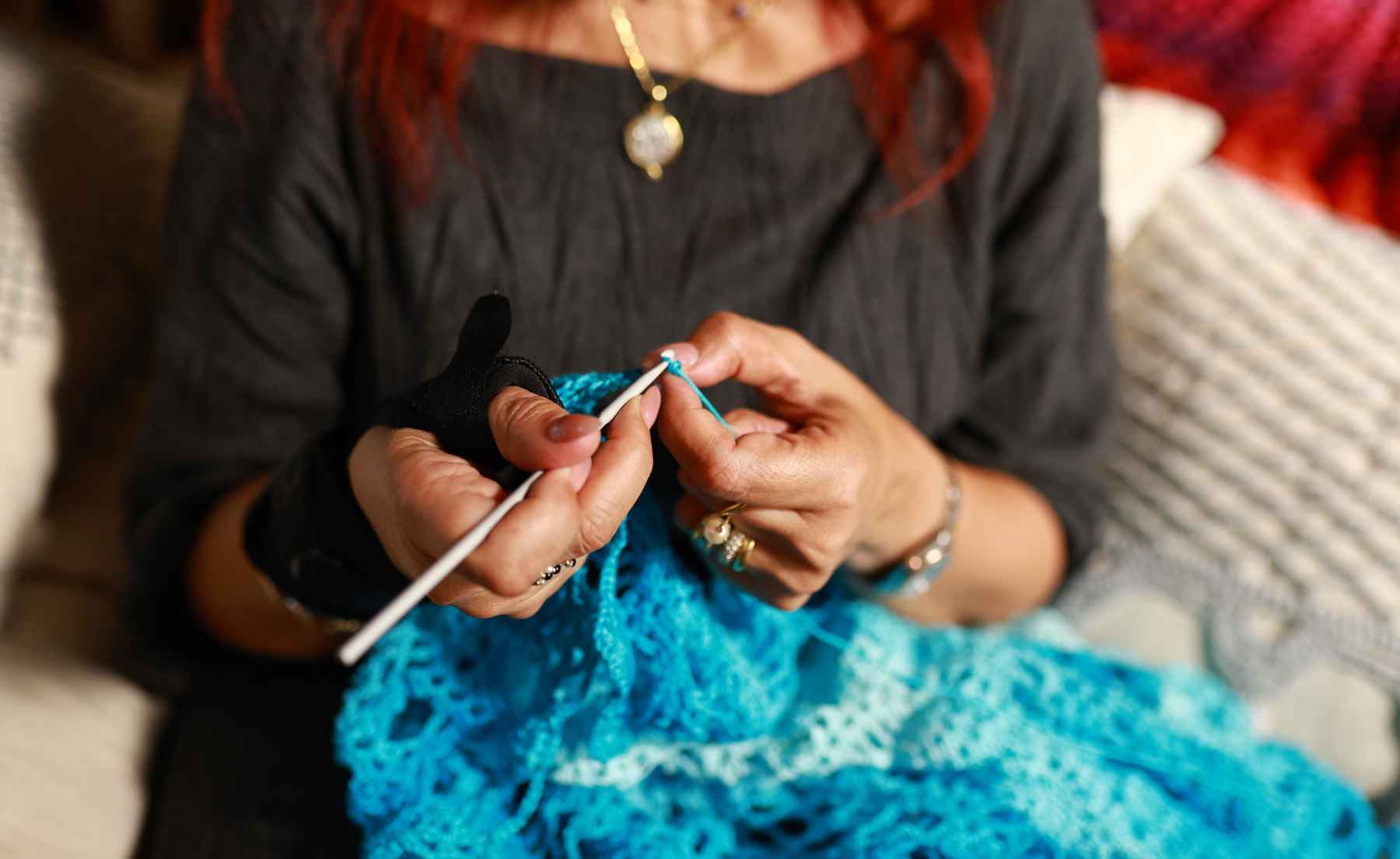
In a home economics classroom, a little girl sat listening closely to her teacher’s instructions, undistracted by the soft scrape of chairs or the low murmur around her. On her desk, small tangled skeins of yarn gathered as her hands moved, tying and untying, trying, pausing, beginning again.
Somewhere between one stitch and the next, Hala Ashour began to sense the quiet possibilities in it—the way a simple thread could take form, could become something. When the bell rang and the class moved on, she didn’t.
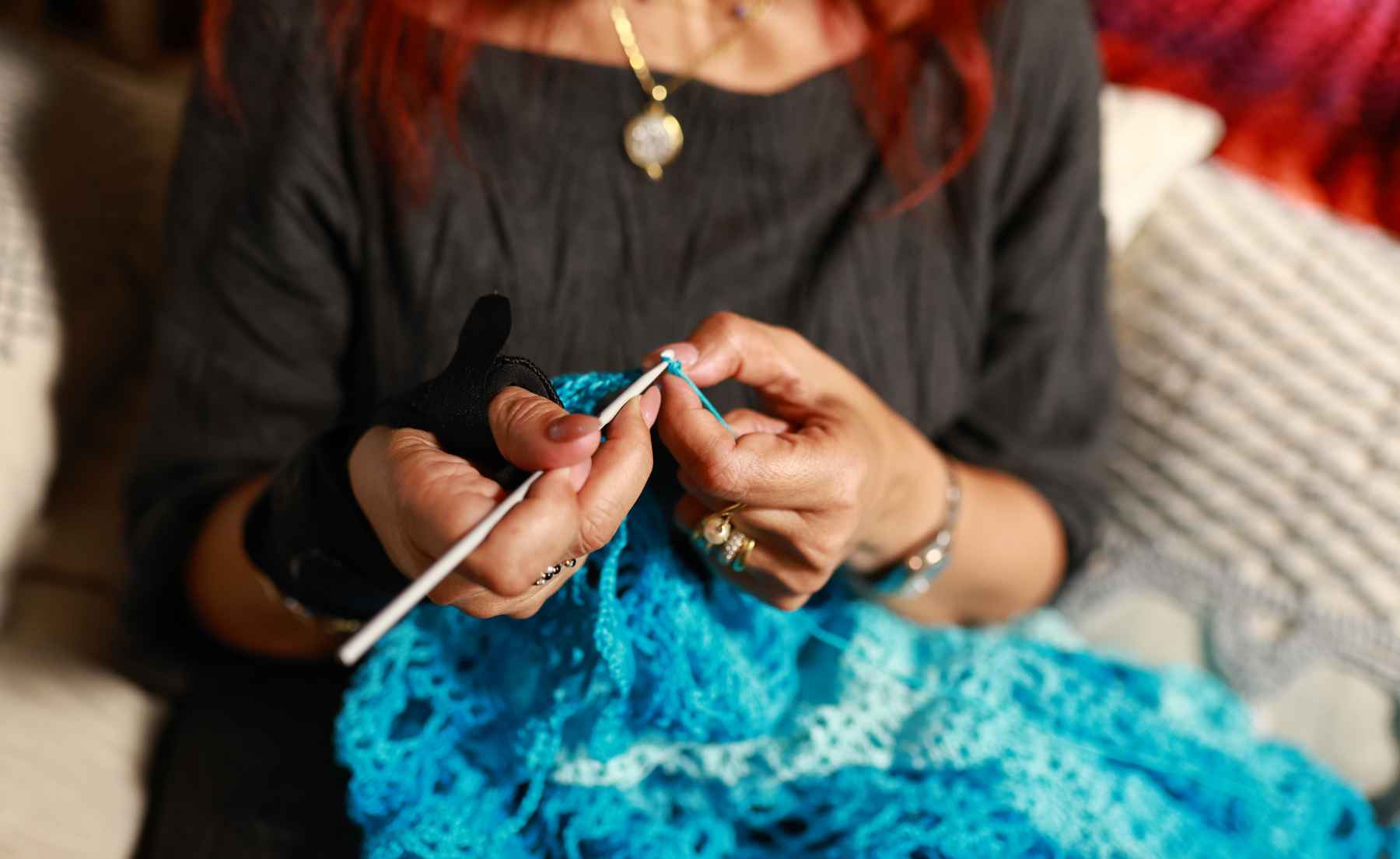
“I fell in love with it,” she says. “All of it. Crochet, knitting, canvas embroidery.”
That relationship with making developed gradually. She began by creating pieces for family members, first for aunts and upcoming brides, then for children. By the time she had a home of her own, the process had already settled into her daily life; it was not structured as a business, but it was consistent enough to become one. Requests began to move through her immediate circle, and what she made for her little girl naturally extended to others.
Material access, however, was a constraint that shaped how far that work could go. “Yarn was very scarce in Egypt,” she explains. “So whenever I travelled, I would buy yarn and catalogues.” Travelling exposed her to new materials, textures, and techniques, and her attachment to yarn and crochet gave those journeys a quiet direction. What she encountered along the way fed back into her work, expanding what she could make and how often she returned to it.
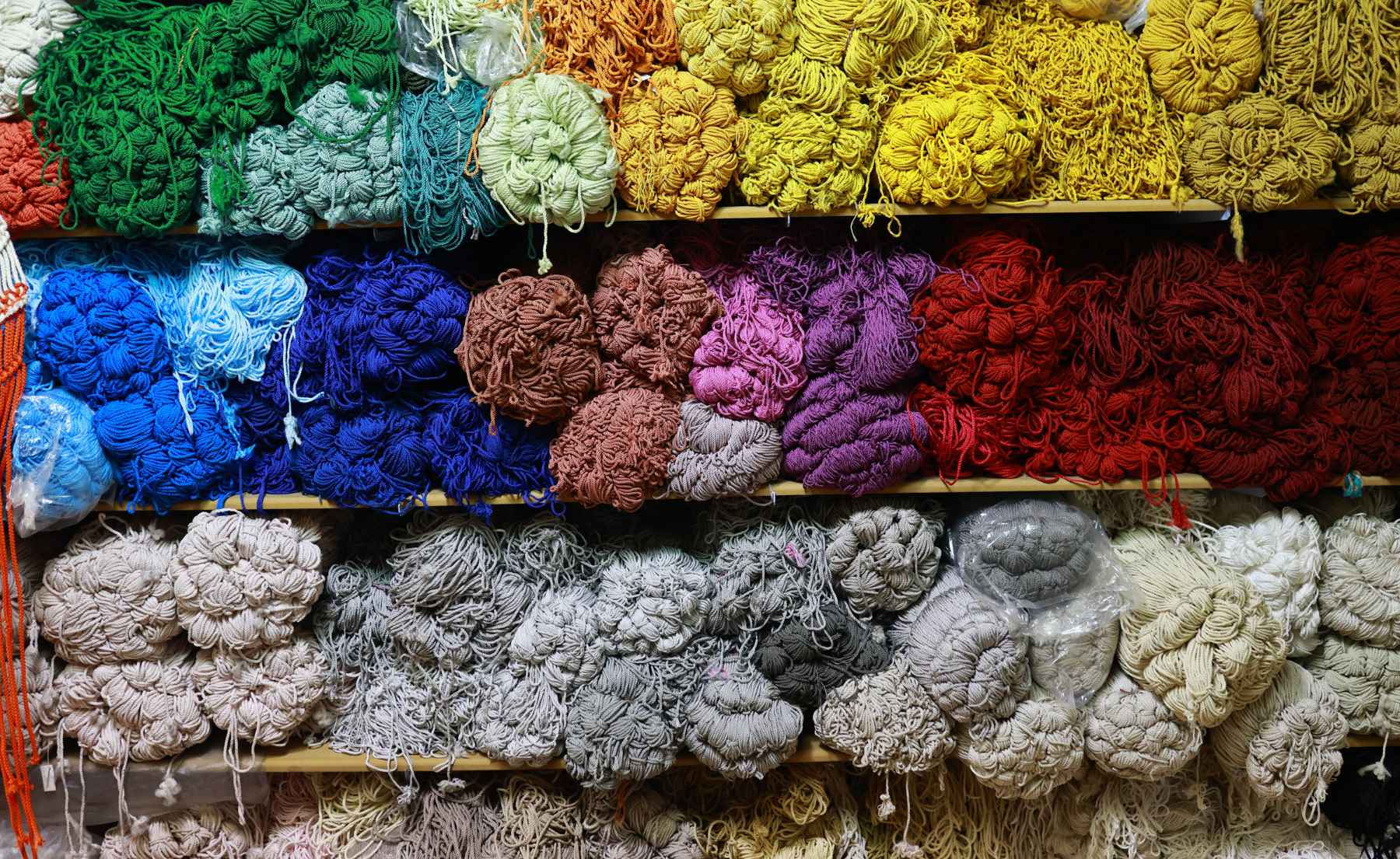
A turning point came through an opportunity her husband introduced during one of those trips, after he came across a yarn shop in France. “He told me, ‘I have a surprise for you. I’ve got you an appointment with a yarn factory in France,’” she tells SceneHome. With that shift came a clearer approach to how the work could grow. “The most important thing is to teach people,” she says. “Because the people you teach become your clients.” The idea extended beyond selling products into building familiarity with the material itself.
At the same time, her move into product design came from a direct and practical gap. While moving between homes, she was looking for small bins that could be placed across different rooms. What she found in the market did not align with how she wanted to use them. “It was either very fancy and very expensive,” she says. “You would buy one for the salon, not ten for the whole house.” She made her own version using crochet. “I said, ‘Why not make a bin out of crochet?’” The decision introduced a different application of the material, shifting it from decorative craft into something functional and repeatable. The bins were lightweight, adaptable, and suited to everyday use. They sold in large quantities and quickly became the foundation of her work. “For a period, I was selling nothing but bins,” she adds, laughing. “Until I became known as ‘Hala, the bin lady.’”
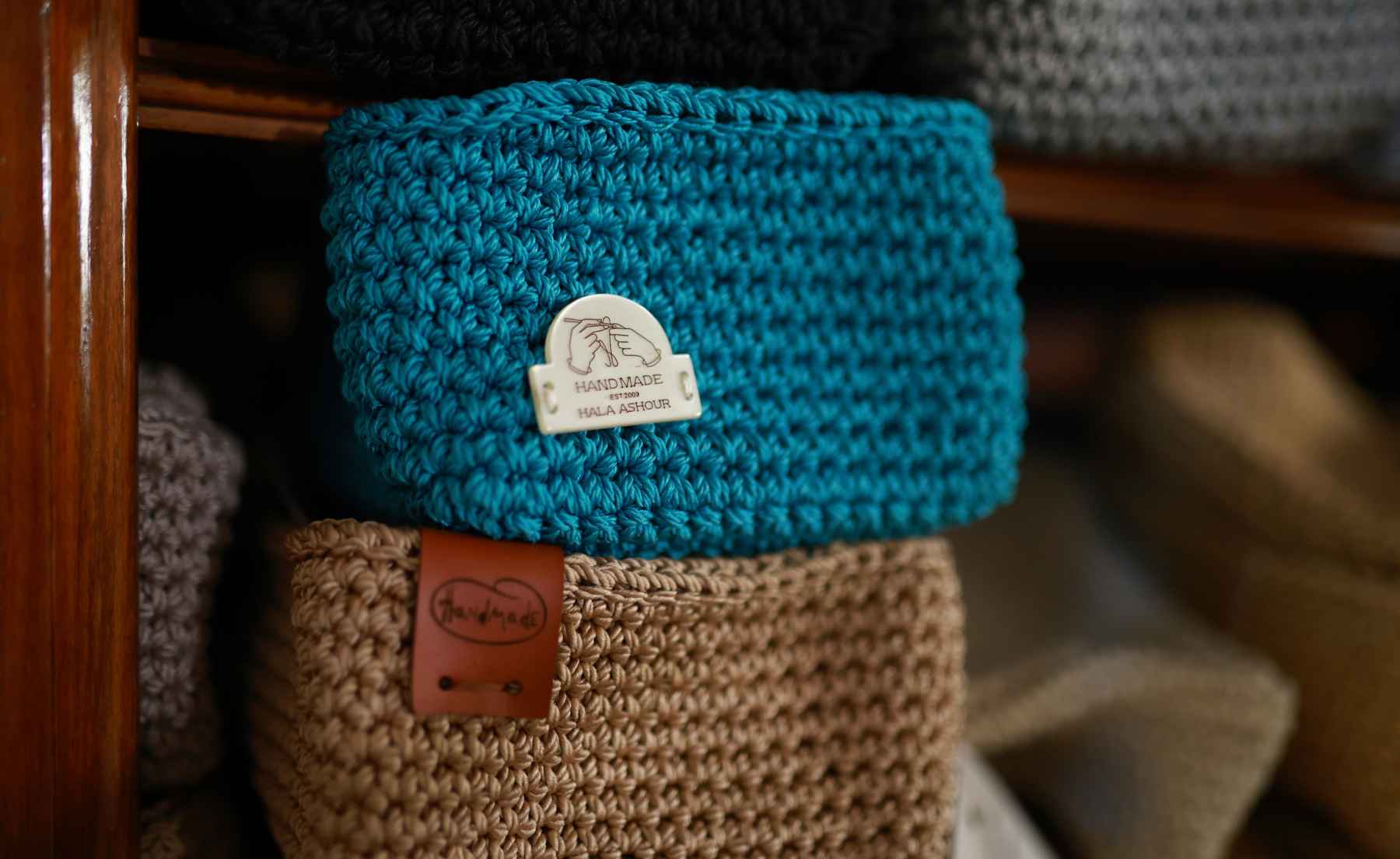
From there, the work moved into a wider system of basketry. Instead of focusing on a single object, she developed a range of storage pieces designed for different uses and spaces: bathroom storage, living room pieces, kitchen baskets, divided and undivided formats, each responding to a specific function. As more products were introduced, imitation became inevitable. “With every model I released, shortly after, people were copying,” she says. But instead of getting frustrated, she adjusted her approach.
She began combining materials and involving other craftspeople in the process. Iron structures were introduced into certain pieces, adding both strength and complexity. “When you combine two materials or involve someone else in the process, it becomes harder to imitate,” she explains. This method allowed the work to evolve without relying on constant reinvention. It also opened the door to new product types.
A swing, for example, was inspired by a model she encountered in Cuba, where seating is often placed at the threshold of the home rather than within it. She brought one back, studied how it was made, and developed her own version, adjusting the structure and materials to fit her system.
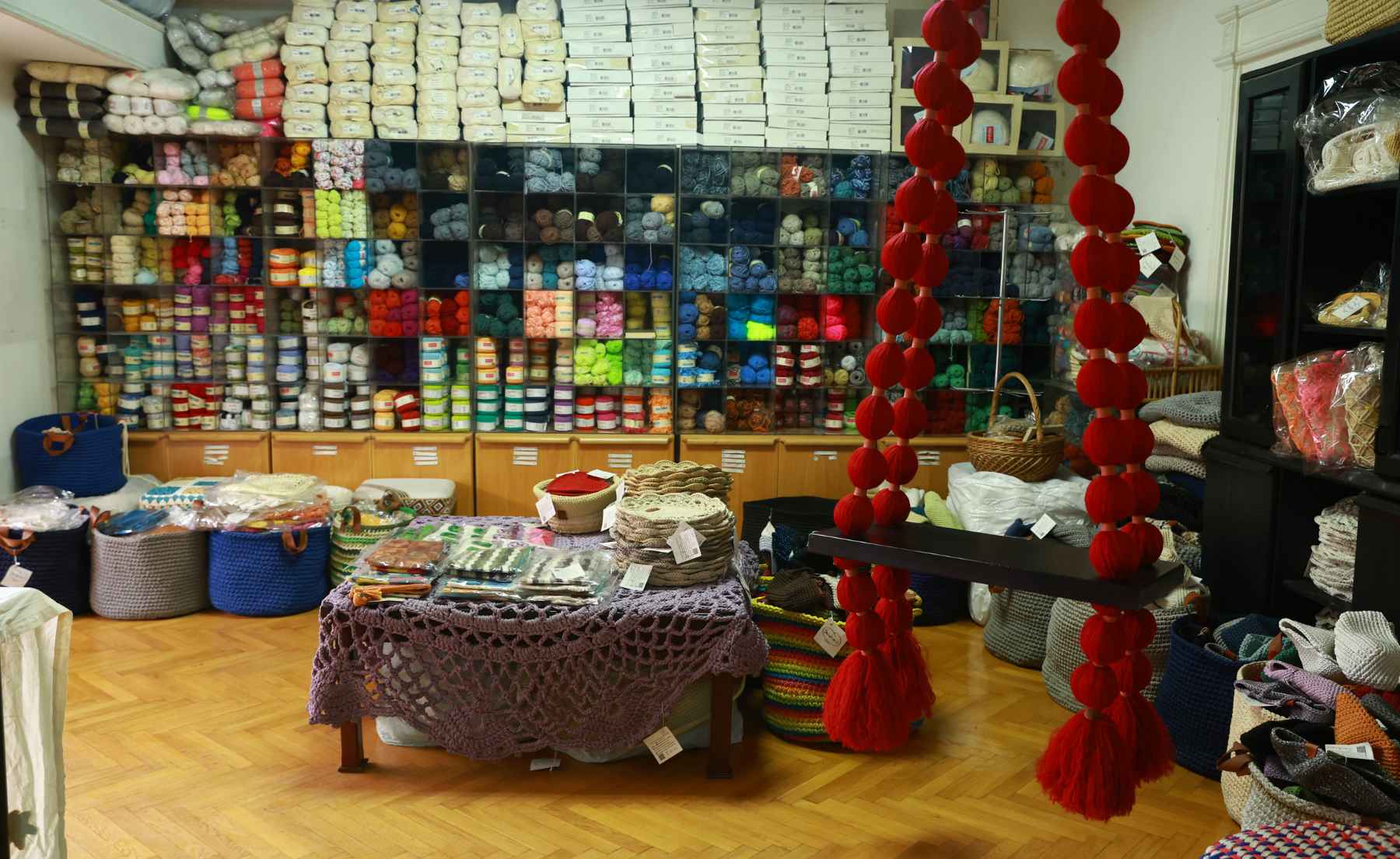
As the work gained visibility, demand shifted in a way she had not anticipated. After appearing on television, the increase was not limited to customers. It came from women who wanted to be part of the production process. “Every day, no fewer than 30 or 40 women came wanting to work,” she says. “At one point, there were around 100 women here. The place could not handle all these people.” Expanding a single space was not a viable solution, so she restructured how the work was distributed. Orders began to move through a network rather than a central workshop. “If I ask for 100 pieces, one woman takes the order,” she explains. “But she does not do it alone. She works with others.”
The model creates both output and opportunity, but it also requires consistency to function effectively. For Ashour, that consistency comes down to quality. In a market where replication is common, execution becomes the defining factor. “I do not mind being copied if it is done well,” she says. “But if you copy, do it properly.”
At its core, her work carries a stronger intent: placing making in the hands of more women, so that craft becomes not just production, but a form of livelihood, independence, and ownership.
She explains, “I want each governorate to produce what sells in its own area, so that every place builds its own cycle of making, and small, self-sustaining entities emerge from it.”
- Previous Article Moxy Lazoghly Lets You Check Into Downtown Cairo’s Energy
- Next Article The Ancestral Resilience of Omar El Farouk’s Fayoum Home