

Palestinian Designer Lameice Abu Aker Unveils Latest Milan Exhibition
Lameice Abu Aker’s Milan exhibition captures the quiet moment before dinner, where objects, light and memory meet.

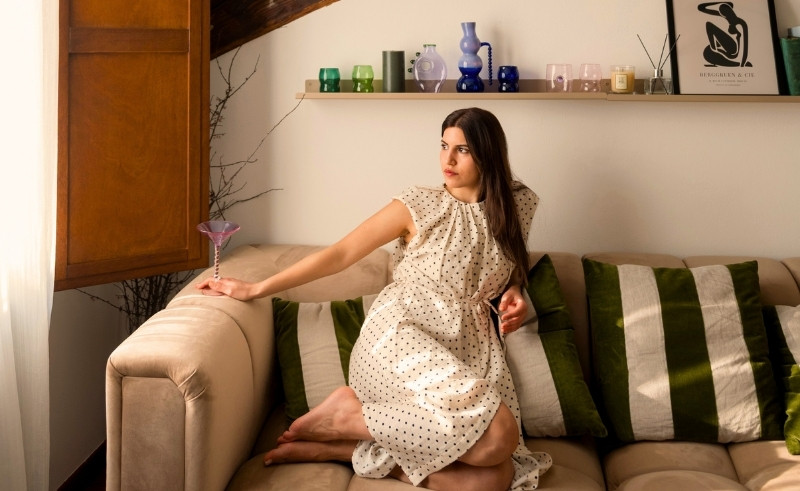
As kids, we moved through our homes knowing certain areas were off-limits. The living room vitrine was usually one of them. Glassware lined up neatly behind doors, visible but out of reach, brought out only for specific moments. You could look, but you couldn’t touch.
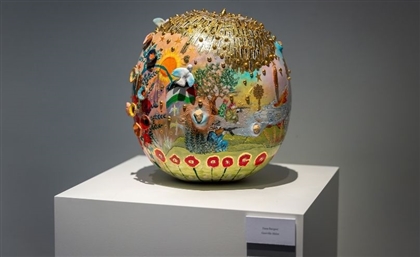
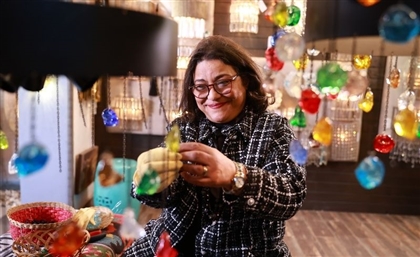
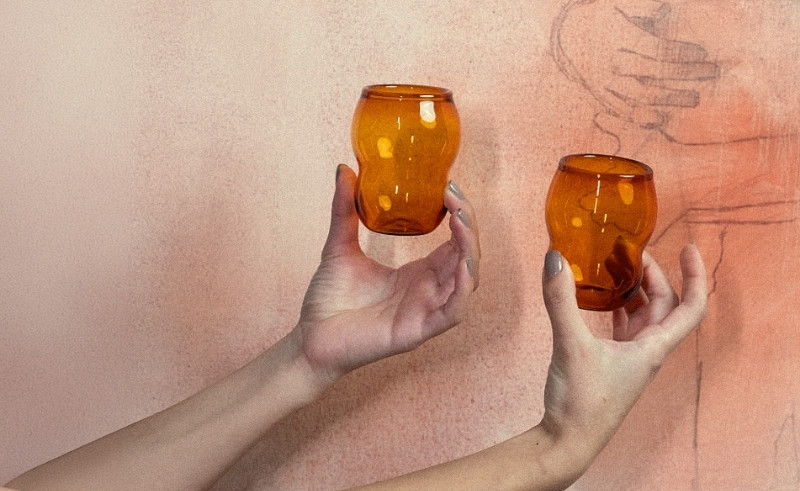
Palestinian designer Lameice Abu Aker builds on that memory, but shifts it slightly. Her blown glass pieces carry that same sense of care, but they’re made to be handled, used and lived with. They don’t stay behind glass.
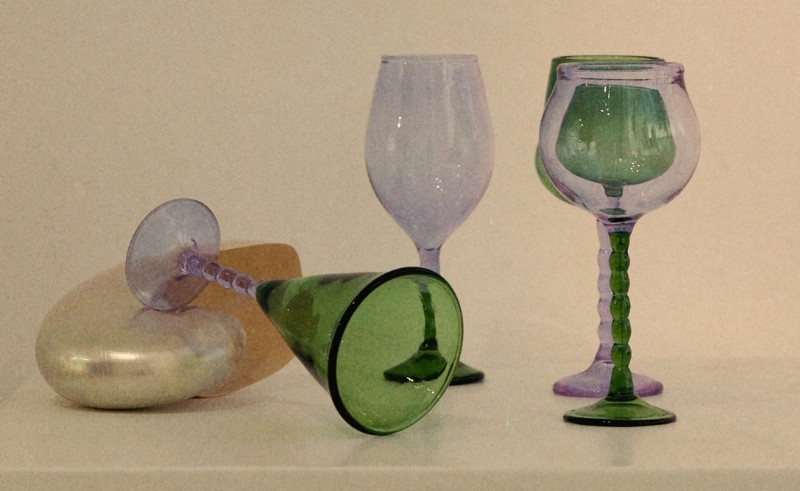
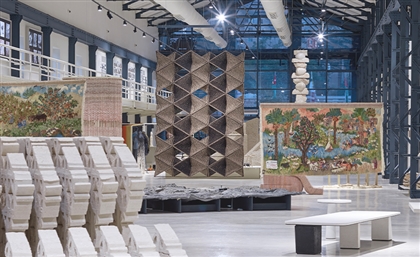
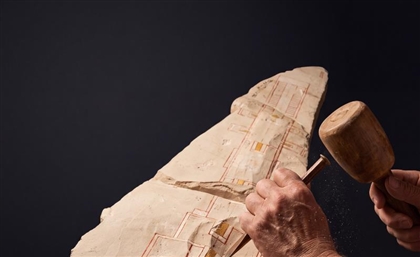
That shift becomes clearer in her latest exhibition titled ‘Apparecchiare’, meaning “to set a table”, in Milan, shown in the Brera art district. The presentation sits within a wider programme of experimental and collaborative work that places objects in dialogue with the space rather than isolating them. Originally from Jerusalem, and now based in Milan, Abu Aker’s practice already moves between contexts. The exhibition reflects that layered way of working, with the space itself built around bringing different practices into one room and allowing them to sit alongside each other without hierarchy.
The exhibition holds on to a very specific feeling, the moment just before dinner in a Mediterranean home, when the sun sits low, the light turns warm, and nothing has begun yet - but everything already feels set in motion.
Abu Aker's way into design started with an interest in how spaces are experienced. “I was always interested in architecture, in patterns, in the sensorial aspect of life,” she says. Growing up in Jerusalem meant being surrounded by strong visual and sensory cues, from the smell of bakeries to the atmosphere of mosques and churches.
She did not begin her career by designing glass. After studying interior design and specialising in furniture in Milan, Abu Aker began working with artisans in Palestine, where she came across glassblowing in a village called Jaba, between Jerusalem and Ramallah. The process immediately drew her in. “It’s like a dance, even people standing in the room get curious. Everyone is mesmerised,” she says.
What began as an introduction developed into an ongoing collaboration. All of her pieces are still produced in that same village, working with artisans who have practiced the craft for generations. Alongside that, there is a clear awareness of the context around it. “It’s continuously being endangered, not only by the political situation but also by the way the world is moving towards mass production,” Abu Aker explains.
The process itself is structured but open-ended. Ideas begin as sketches or 3D models in Milan, then move into production in Palestine, where they are tested and reworked. “The next stage is to present it to the artisans, who say, no, we cannot make this, then we try anyway,” she says. What follows is a period of experimentation, where forms are adjusted through trial and error until something holds. “We take what we love from it.”
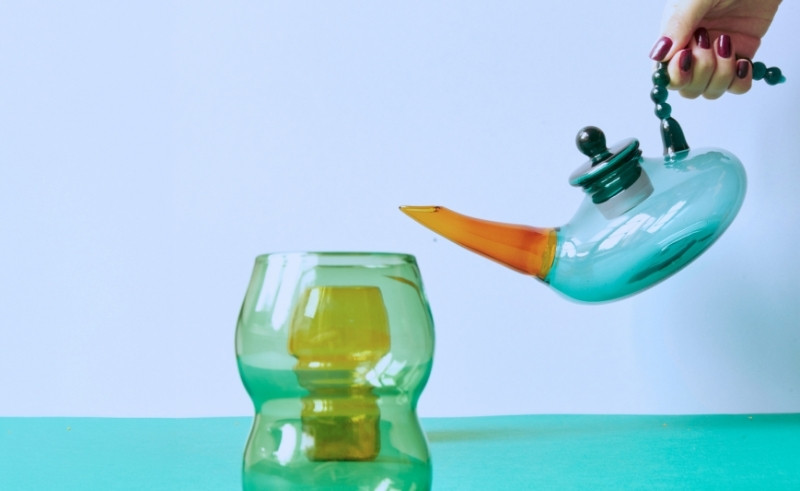
That negotiation between idea and making is visible in the final pieces. The forms feel balanced but not rigid, with small irregularities that give them character. “I like things with personality, a bit of awkwardness,” she says. There is always a sense of control, but it never feels absolute.
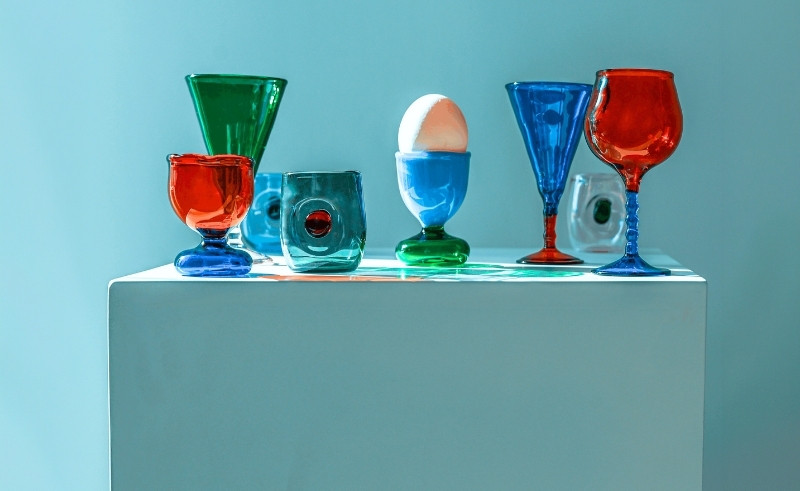
Colour works alongside form in shaping that balance. Some pieces remain more subdued, while others introduce pastel tones and opaque finishes. “Opaque glass is like a different world. It’s playful,” Abu Aker says. It shifts how the material is read, making it feel less delicate and more grounded within a space.
In ‘Apparecchiare’, these ideas are translated into a spatial installation that feels intentionally open, where the exhibition does not follow a strict narrative but allows the works to sit within the architecture of the space and respond to it. Pieces are placed in a way that encourages movement, where colour, reflection, and form shift depending on where you stand, mirroring her wider approach where meaning is not fixed in the object alone but formed through encounter.
This approach also comes through clearly in her Teta collection. The starting point is a familiar domestic scene. “My grandmother had this cabinet. You’re not allowed to open the door,” she says. The vitrine becomes a reference point, tied to family gatherings and small rituals. The collection imagines what might have been placed inside it, drawing from memory without replicating it directly. “It’s very nostalgic, the smell of tea with sage.”
“I try to introduce a feeling into a room through the pieces,” Abu Aker says. In this context, that intention comes through quietly, with objects that don’t demand attention but hold it over time.
- Previous Article Khater Curtains Shapes How Interiors Are Experienced Through Fabric
- Next Article The Ancestral Resilience of Omar El Farouk’s Fayoum Home