

Mustafa Khamash Designs a Moroccan Villa Inspired by Traditional Riads
Dar Mira in Rabat arranges light, materials and courtyards to shape daily life with craft and presence.

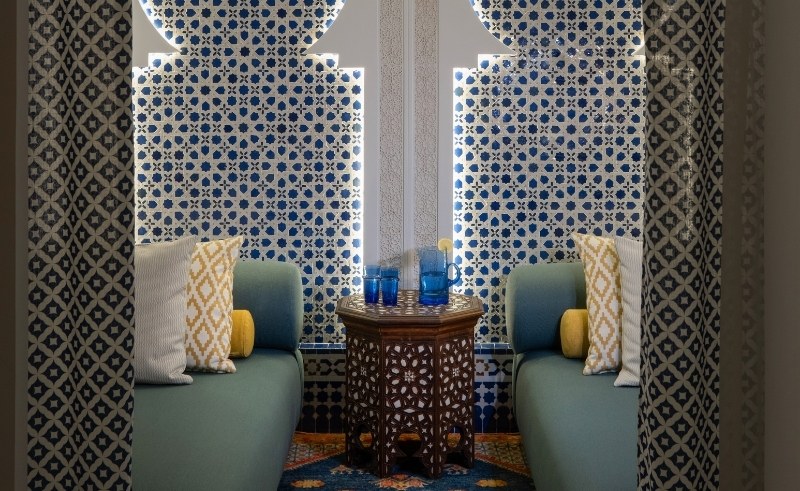
Sunlight falls across hand-cut Zellige tiles at Dar Mira in Rabat, a villa designed by Dubai- and Riyadh-based Architect Mustafa Khamash of Kart Group that draws from centuries of Moroccan tradition while feeling contemporary. “The family’s love for Moorish culture was profound, yet they did not want nostalgia. They wanted continuity,” Khamash says. The design began with simple volumes arranged around courtyards, where compressed corridors open into light-filled communal rooms, shaded walkways guide movement, and the house is positioned to catch breezes through the courtyards.
Material choices were selected for both practical and emotional resonance. “Every surface in this villa had to carry both environmental intelligence and cultural memory,” Khamash explains. Limestone regulates interior temperature, tadelakt plaster and walnut joinery add texture, and Zellige tiles from Fez bring subtle movement. Polished marble in the kitchen balances the warmth of timber, while reclaimed Moroccan doors mark thresholds that connect past and present, and brass lanterns were left to develop a natural patina over time.
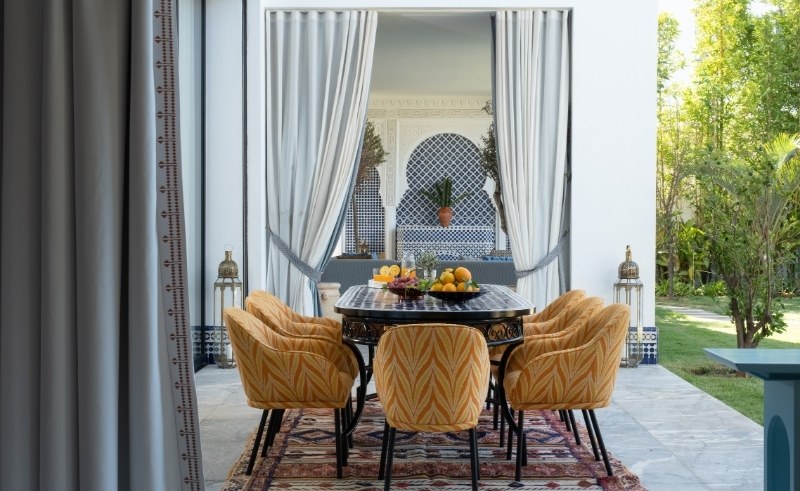
Working with handcrafted materials required patience and collaboration. “Zellige tiles vary in thickness; reclaimed wooden doors carry scars of time. Integrating these elements into a geometrically disciplined framework required patience and collaboration," Khamash notes. Bold colours are placed in shaded corners so they settle into the spaces without overwhelming them, and courtyard proportions and window placements maximise natural ventilation.
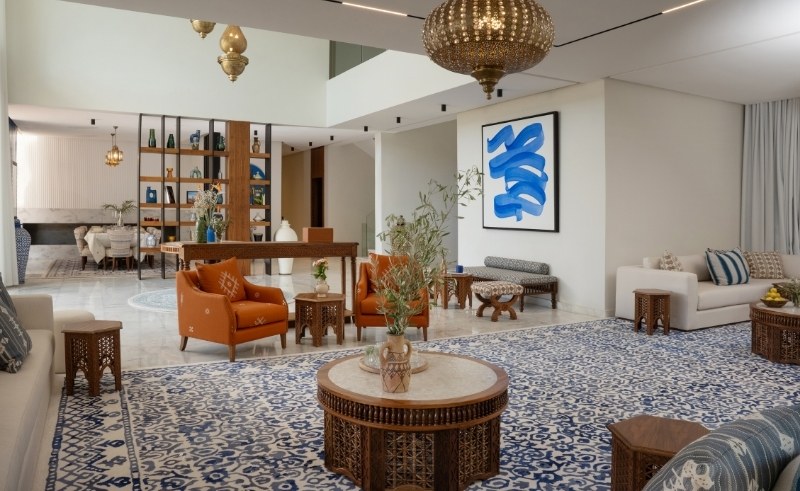
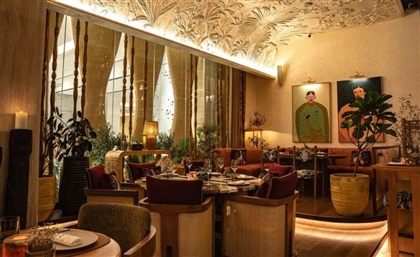
The layout is deliberate yet easy to live in, with entry-ways that open into double-height living areas, sunken seating that encourages conversation, and private rooms that remain quiet with neutral tones and soft light. “The house oscillates between grandeur and stillness. It can glow during gatherings, yet retreat into quiet sanctuary within moments,” Khamash observes, highlighting how the home accommodates both social and intimate moments.
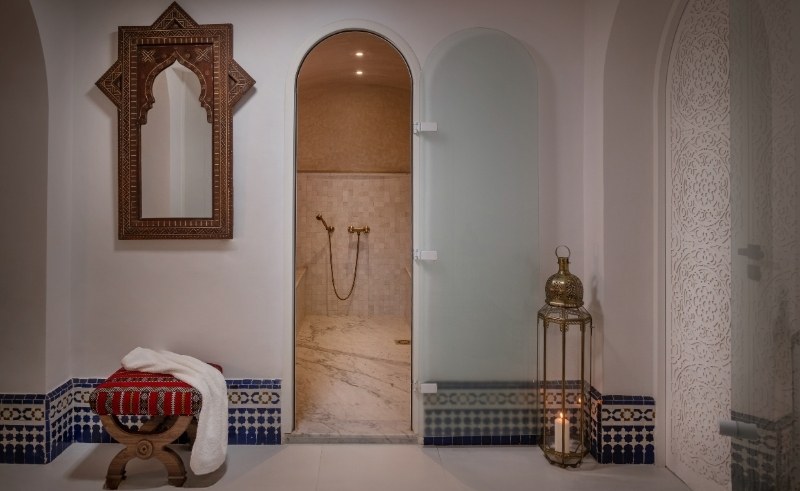
Certain details carry deeper meaning, such as the hand-applied plaster cupola in the majlis ceiling that filters light gently, and the restored Moroccan door at the majlis entrance that keeps its carved pattern within a simple limestone frame. “The juxtaposition is powerful: intricate ancestral carving set against a clean, contemporary plane. It embodies resilience of craft, of culture, of the home itself,” Khamash says.
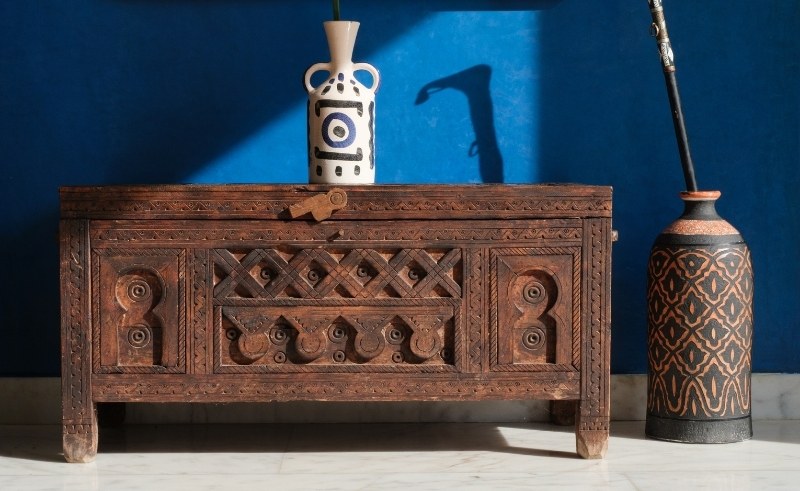
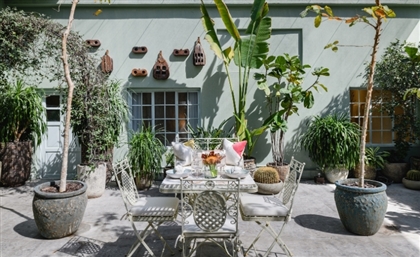
Outdoor spaces continue this rhythm, with sunken majlis, tiled terraces, and open courtyards that invite alfresco living while keeping everything calm and connected. Light, colour, and texture move naturally through the villa, creating a sense of ease and presence.