

AD: The Mosques Defining Sacred Architecture in Egypt’s New Capital
From monumental domes to ceremonial courtyards, these mosques shape the architectural language for worship in the New Capital.

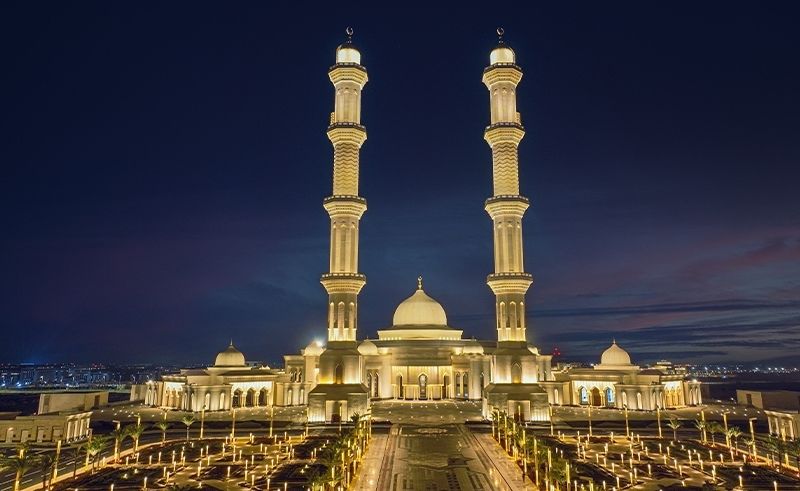
As Egypt’s New Capital continues to define itself through landmark architecture, two mosques stand out as dominant spatial and symbolic anchors: Masjid Misr and Al-Fattah Al-Aleem Mosque. Together, they frame a vision of religious space that is as much about urban presence as it is about prayer, translating scale into a language of geometry, light and spatial sequence.
Masjid Misr rises along the North Bin Zayed Axis from a 24‑metre‑high hill, positioned between the New Capital's Downtown and Nation’s Square. Its elevated setting transforms the mosque into a visual terminus for the surrounding urban fabric, with its massing designed to be read from a distance as a sequence of ascending planes, domes and vertical markers.
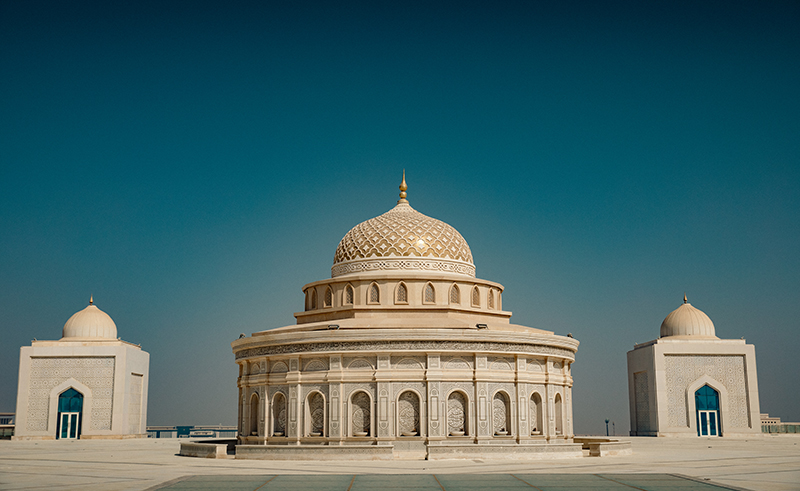
Spanning more than 400 square metres, it is considered to be one of the largest mosque complexes in the world, with open courtyards and built volumes arranged to create a gradual transition from city to sanctuary.
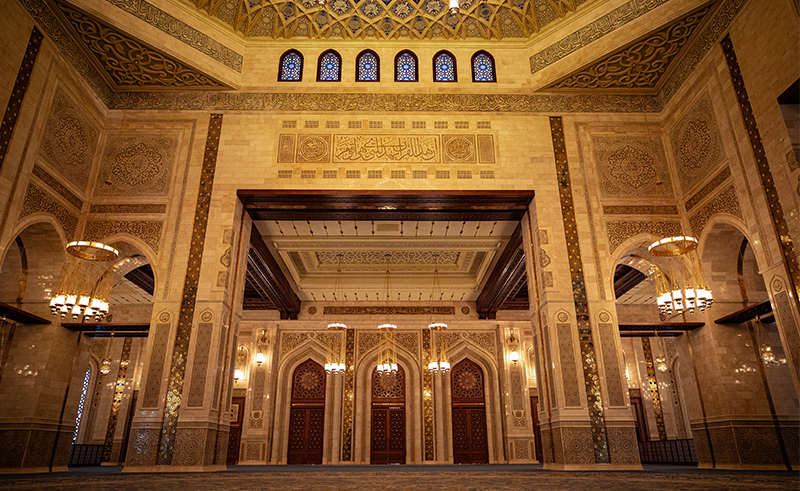
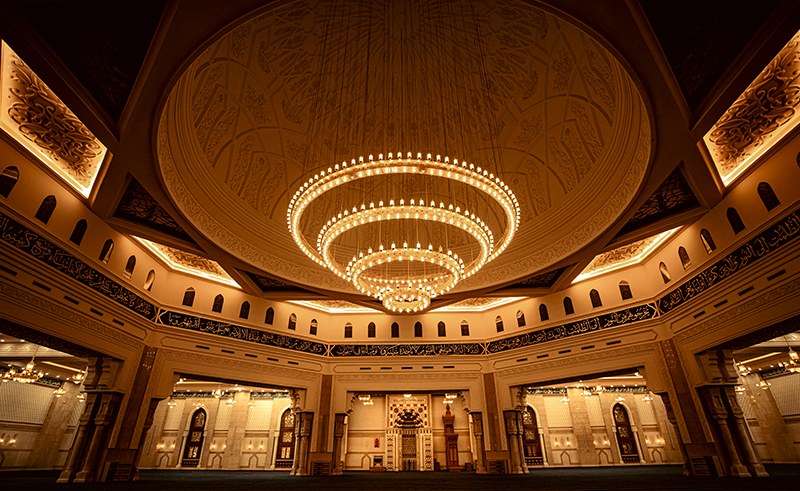
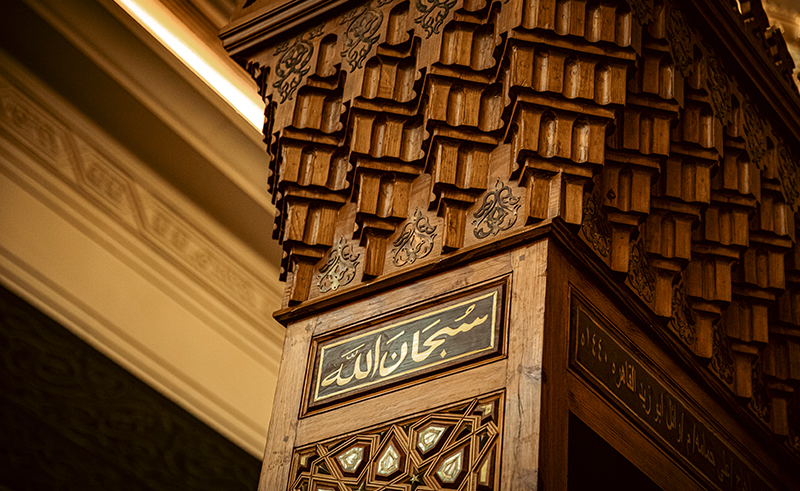
At its heart, the main prayer hall sits beneath a dominant central dome. A vast chandelier hovers over the prayer hall, its circular form mirrors the geometry of the dome and anchors the space with a soft, diffused glow. The wooden minbar introduces texture and warmth, offering a human-scale counterpoint to the surrounding expanse and grounding the experience in material presence. The transition from the open courtyards to the enclosed interior is marked by a change in light and acoustics, creating a sense of pause before entering the core of the mosque, drawing the surrounding landscape inward and upward.
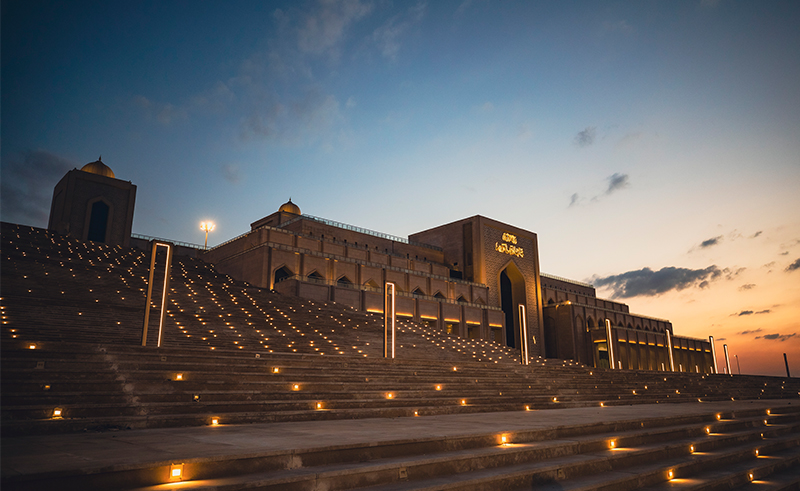
Beyond the prayer spaces, the mosque unfolds as a cultural landscape. Libraries, learning rooms, retail spaces and visitor facilities are woven into the edges of the complex, blurring the boundary between religious institution and public realm. At its centre, Dar Al-Quran forms a contemplative sequence of marble-lined rooms, where engraved verses transform recitation into a spatial experience. A museum dedicated to Egypt’s most renowned Quran reciters extends this narrative, situating the mosque within a living tradition of voice, memory and cultural heritage.
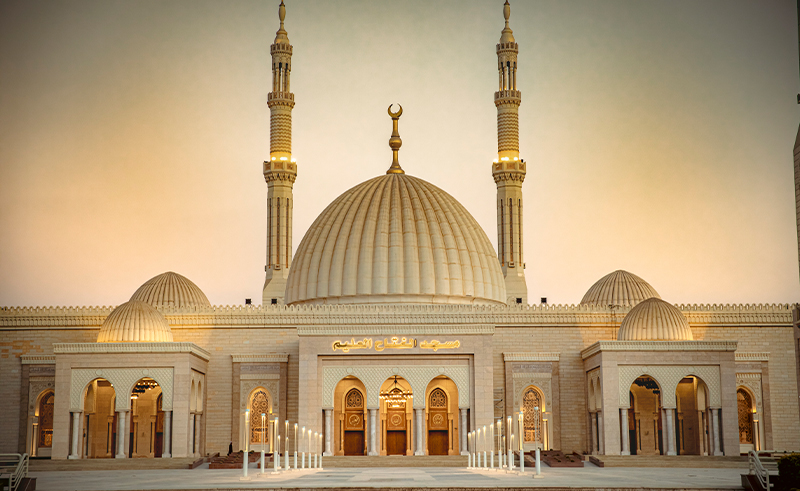
While Masjid Misr is defined by its vastness, Al-Fattah Al-Aleem Mosque is shaped by ceremonial symmetry. Located at the entrance of the New Capital along the Middle Ring Road, the mosque is presented as a gateway landmark, its composition is structured around a central courtyard and flanked by two main building volumes.
Four slender minarets rise at the edges of the site, framing the skyline and guiding the eye toward a dominant central dome that crowns the mosque’s silhouette. Around it, a series of smaller domes creates a layered roofscape, breaking down the scale of the structure into a rhythmic sequence of forms that shift with changing light and perspective.
The spatial experience in Al-Fattah Al-Aleem Mosque is defined by movement through open and enclosed zones. The main courtyard functions as a transitional plaza, guiding worshippers and visitors between the two primary buildings and into the prayer halls. A ceremonial route extends along a landscaped green axis, integrating architecture with processional landscape and reinforcing the mosque’s role in formal state and religious occasions.
Echoing Masjid Misr’s broader civic role, Al-Fattah Al-Aleem Mosque operates as more than a place of prayer through a series of multi-purpose halls designed for ceremonies, conferences and communal events. A helipad and dedicated service infrastructure reflect the building’s role as an official state mosque, balancing ceremonial presence with everyday function.
- Previous Article Riyadh is Getting the World’s Largest Urban Park
- Next Article Inside Mariam Aboud’s Home, Shaped by Mind, Motherhood, and Play