

Palestine Design Week Debuts in Ramallah Eight Years After Proposal
Director Shadi Abubaker says the idea was first proposed in 2018. Eight years later, Palestine Design Week opened across Ramallah and satellite locations under the theme Without Permission.
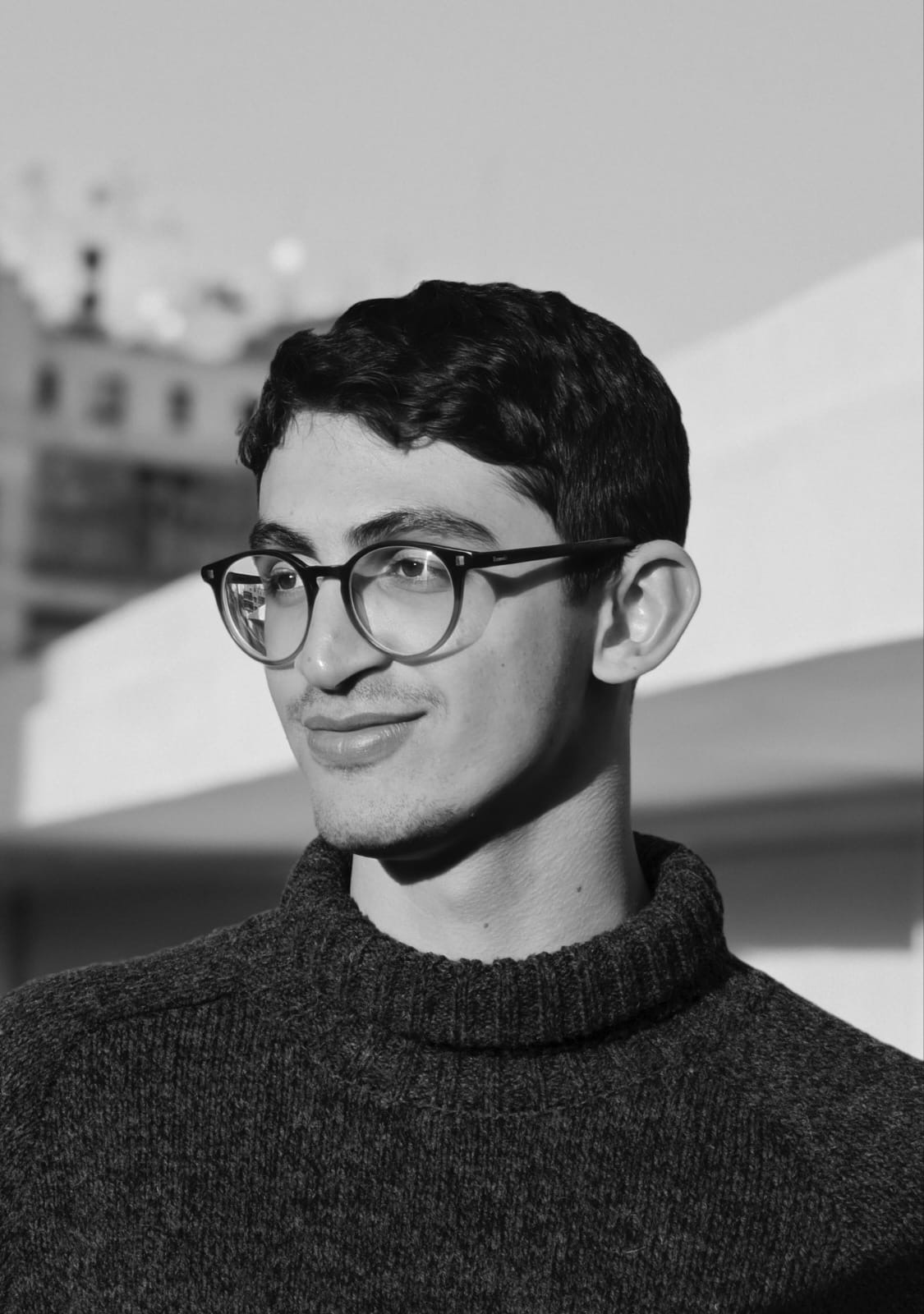
“In the shadow of what’s happening in Gaza, why talk about design?” asks Shadi Abubaker, just days after the very first Palestine Design Week concluded.
Abubaker had been working since 2024 to bring Palestine Design Week to life, starting with his appointment as project manager of Miskhal, an EU-funded Goethe-Institut project that led to the event’s creation.
Abubaker says a previous Goethe-Institut project manager first proposed the idea in 2018, but it never got off the ground. COVID-19 and, later, the genocide in Gaza prevented subsequent attempts from moving forward.
“The problem in this question is that it assumes design is separate from the reality in which we live, and this is not true,” Abubaker says. “Design is the reality we live in.”
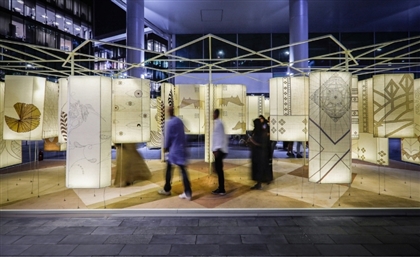
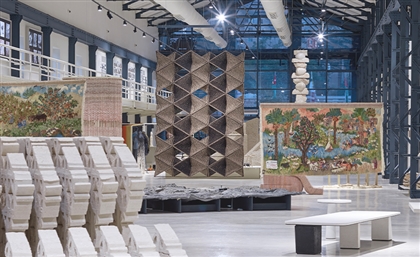
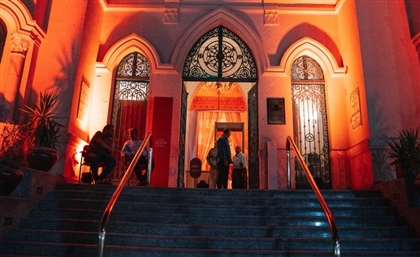
Palestine Design Week debuted on September 15 at a restored Ottoman-era stone house on the outskirts of Ramallah’s Old Town under the theme Without Permission. Hundreds of people came to see work by 65 Palestinian and international designers, alongside workshops, panel discussions, film screenings and live performances.
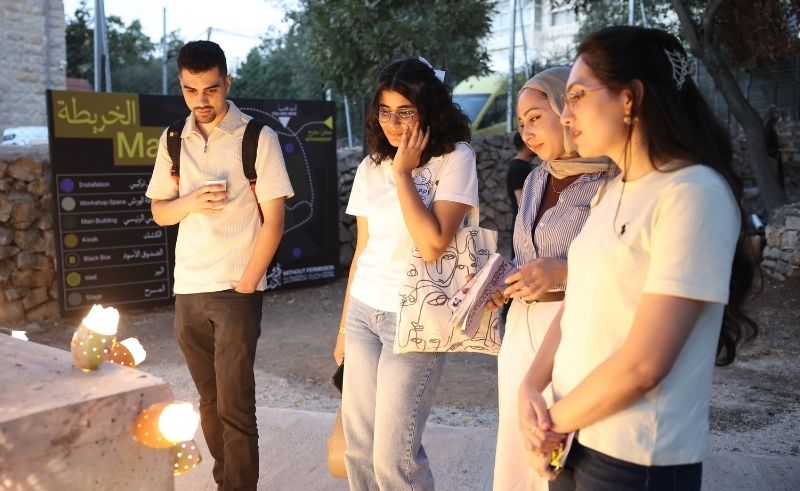
There was a symposium titled ‘Design as a Tool of Resistance’, another talk that explored the concept of ‘Home as a Public Space’ with Elias Khuri, the architect behind the striking 12 Olives Trees House, and a two-part workshop on experimental Arabic lettering with Dubai-based graphic designer and calligrapher Ibrahim Zaki.
“In Palestine, design is tied to our access to resources, space, and memory,” Abubaker says. “For us, talking about design is not an escape from reality or an attempt to distract ourselves. I see it as another way to read the Palestinian reality, and a way to think about how the future might be.”
This vision brought together the local design community and international partners. Palestine Design Week was implemented by Goethe-Institut with funding from the European Union and in partnership with the British Council and UNESCO. Local partners included the Palestine Investment Fund, Dar Al-Kalima University, Ramallah Municipality and the Ministry of Culture.
Design weeks have expanded across the Arab world in cities including Cairo, Beirut, Amman, Doha and Dubai, often using contemporary design to revisit local craft and cultural history.
Palestine Design Week places that conversation within the conditions of Israel's occupation, presenting design as something shaped by access to resources, space and memory, and as a way of preserving knowledge under extreme pressure.
For Izz Aljabari, the curator of Palestine Design Week’s first edition, the question was how to spotlight this history without falling into the trap of nostalgia. His answer: to inspect the origin of the word design itself.
“In Arabic, the word tasmeem comes from samam, the one who insists upon something” he explains. “It means as well someone who cannot hear; he listens only to what is in his mind and not to what is around him, and so persists in his path. And I thought this is true in Palestine.”
Aljabari, an artist and cultural researcher, previously curated Specters of Presence in Hebron, transforming a historic cave into an art exhibition for the Palestinian artist Rani Sharabati. For another exhibition, In Situ, Aljabri similarly sought to create from the space not just a backdrop for display, but a “co-author of meaning.” For Palestine Design Week, the opportunity presented itself again.
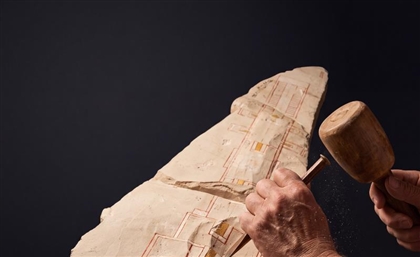
The century-old stone house which hosted Palestine Design Week was formerly owned by the affluent Jaghb family in Ramallah, and had been destined for demolition when the Ramallah Municipality stepped in and purchased the property for two million Euros. When Abubaker came upon it by chance on a walk with his son, the Municipality agreed to let Palestine Design Week renovate and use the building. Both parties hoped it could later be used for cultural purposes and as a creative hub for artists.
“A large portion of our budget went to renovating this building,” explains Aljabari. They only had 40 days to get the house prepared, and one particular challenge was the walls. “How could you take the more than 45 works – most of which were installation pieces – and put them inside this house within a space that is very limited?”
Abubaker, Aljabari and their team succeeded in restoring the two-floor house without changing its character or architectural features, and immediately they were rewarded in-kind for their efforts.
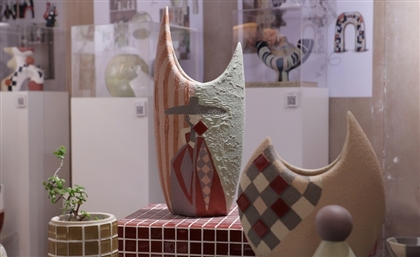
One of the designers, Yasmin Tams, who was a finalist for the Arab World Institute Design Prize 2025 and comes from a family that used to own tile factories in Ramallah and Jerusalem, was putting forth a project on the dying practice of tile-making in Palestine.
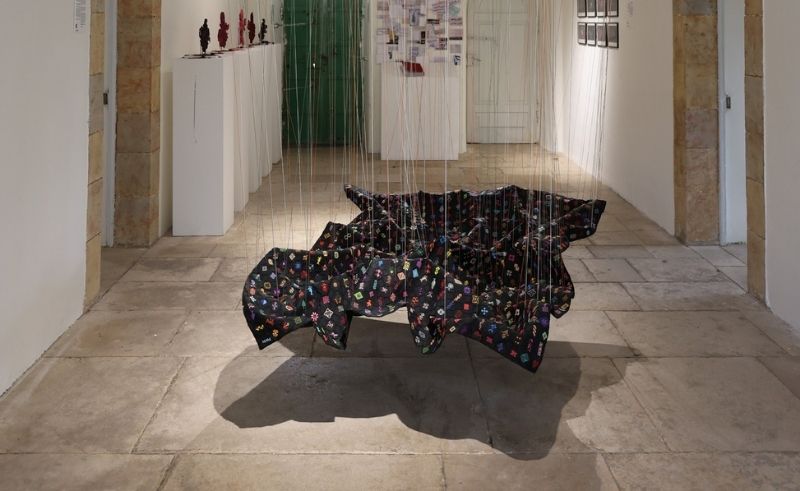 “Nothing remains of my family’s factories except for some fragments of stories,” she says. Digging through the archives of the Palestinian Museum in Birzeit, Tams had found one of the original patterns used by Palestinian tile factories in the 1920s and 30s. “Lots of documentation exists on how these tiles were made and what materials were used, but what was lost was the meaning of the patterns,” she explains, “which were in fact the emblems of local families.”
“I created a collection of candles from the pattern I found to speak about how we are losing the meaning behind these tiles,” says Tams. Then, when she went to Bayt Jaghb, she found the same pattern right there on the floor.
“It was definitely a surprise,” says Tams. “As Izz showed us around, I saw it at the entrance to the backroom. It felt like a full circle moment.”
Aljabri similarly found meaning in this incident. “These things really are still here and still alive, we just have to search for them. You’ll be surprised.”
Elsewhere, challenges that could not be overcome were worked around. For those who could not be in attendance, whether because of distance or the travel restrictions imposed by Israel on Palestinians, there were satellite events taking place elsewhere across Ramallah, as well as Jerusalem, Bethlehem, Nazareth, Yaffa, Dubai, and Amman.
Yet, in the final three days of the event, Israel imposed a lockdown of the major roads leading into and out of several West Bank cities and towns, including Ramallah. This barrier to movement, coupled with heightened fear of settler attacks, led many participants to stay home and not attend Palestine Design Week’s closing ceremony.
 Even after the Week had ended, the organizers are still waiting on merchandise that they printed in Egypt and which has been stuck in customs at Ashdod port, an arbitrary obstacle which faces many Palestinian businesses trying to import materials or export their products from the West Bank. The merchandise—branded T-shirts and scarves—had left Egypt on August 25 and was supposed to arrive just ten days later.
These were challenges that could not be overcome. Still, Palestine Design Week counts its many successes, and the next edition is planned for 2028—a two-year timeline which Abubaker says will help ensure curatorial and artistic quality.
“In the end, I can say that design won’t resolve a political crisis, but it can propose questions, preserve knowledge, and create new tools and spaces,” Abubaker says. “It gives people the ability to imagine something new. This, I think, is very important.”
- Previous Article UAE-Based Datecrete Studio & Lab Wins Seoul Design Award