

America's Small-Town Theatres That Fell for the Egyptomania Aesthetic
From DeKalb to Boise, American small-towns embraced Egyptomania as their movie theatres became mini temples of spectacle.

Two pharaohs, each on either side of a design depicting a scarab beetle, sit at the forefront of the structure’s entrance.
You'd probably think I'm painting a picture of an ancient Egyptian temple. But, in fact, I'm looking at a movie theatre in DeKalb, Illinois. A city in America’s midwest about 105 kilometres away from Chicago.
Amid the Victorian & Tudor Revival-style structures that dominate the design of the town, an Egyptian theatre stands out. Why did small-town America lean into Egyptian Revival? Was it spectacle, escapism, or Hollywood fantasy bleeding into architecture?
With the discovery of Tutankhamun’s tomb in 1922, a wave of fascination with Egyptian civilisation began. Throughout the decade, a number of movie theatres, all built in that same Egyptian Revival style, popped up. It is believed that up to a hundred existed at one point in time.
Significantly fewer exist today, and even fewer are operational. However, you’ll find some that’ll quench your thirst for ancient architecture:
Peery’s Egyptian Theatre — Ogden, Utah
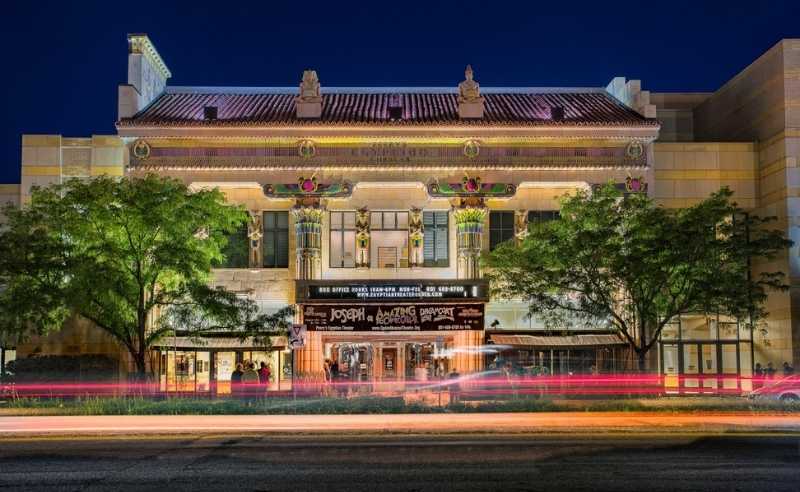
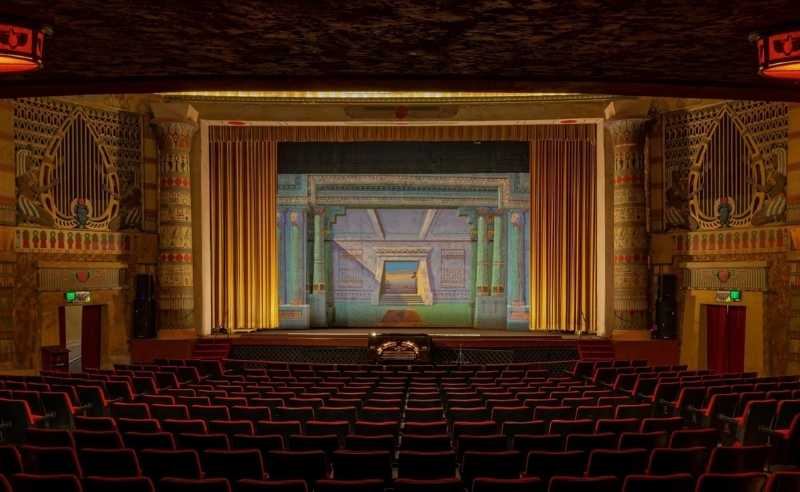
Designed by architect Carl Boller, Peery’s Egyptian Theatre is one of the earliest and best preserved examples of Egyptian Revival cinema architecture in the U.S. Its interior features lotus columns, hieroglyphic motifs, and a star-studded ceiling. After decades of decline, it was meticulously restored in the 1980s and now functions as a performing arts venue, anchoring Ogden’s historic 25th Street district.
Egyptian Theatre — Coos Bay, Oregon
Built in 1925, the Egyptian Theatre in Coos Bay reflects how far the Egyptomania of the 1920s reached, all the way to America’s Pacific coastline. Its facade and interior incorporate stylised Egyptian symbols adapted to a smaller-town scale. Though it faced closure multiple times, community-led restoration efforts have kept it alive. Today, it serves as a cultural hub for films, concerts, and local events.
Mary G. Steiner Egyptian Theatre — Park City, Utah
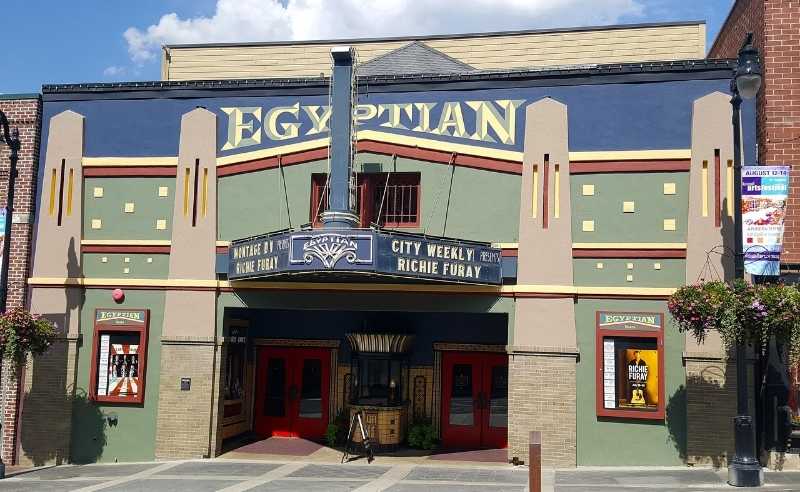
This theatre blends Egyptian Revival elements with Art Deco influences. Originally opened in 1926 and later renamed after philanthropist Mary G. Steiner, it is nestled in Park City’s historic Main Street and has been repeatedly renovated to suit changing needs while retaining its distinctive character. It now hosts film screenings and festivals, most notably during the Sundance Film Festival.
The Egyptian Theatre — Boise, Idaho
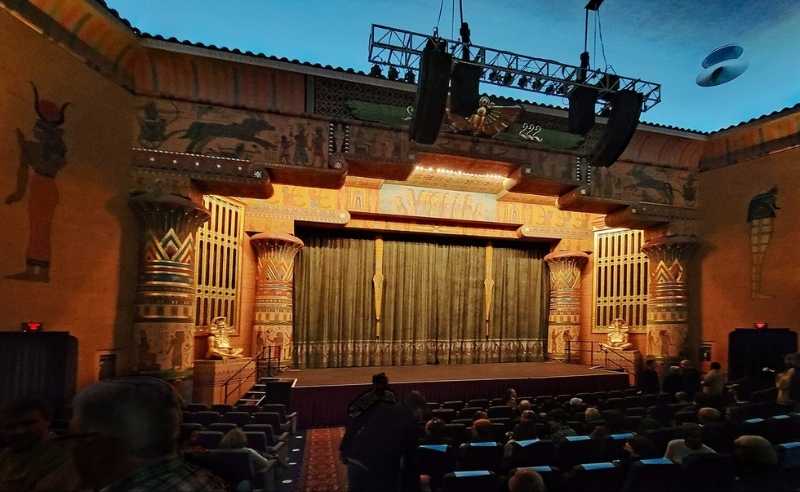
Designed by Frederick C. Hummel and constructed in 1927, Boise’s Egyptian Theatre is among the most elaborate surviving examples of the style. Its interior features hand-painted hieroglyphs, papyrus columns, and a richly detailed proscenium. After a major restoration completed in 1999, it reopened as a nonprofit performing arts theatre and is widely regarded as one of Idaho’s architectural landmarks.
Egyptian Theatre — Delta, Colorado
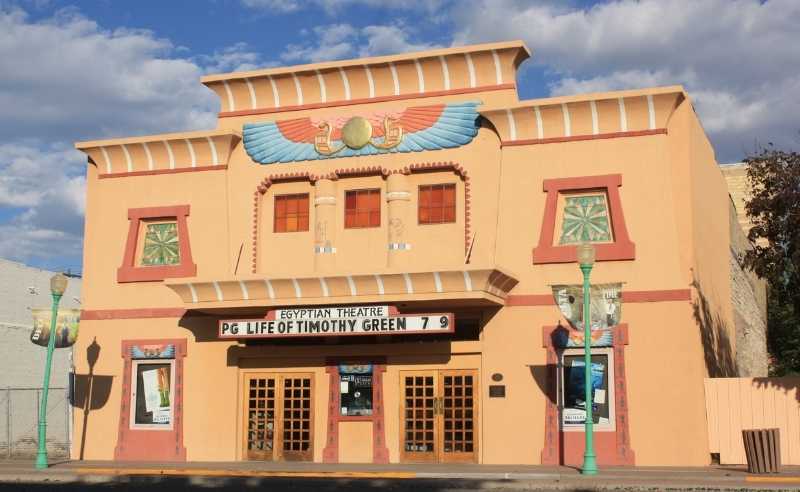
Opened in 1928, the Egyptian Theatre in Delta is a modest but striking example of Egyptian Revival design adapted for a rural community. Its exterior incorporates stylized pylons and reliefs, while the interior was designed to evoke grandeur on a smaller scale. After years of decline, it was restored in the early 2000s and remains an active community theatre, underscoring how this architectural fascination extended well beyond major urban centres.
- Previous Article This Contemporary Amman Home is Shaped Around Salvaged Olive Trees
- Next Article The Ancestral Resilience of Omar El Farouk’s Fayoum Home