

Egyptian Photographer Captures Riyadh’s Qasr Al Hokm Metro Station
Andrew Shenouda captures Riyadh’s newest metro station as a passage from past to future.

For Egyptian photographer Andrew Shenouda, Qasr Al Hokm Metro Station in Riyadh is read through movement, unfolding step by step as the space shifts around you and shaping how he documents the project. He is drawn first to the history of the site, where traces of the old city are still present in the ground of Riyadh’s historic core.
“When you arrive, it feels like you are in a historical area, you see old architectural elements, stones, and several layers. As you move through the circulation, you feel a shift between history and future,” Shenouda tells SceneHome. His documentation follows this movement using a handheld approach at human scale, focusing on how the space is experienced while moving through it.
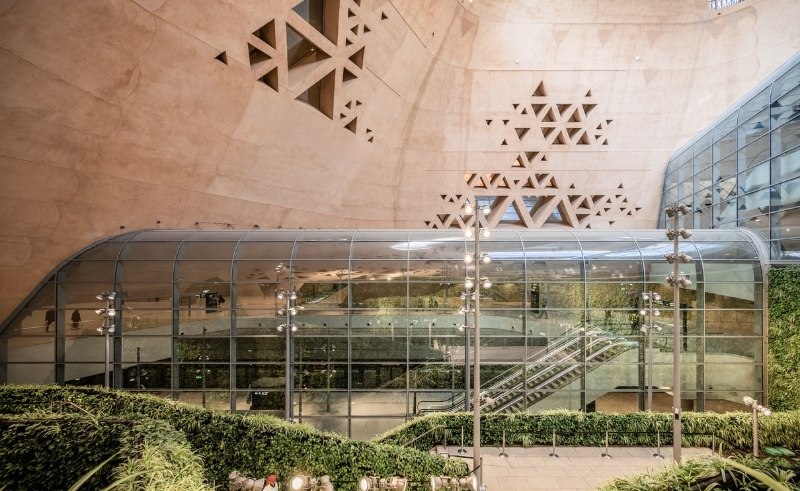
The site is shaped by the memory of the 18th-century city walls that once enclosed Riyadh before being removed during expansion. Even without their physical presence, this idea still informs how the space is organised and how it is read.
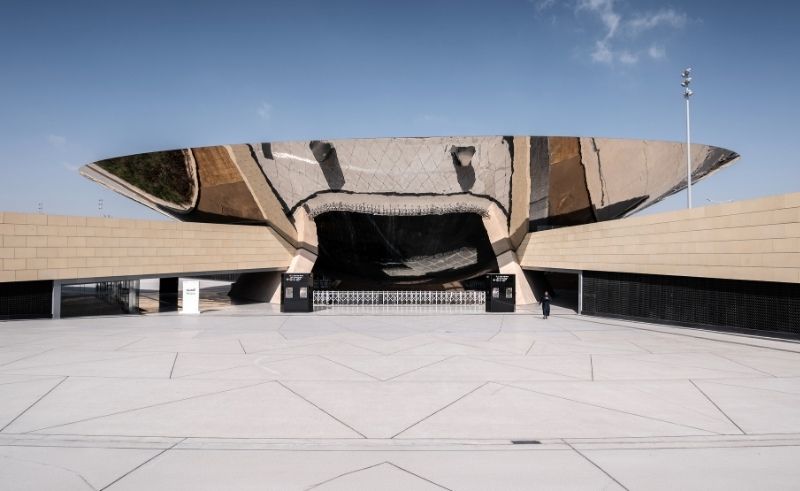
Shenouda's arrival images place the station within this context, using wide frames that hold stone, planting, and the building together in one view. The canopy reflects parts of the site, bringing the surrounding landscape and structure into the same frame, while keeping the scale of people and space visible.
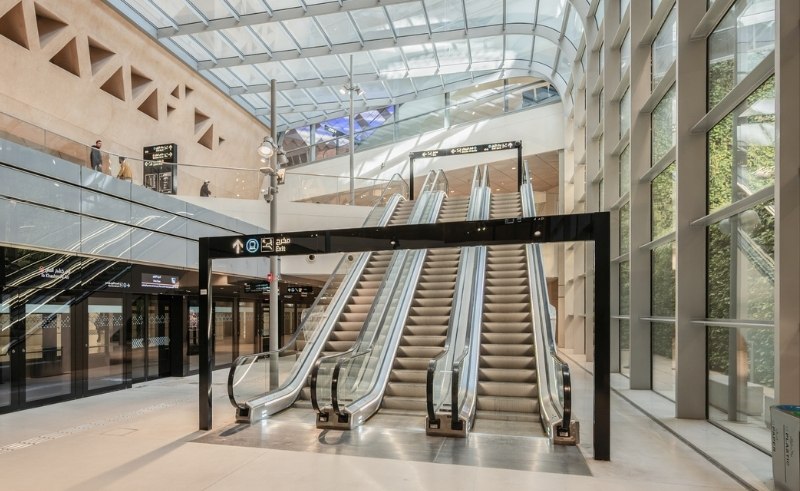
He reads the station as a transition that begins underground, in enclosed spaces shaped by material and structure that carry traces of the city’s past. As you move through, light increases, surfaces change, and the space gradually opens, with each level offering a different reading.
At the surface, the station opens into a wide civic plaza paved in continuous stone, connecting the metro entrance with the nearby mosque. Above it, a large stainless-steel canopy reflects the city in motion, bringing sky, people, and activity into one surface. “When you come off the train and look up, you see the city reflected, it helps you understand where you are,” Shenouda says.
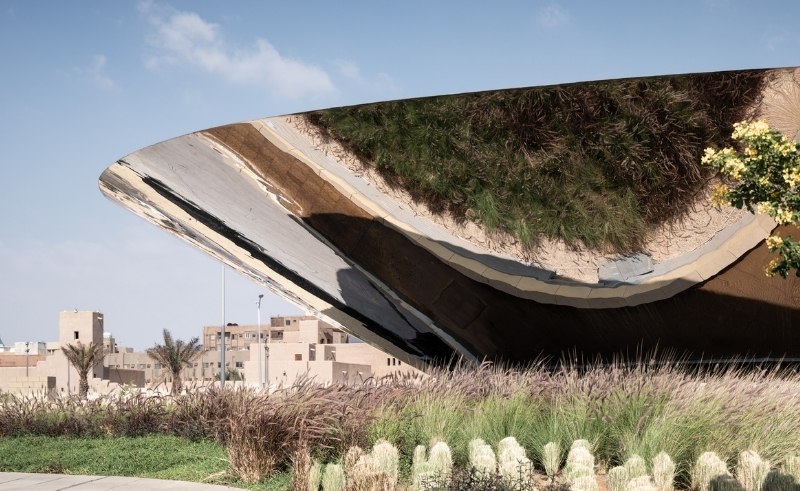
Inside, he uses upward and wide views to capture the ceiling, oculus, and structural lines in one frame. These images show how the space opens up through movement, with light changing the way each level feels, the use of Najdi triangular patterns can be seen throughout the building.
Greenery appears along circulation paths, forming a more present layer within the station, especially beneath the canopy where it shapes a maze-like setting with seating areas placed in between. It responds to heat and movement through the space, offering shaded moments within the flow of circulation. “They take care of planting as many trees as possible in the city in order to reduce the temperatures,” he explains. In his images, greenery sits across edges and different layers of the frame, softening the hard surfaces of stone and steel.
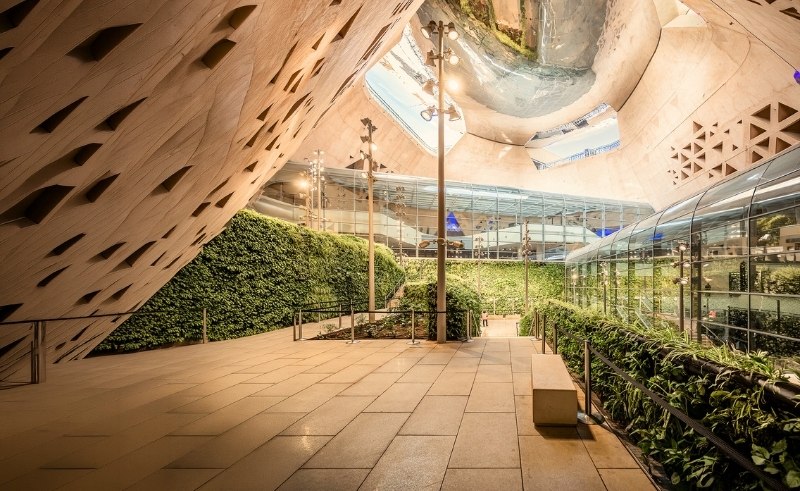
Across the station, the experience is shaped by movement, with changes in light, material, and level.
More of Andrew Shenouda’s award-winning work can be seen on his Instagram and website, where he continues to document architecture through circulation and how it is experienced.
- Previous Article Palestinian Artist Saj Issa Turns Colour Studies Into Ceramic Forms
- Next Article The Abandoned Architecture of Villa Badran by Gamal Bakry