

How Alia Rachid Is Building a Creative Bridge ‘FROMM.’ Doha to Milan
From Msheireb to Milan, FROMM. is creating the mentorship, production, and global networks helping Arab designers move beyond prototypes.
For years, the story of design in the Arab world has often been told through isolated names: individuals who managed to break into international conversations despite the absence of larger systems capable of sustaining them. Talent was never the issue. Infrastructure was.
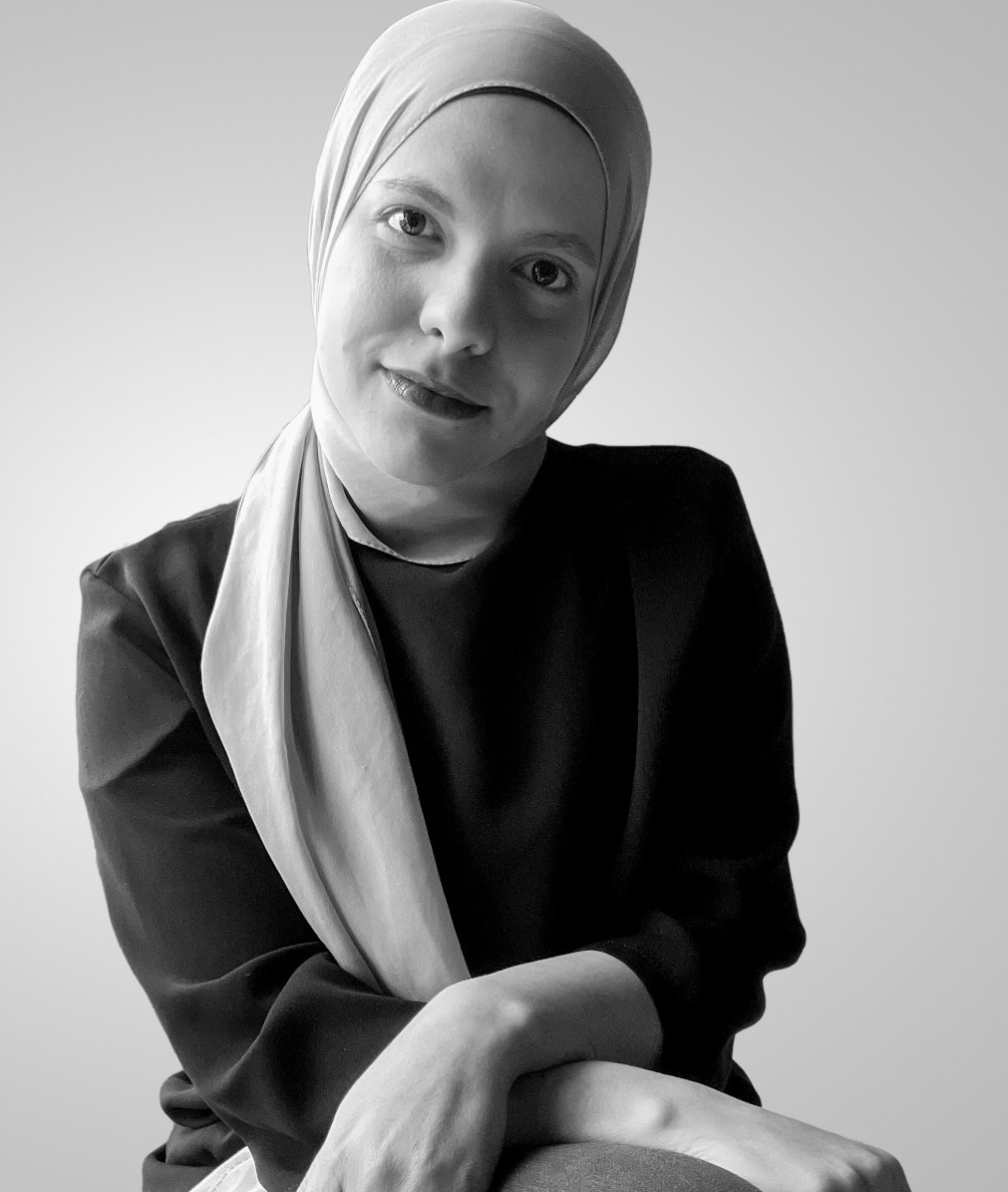
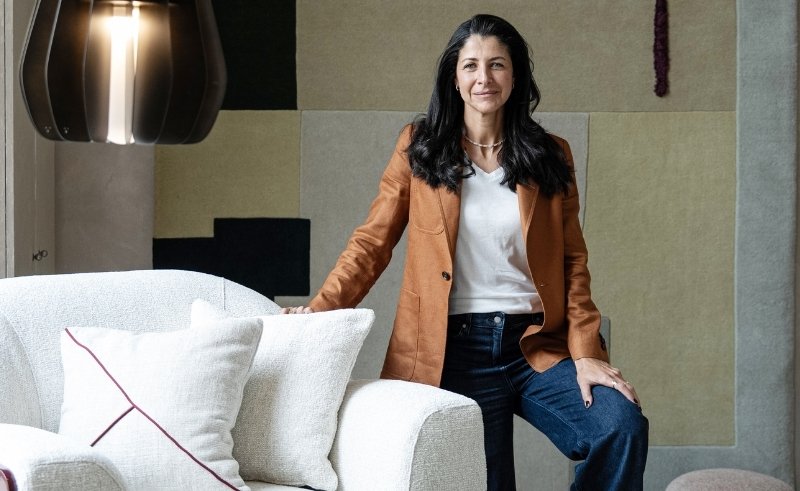
Five years ago, in Doha’s Msheireb district, Alia Rachid began building what she believed that missing infrastructure could look like.
The platform she founded, FROMM., takes its name from a symbolic bridge. The extra “M” stands for Msheireb and Milan, two cities that became the conceptual anchors of the project. One represents an emerging regional design ecosystem still defining itself; the other remains one of the global capitals of contemporary design and a benchmark for Italian craftsmanship and manufacturing excellence. Between them, Rachid envisioned a movement from one context to another. “FROMM. positioned itself to be between two worlds. I wanted to capture what’s happening in the region, in Msheireb where I live, and extend it to Milan.” Rachid tells SceneHome.
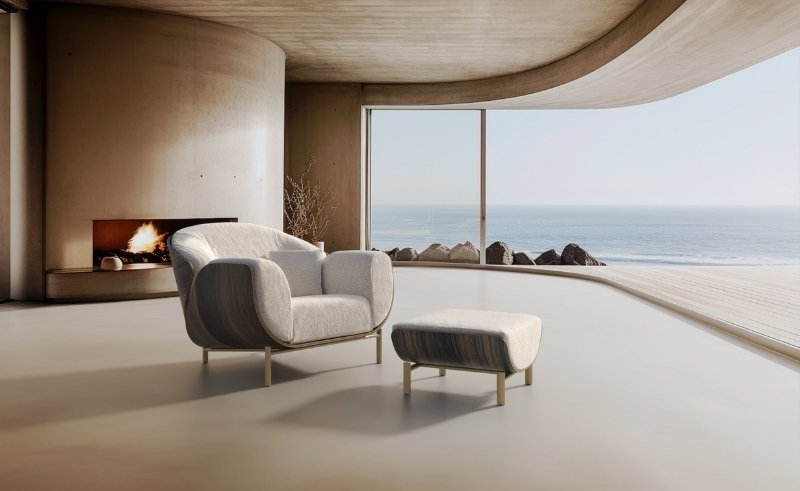
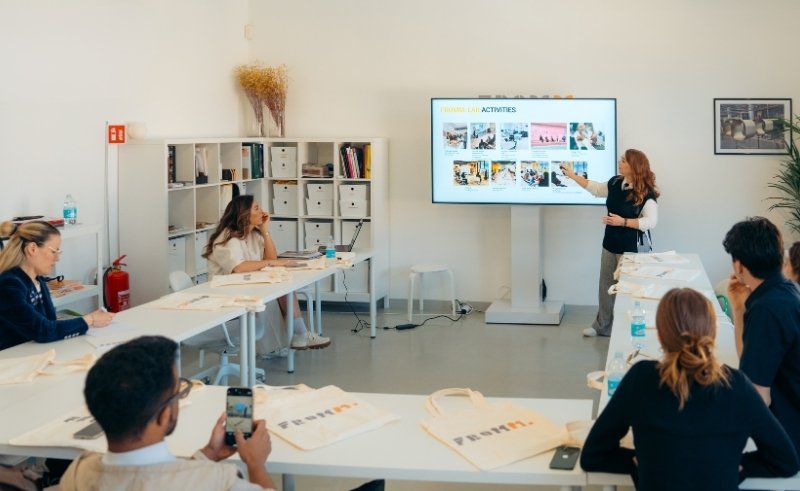
Although FROMM. operates within the luxury design space, it strongly challenges the idea that access to design should remain exclusive. This belief is reflected in FROMM.Lab, a platform focused on education and talent development, where emerging designers are supported in navigating the industry with the help of established professionals. It’s a full process that begins with the initial design thinking and carries through to production and distribution, supported along the way by research, training, and mentorship.
In an industry where many emerging designers struggle to move beyond ideas and one-off prototypes, FROMM.’s role is not simply to showcase creativity, but to build the systems around it. “It is all about creating the ecosystem that allows this creativity to grow. We bridge the gap between creativity and market-ready.” Rachid explains.
Before founding FROMM., Rachid trained and worked as an industrial engineer, an experience she credits with shaping the operational logic behind the platform. “I’ve always been interested in creating systems and turning ideas into something tangible,” she says. Later, she moved into the furniture industry through the Qatari-led hospitality and fit-out firm, Luxury Living, working on the commercial side of design, while remaining closely connected to her family’s long-standing commitment to supporting creative communities through Bidayat, the platform founded through Alsara Investment Group to amplify Mediterranean creatives on a global stage. Building ecosystems around creativity, it seems, runs in the family.
 The balance between regional identity and international dialogue sits at the centre of FROMM.’s philosophy. As conversations around Arab design continue to evolve, there is an increasing temptation to frame the region’s creative rise as a rejection of Western influence. Rachid resists that framing entirely. “One of the most important things is building bridges with international creative communities beyond our region, making our design and culture legible and accessible beyond our own context,” she says.
For her, Milan was never chosen as a counterpart to Doha because it represented approval from abroad. Rather, it represented access to a deeply embedded ecosystem of high Italian craftsmanship, production expertise, and design heritage that continues to define the global luxury standard. Within this context, Italian manufacturing becomes not a supporting element but the structural backbone of FROMM.’s production model. Grounding Arab heritage design in material precision, technical knowledge, and generations of artisanal skill, before they are translated into contemporary design languages. “You want to tell your stories, but you also want to make sure what you’re creating is globally relevant,” she explains.
 And while FROMM. began as a link between Qatar and Italy, over the last five years it has gradually expanded through its educational arm FROMM.Lab into regional and international programmes, open calls, and competitions involving designers from Saudi Arabia, Egypt, Lebanon, Turkey, Italy, Japan, China, and beyond. Even when projects are developed by international designers, the design language remains consistently rooted in Arab heritage.
Because distinction matters. FROMM.Lab supports designers in focusing their research through regional heritage, the way people live, nature, architecture, and symbolism through a more meaningful and contemporary lens. Speaking to Rachid, it becomes clear that the more urgent issue is the depth and uniqueness of these ideas.
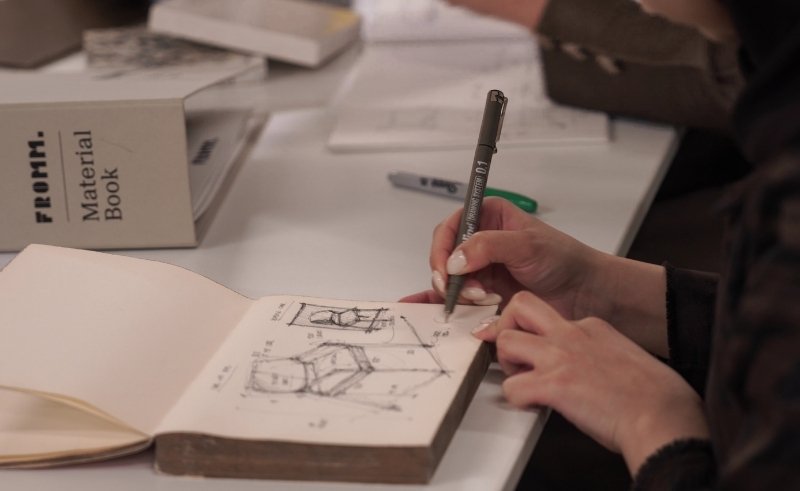
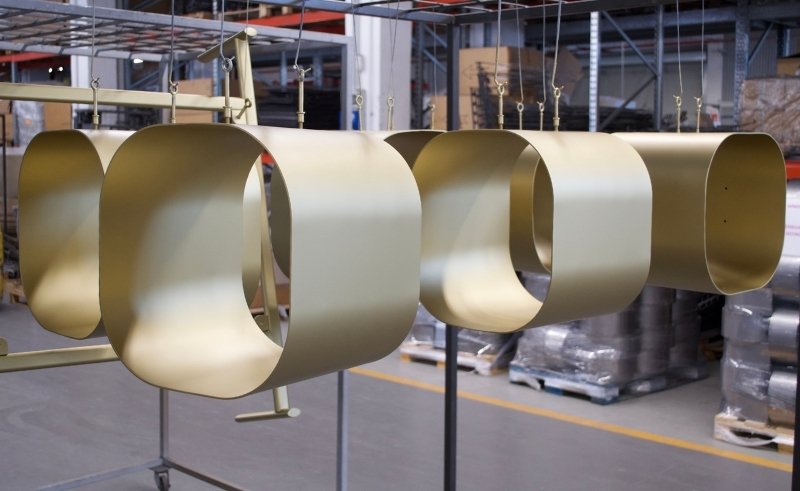
 Sometimes, the most creative minds lack the technical and structural skills that sit outside their sketchbooks and moodboards. How do designers access fabrication? How do they prototype? Who mentors them through ideation and production challenges? And how do they promote their products locally and internationally?
These are logistical questions as much as creative ones, and Rachid approaches them with the mindset of someone with a hybrid experience beyond the design world alone. The designers themselves are selected less for refinement than for perspective. “Technical skills matter,” Rachid says, “but I’m more interested in their point of view, their storytelling, and the emotional depth of their work.”
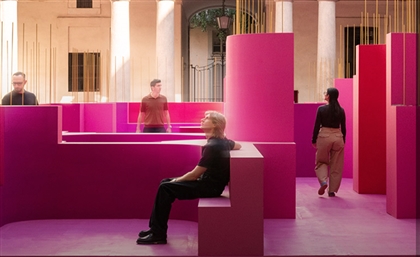
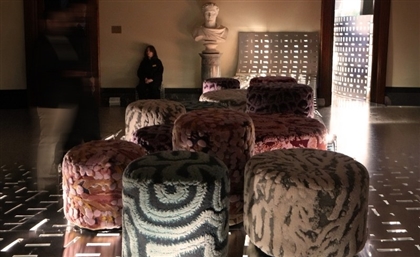
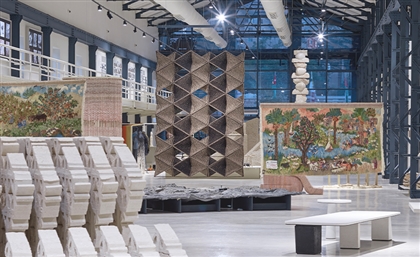
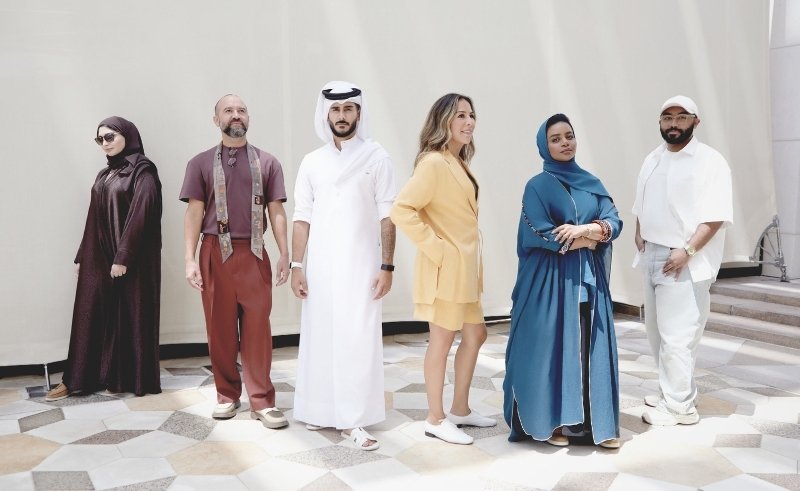 Earlier this year, during Milan Design Week 2026, FROMM. marked a dual-venue presentation: at Salotto Retori on Via della Spiga, it unveiled its new capsule collection, while FROMM.Lab presented a preview of its International Design Competition exhibition 'Interalced: Dialogues in Design' at Alcova. The competition invited designers from around the world to create concepts inspired by Arab heritage, receiving more than 120 submissions from which 12 winners were selected. The Alcova presentation offered an early glimpse of four of these winning projects, with the full exhibition set to open during the Doha Biennale in November 2026.
For Rachid, the significance of the competition was not in its scale, but in its direction. FROMM. may be rooted in the region, but it is not interested in limiting regional narratives to regional voices alone. “A designer from Japan or China can be inspired by our culture,” she says. “What matters to us is that the stories remain rooted in the region.”
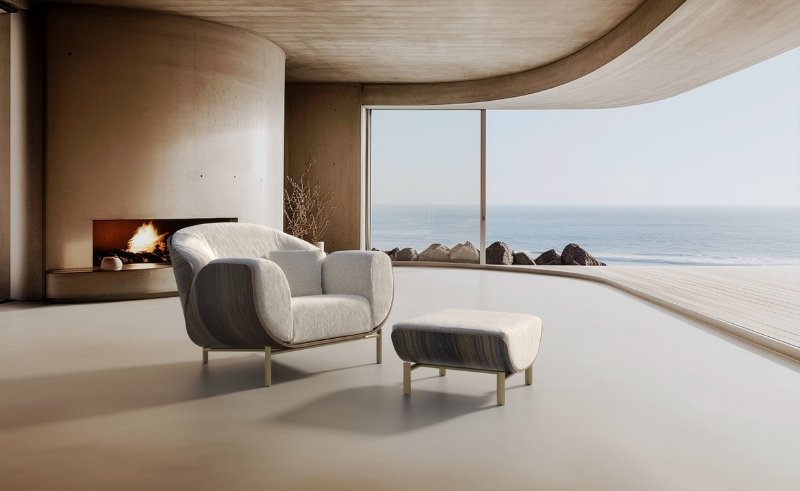 In many ways, FROMM. emerged at a moment when design across the region itself was beginning to shift. Over the past decade, cities across the Gulf, North Africa, and the Levant have witnessed the visible emergence of independent studios, design fairs, mentorship programmes, and institutional support structures that previously did not exist at this scale. Egypt, in particular, Rachid notes, possesses a density of designers and makers that naturally pushes local talent outward into global conversations. What FROMM. attempts to do is formalise that movement.
Part of this process involves mentorship, an aspect of the platform that Rachid speaks about with particular emphasis. Depending on the project, FROMM.Lab brings together some of the design world's most respected voices across academia, commercial design, curation, and production. Among them are Italian professor Luca Fois from Politecnico di Milano, designer Giulio Cappellini, Alcova co-founder Joseph Grima, and Lebanese architect and designer Aline Asmar d’Amman and more. The intention is not only to help designers refine ideas, but to understand how objects survive in the real world beyond conceptual value alone. “We always try to engage mentors with different experiences, especially when it comes to translating products into market-ready ones.” Rachid explains.
The process itself can stretch across months. Designers selected through FROMM.Lab’s competitions move through stages of concept development, material research, refinement, prototyping, and production before final presentation. In other cases, FROMM. selects designers to create collections or initiates collaborations directly through commissions with hospitality groups, corporate clients, or private projects, inviting designers to participate within that framework.
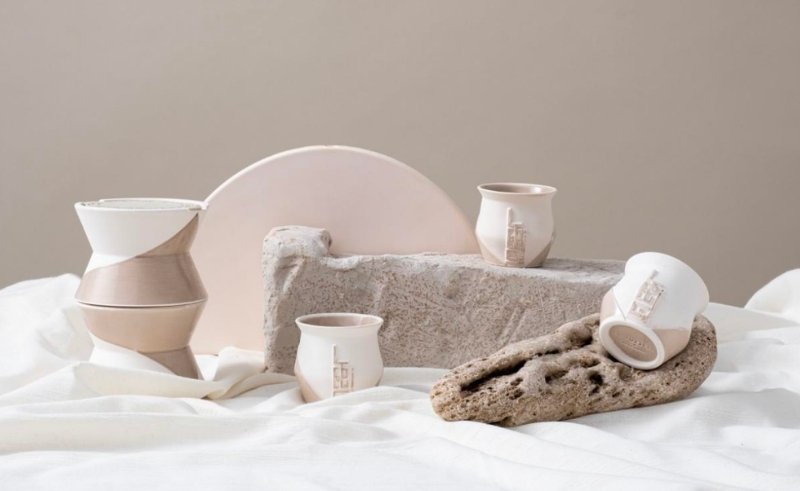 Some of the clearest examples of this process can already be seen in the collections that emerged from the platform’s earlier cycles. The Shurouq collection, developed with two Qatari designers, Maryam Al Suwaidi and Shua'a Ali, is inspired by the nature and architecture of Qatar, with pieces such as the Haima’ Armchair, Baida’ Sofa, and Maktaba Wall Unit moving from concept through the full process into a refined series now sold internationally. Another collection, The Ottoman Dream, celebrates 500 years of Ottoman luxury, bringing together Turkish designer Rüya Akyol and Italian designer Antonio Aricò to create a unified contemporary language. “It’s a very rewarding feeling, when I walk into a gallery or even a home and see a piece and know exactly how FROMM. took it from a designer’s initial concept and shaped it into a refined collectable object,” she tells SceneHome.
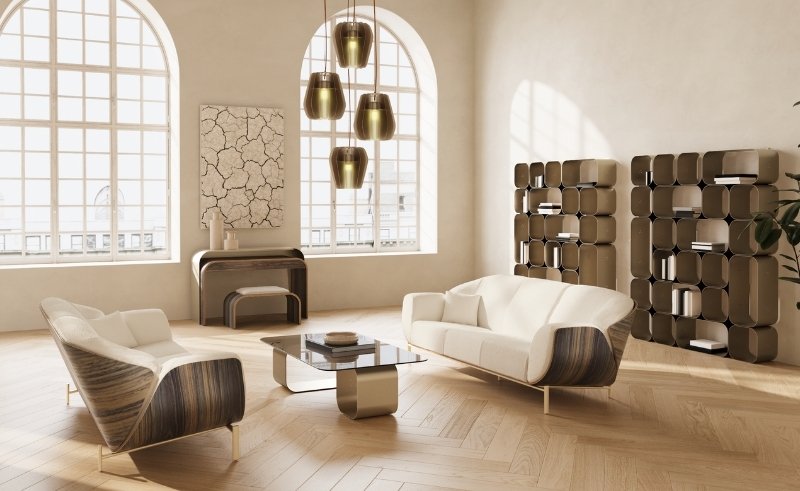 Even within the region, FROMM.Lab is not confined to Qatar alone. During Milan Design Week, the platform announced a partnership with Sharjah’s Research, Technology and Innovation Park (SPARK) to develop new design programmes for regional creatives. Meanwhile, its network of collaborations continues to expand across disciplines and geographies.
“FROMM. has always been born in Msheireb,” she says. “From Msheireb to the world.”
Success, however, remains not tied to a single milestone. She describes it through an emerging Arab designer’s piece appearing naturally inside a gallery in Paris, or a design store in London, or someone’s private home. “Seeing Arab names represented internationally, that’s for me the most rewarding feeling,” she adds.
- Previous Article Studio Meshary AlNassar Turns Its Ground Floor Into a Walk-in Gallery
- Next Article The Intricate Beauty of Ben Youssef Madrasa