

MENA Designers Making Their Mark at Milan Design Week 2026
As Milan Design Week wraps up, we recall the MENA creatives we spotted this year. Growing in number, they had us in constant motion across the Italian capital of design.
Across Milan Design Week, the MENA designers we encountered brought a clear sense of intention to what they were showing. There was creativity, yes, but also a strong focus on how things are made, where materials come from, and the stories they carry. Many of the works drew on heritage without feeling nostalgic, balancing tradition with a more contemporary perspective. Others leaned into experimentation, but still held on to a distinct identity.
What came through consistently was a sense of character. Each designer approached their work differently, but there was always an awareness behind their choices - of process, context, and audience - that came through in our conversations. Seeing that range, across different exhibitions and parts of the city, made the trip feel justified. It wasn’t just about being present at the world’s biggest design week, but about recognising how MENA designers are showing up within it.
Lina Ghotmeh (Lebanon) - Metamorphosis in Motion
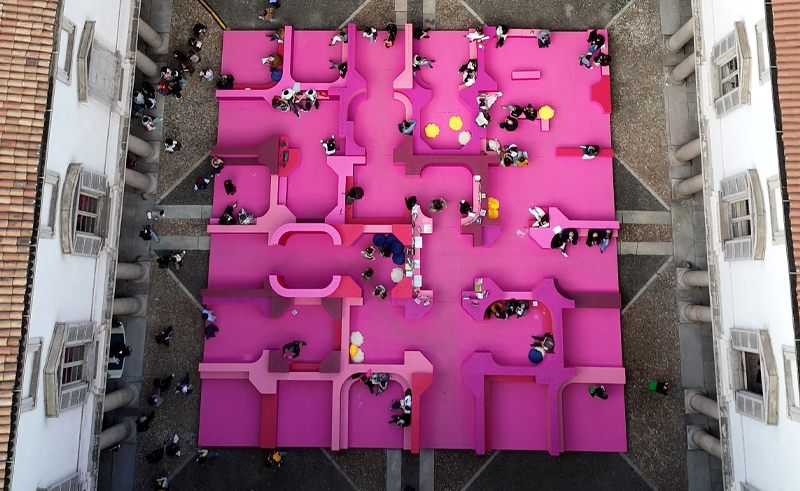
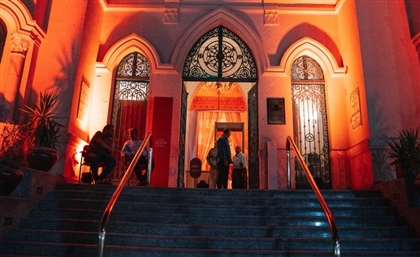
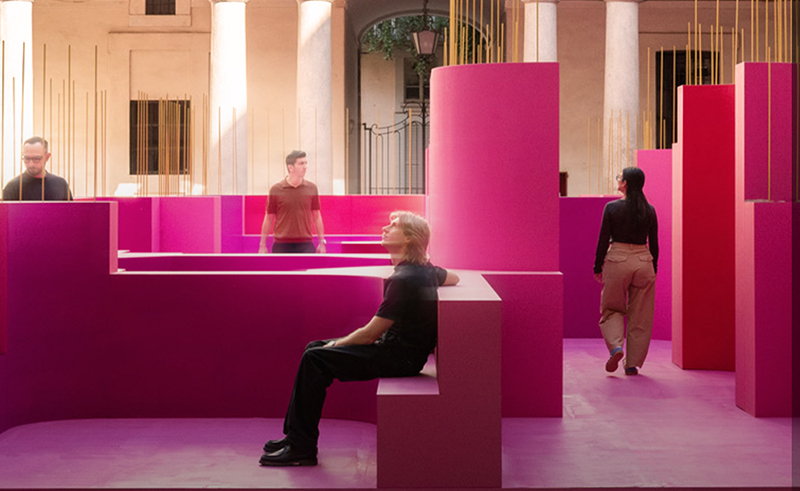
Set within Palazzo Litta during Milan Design Week 2026, Metamorphosis in Motion takes shape as an immersive spatial experience built around the colours of sunlight. One of the week’s most talked-about pavilions, it had already generated buzz ahead of opening, drawing visitors who travelled in specifically to see it. Drawing from the palazzo’s Baroque heritage, the installation blurs the lines between architecture, design, and art, guiding visitors through a sequence of curved forms and shifting viewpoints. It unfolds as a kind of choreography - one that moves with people, and is ultimately shaped by them.
Laila Gohar (Egypt) - Fruit & Vegetable Carousel
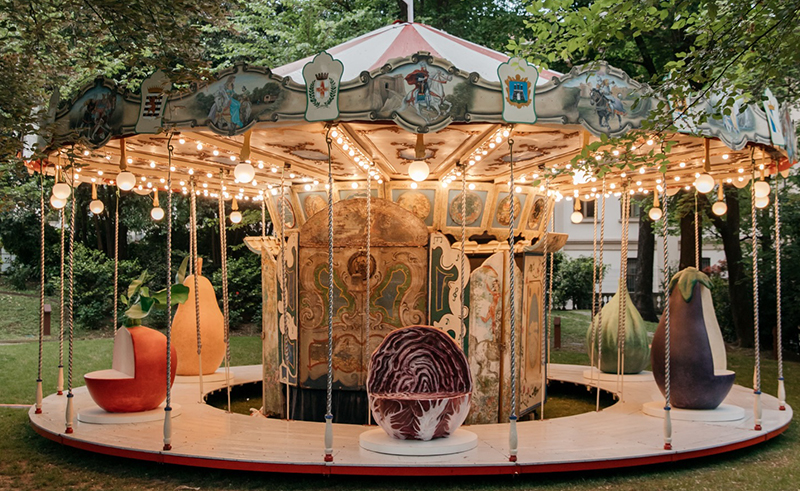
Set within Giardino delle Arti during Milan Design Week 2026, Laila Gohar’s collaboration with ARKET reimagines one of Italy’s oldest 18th-century carousels. Taking over the historic structure, the installation replaces traditional horses with oversized fruit and vegetable forms that visitors can ride, turning a familiar object into something unexpected.
Positioned between installation and playground, the piece invites interaction across ages. Its surreal, sensory quality has drawn a wide audience—from design enthusiasts to families—and has earned it a nomination for the Fuorisalone Awards.
ZAZA MAIZON (Saudi Arabia) - The Vitturi Chair & Tawāshuj
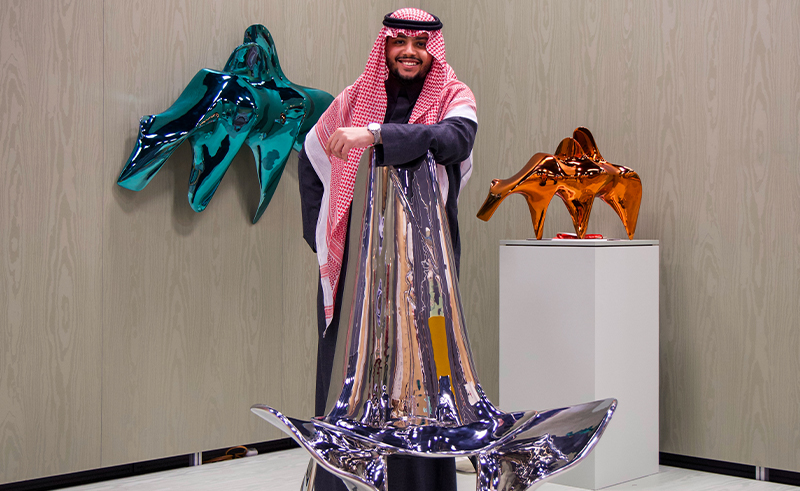
Abdulaziz Al Tayyash of ZAZA MAIZON presents a series of reflective, fluid pieces that draw from desert landscapes, translated into mirrored surfaces. The work is grounded in Saudi culture, reinterpreting familiar, everyday gestures into contemporary forms that invite a more tactile and immediate way of understanding.
The pieces are conceived as responsive surfaces, shifting with light and movement so that no single reading remains fixed. The Vitturi Chair, for instance, takes cues from the shemagh and nasfa, translating the repeated gesture of adjustment into a continuous line that moves through the structure. Nearby, Tawāshuj approaches form differently, reading the camel as both figure and landscape, where its contours suggest terrain, and its negative spaces open into imagined paths shaped over time.
Richard Yasmine (Lebanon) - Vessels of the Intangible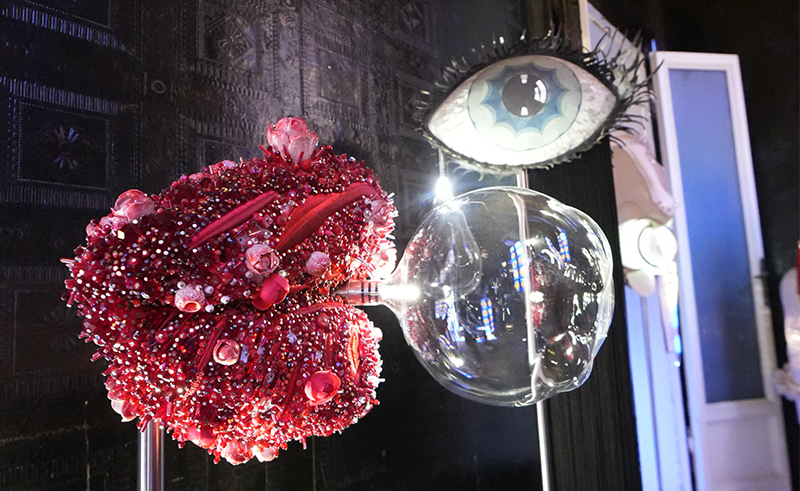
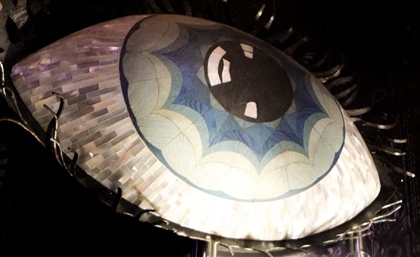
Lebanese interior architect and product designer Richard Yasmine presents Vessels of the Intangible, a collection exploring the space between reality and imagination through the human body as form.
The series features five sculptural lights reinterpreting the senses, from The Eye and The Finger to The Lips, The Nose, and The Ear. Each piece transforms anatomy into object, with light extending perception outward.
Crafted through multiple artisanal techniques, the works are framed by Yasmine as Neo Ritual Baroque, where emotion and material intensity take precedence over function.
Malak ElZeftawy & Rana Ayman (Egypt) - Zahra Stool
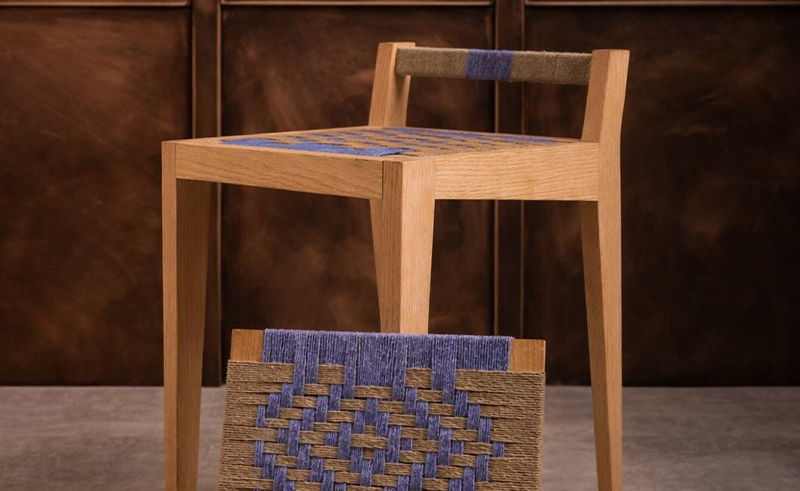
Presented as part of the Isola Design Festival, the Zahra stool draws on ancient Egyptian craft and architectural principles, reinterpreting a sense of balance through sculpted wood and a modular woven linen seat.
Sustainably dyed with Zahra powder, its deep blue references both the Nile and the heavens, carried through a refined contemporary form that connects material, colour, and heritage.
David/Nicolas (Lebanon) - La Boiserie
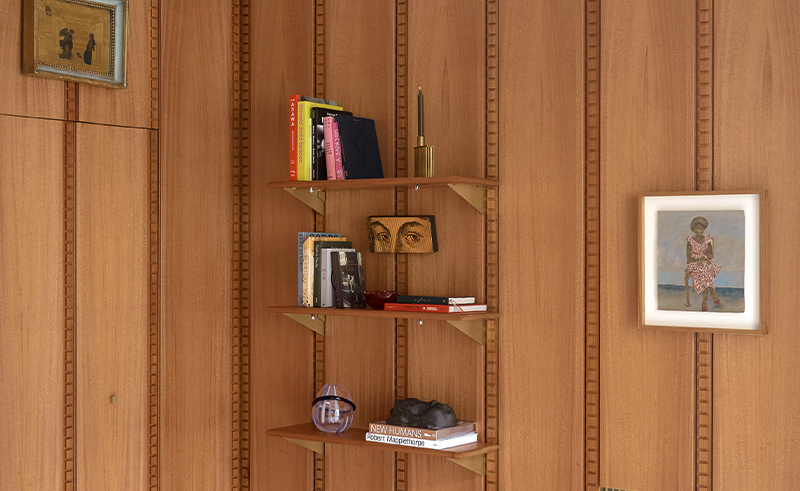
Lebanese designers David/Nicolas inaugurate their Milan studio in the 5VIE district, introducing La Boiserie as its central project. Conceived as both a reflection and a working system, it positions the studio as a tool for making rather than just a space for display.
Reinterpreting traditional wood panelling, La Boiserie becomes a modular wall system where surface and function merge, integrating storage and built-in elements into a continuous structure. Developed in-house, it is designed to evolve across different spaces while maintaining a consistent design logic.
Amr Helmy (Egypt) - Three Kitchens. Three Positions. One Question.
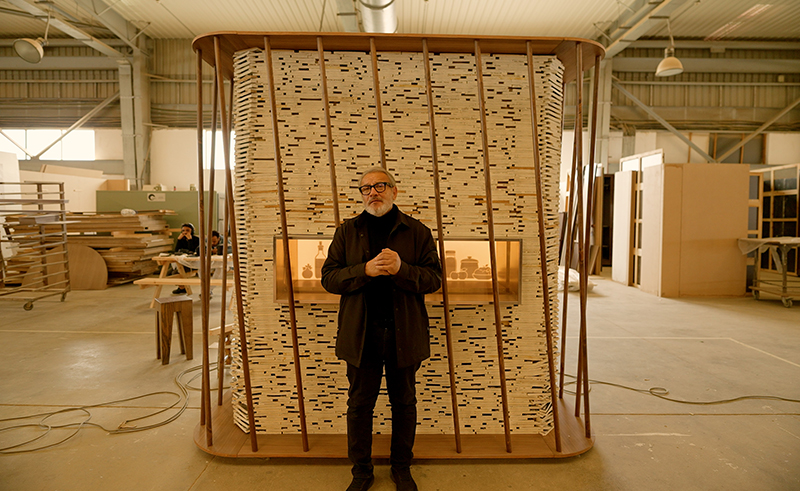
Egyptian designer Amr Helmy presents Three Kitchens. Three Positions. One Question. at EuroCucina, a project that began with writing rather than drawing. He first authored a book on the Bauhaus school of design through his Cairo Letters, reflecting on modernism from a Cairo-based perspective before translating it into space.
From this, the installation poses a direct question: should design move forward, step back, or stand still? It is answered through three kitchens shown within one setting. The Victorian kitchen reflects inherited routines, the Bauhaus kitchen focuses on clarity and function, while the Isistron kitchen explores automation and adaptability.
Roseline Jabbour (Lebanon) - The Loop Bench
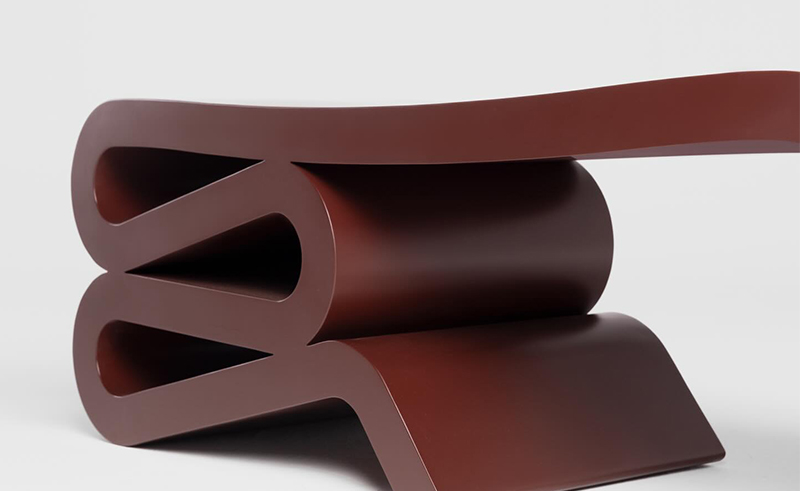
The Loop bench by Roseline Designs draws from the small shifts of everyday life and the contradictions within human behaviour. Defined by a twisted gesture, it brings together soft curves and a more rigid structure within a single form.
Crafted from 2mm powder-coated black steel, the bench appears as one continuous movement, though it is constructed from multiple laser-cut pieces that are precision-welded into a seamless profile. Lightweight yet stable, it balances visual fluidity with structural clarity.
Rania ElKalla (Egypt) - Shell Homage
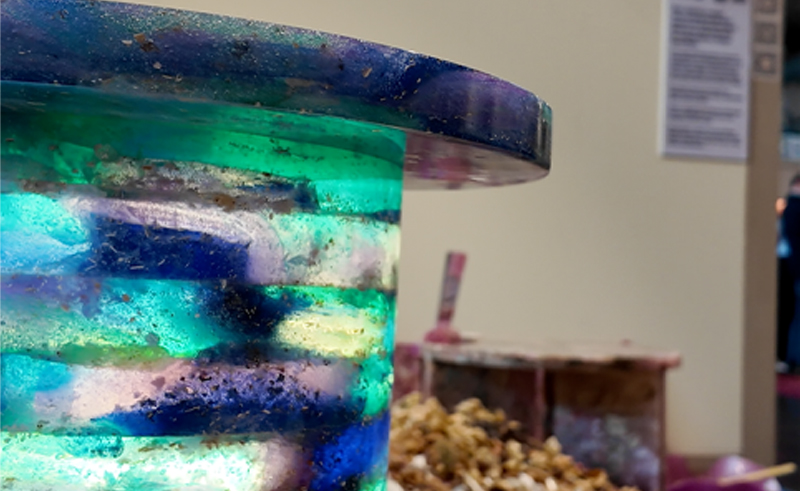
Shell Homage, founded by Rania Elkalla, presents an installation centred on process, moving from raw fragments to fully realised objects. Using cleaned shells combined with plant-based binders, the project develops a biodegradable material free of toxic chemicals.
Its final forms shift depending on treatment - sometimes dense like stone, other times softly translucent - and are applied across flat-pack lighting and furniture pieces. The work foregrounds material and craft, focusing on how making shapes both form and outcome.
ABI (Egypt - Italy) - Egyptian Stone Collection
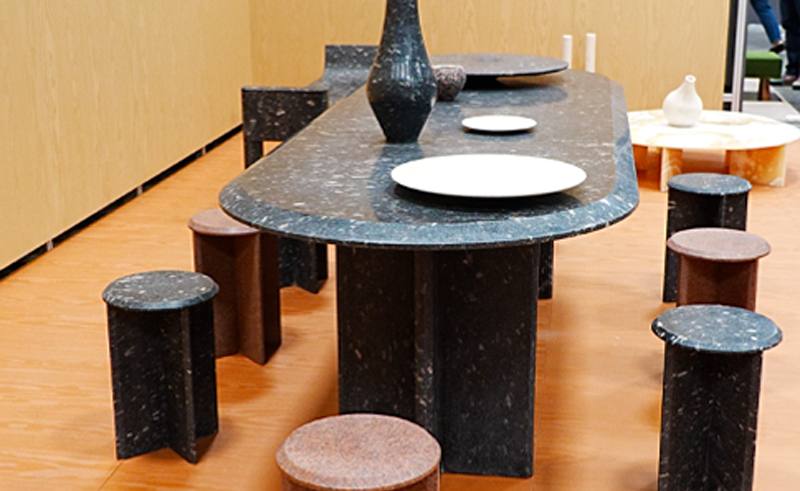
ABI Milan Cairo presents a stone design practice born from the partnership between Italian designer Simone Becchio and Egyptian stone maker Robin Abdalla of Marmonil, a third-generation family business rooted in over sixty years of quarrying and craftsmanship.
Working exclusively with Egyptian stone, the studio positions material as both history and medium. Presented at Milan Design Week as part of Salone Raritas, the latest collection brings together four designers whose works translate this dialogue between ancient material and contemporary form.
Jwana Hamdan (Lebanon) - Babilonia
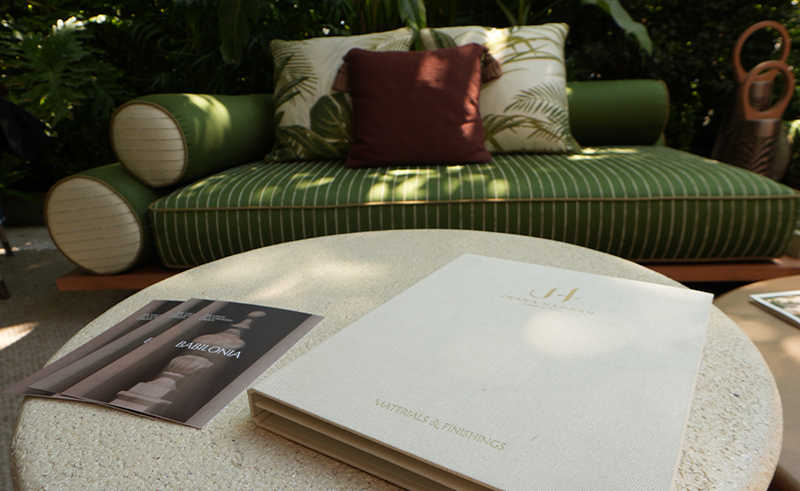
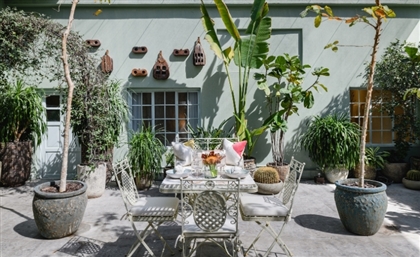
Jwana Hamdan presents an installation set within the private garden of ME Milan Il Duca. In this open-air setting, the brand’s iconic lounge pieces are reinterpreted through the Babilonia textile language, gaining a renewed visual and tactile identity. Each piece defines a distinct environment, expressed through three chromatic worlds that explore the dialogue between texture, tone, and form.
Sand Fortress unfolds in warm beiges, evoking an arid, ancestral terrain that feels quiet and timeless. Green Sanctuary layers shifting greens into a living atmosphere associated with renewal and presence. Blue Mirage moves into deeper, celestial tones, recalling a desert vision suspended between stillness and illusion.
Abeer AlRabiah & Albandari Sulaiman (Saudi Arabia) - Cora
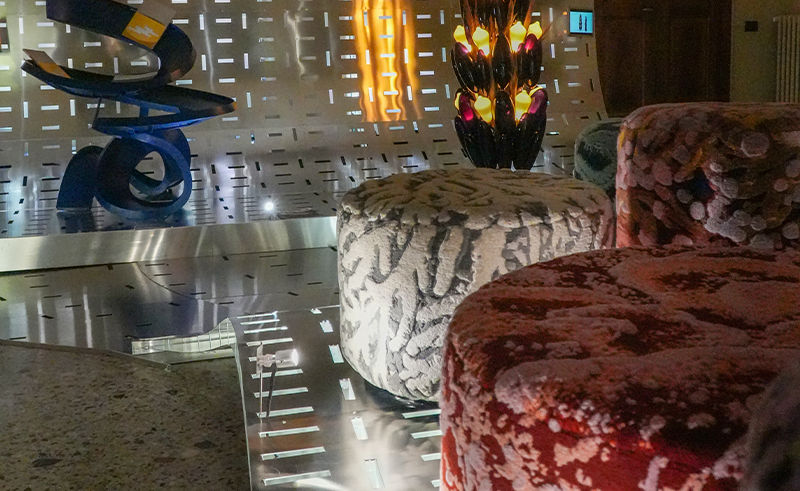
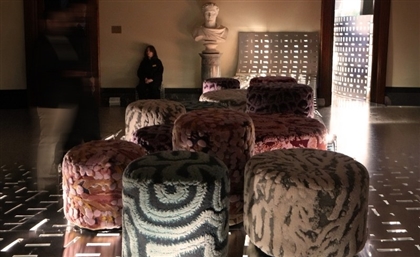
In collaboration with Iwan Maktabi, The CORA Collection is part of Jusoor Design Collections for emerging Saudi designers, presented as a tribute to the Red Sea’s coral reefs - living worlds defined by colour, movement, and resilience. Drawing from personal memories and a shared connection to the sea, the designers translate the hidden forms of underwater ecosystems into sculptural objects.
The collection features twelve stools inspired by five coral species, their cylindrical silhouettes evoking the quiet rhythm and strength of coral colonies. Alongside them, three “bleached” pieces stand in stark contrast, serving as a reminder of coral fragility and the ongoing threat of loss within these ecosystems.
Saud Alsaleh (Saudi Arabia) - Tah
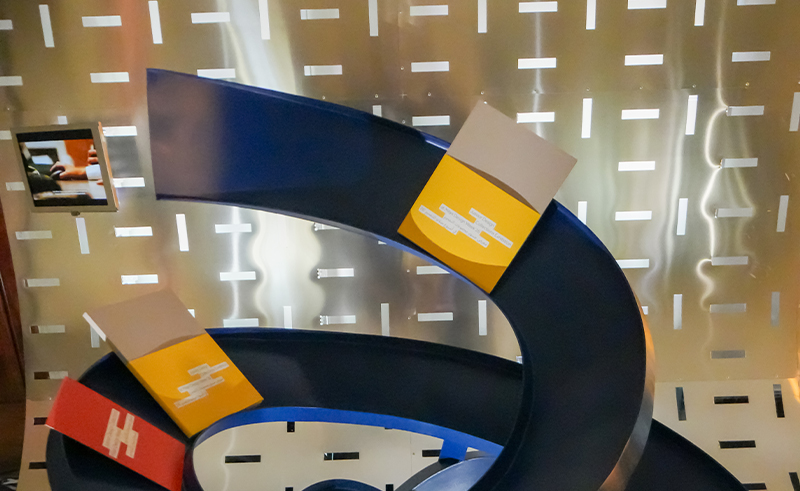
In collaboration with Lagranja Design and part of Jusoor Design Collections for emerging Saudi designers, Tah explores the lived experience of dyslexia. For Saud, language is perceived less as sequence and more as movement, where letters shift, lines bend, and meaning unfolds through rhythm rather than order.
This perception shapes the work, titled Tah - Arabic for “got lost” - a reference to the disorientation he experiences when reading text. The piece translates that state of being into form, reflecting how words can become spaces of confusion, where meaning is constantly slipping and reforming.
Moutaz Abbas (Saudi Arabia) - Thanoon
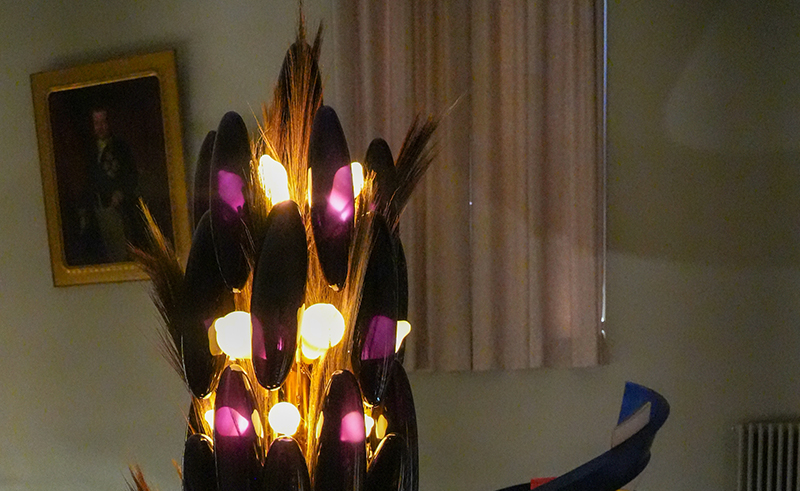
In collaboration with Klove Studio and part of Jusoor Design Collections for emerging Saudi designers, Moutaz's floor lamp is inspired by the Stanche - locally known as Thanoon - a plant that thrives in the desert surrounding Riyadh. It translates the plant’s resilience and organic grace into a contemporary sculptural form.
Rather than replicating its appearance, the design interprets its essence, drawing from its patterns of growth, fluid movement, and natural clustering. The lamp is composed of interconnected geometric forms that reflect these groupings, balancing spontaneity with a sense of structure and harmony.
Aseel Alamoudi (Saudi Arabia) - TAKWEEN
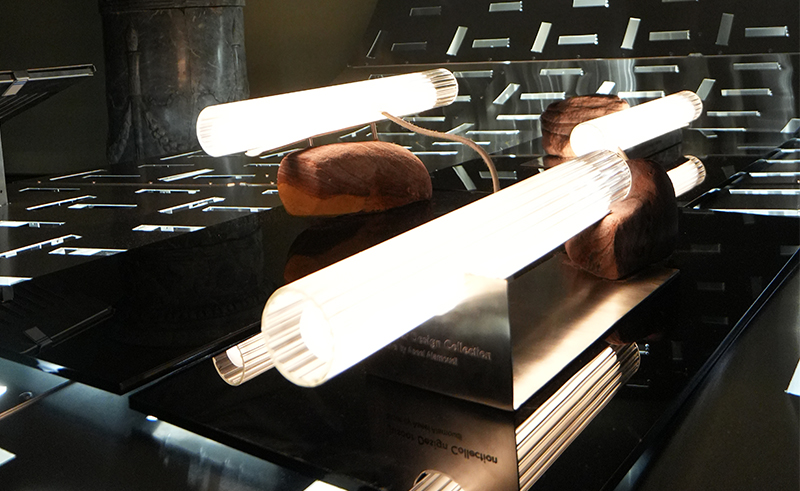
In collaboration with Klove Studio and part of Jusoor Design Collections for emerging Saudi designers, Aseel's set of three table lamps explores the tension between natural, handcrafted, and industrial materials. Each piece brings together raw sandstone, hand-blown glass, and stainless steel, allowing the character of each material to remain distinct and visible. The materials exist in dialogue, retaining their individual identities while forming a cohesive whole. Light acts as the unifying element, revealing subtle variations in colour, texture, and reflection. Each lamp is inherently unique, shaped by its components, materials, and making process.
Chafic Mekawi (UAE) - Of One, Of Many
Of One, Of Many by Chafic Mekawi (UAE) reinterprets the Monobloc chair - long a symbol of global mass production since the 1960s - through regional craft. The familiar plastic form becomes a vessel for local memory and cultural identity, reshaped through making.
Nermin Habib (Bahrain) - Olla Forms
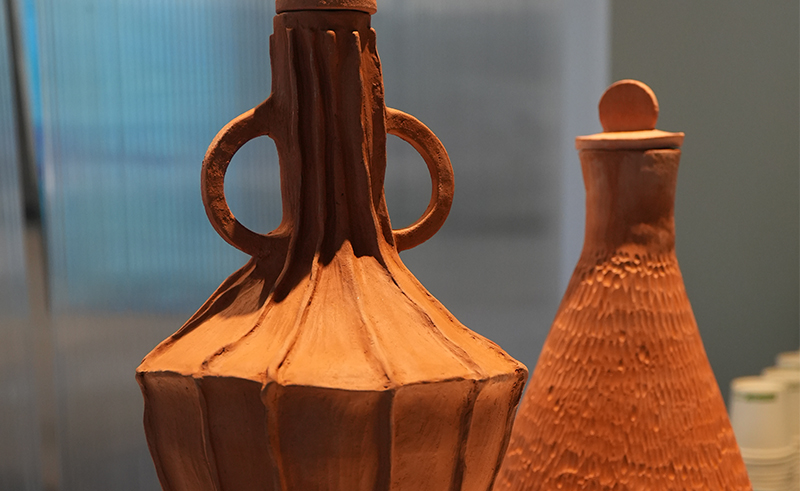
Olla Forms by Nermin Habib (Bahrain) revisits ancient evaporative cooling techniques through contemporary craft. The traditional terracotta water vessel is reinterpreted as a functional object rooted in climate, memory, and material intelligence.
Olna Znad (Bahrain) - Walls of Remembrance
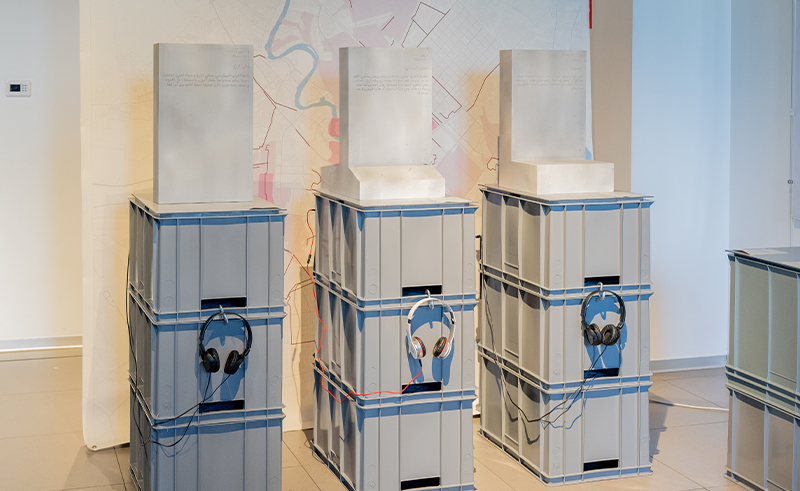
Walls of Remembrance by Ola Znad is inspired by post-2003 Baghdad walls. Three engraved concrete structures carry layered references to childhood, fading rituals, and Iraqi folklore, translating personal memory into collective resilience.
Stephen Amoyo (Qatar) - SUNGKA!
SUNGKA! by Stephen Amoyo revisits an ancient game that travelled across the Middle East, Africa, and the Philippines. Reclaimed by the Filipino diaspora in Qatar, it becomes a shared cultural thread connecting migration and play.
Dana Wazni (UAE) - The Conversation Sofa
The Conversation Sofa by Dana Wazni, designed for Studio Obliq, transforms seating into an interactive surface. Drawn and written upon, the sofa becomes a living archive of its visitors, accumulating traces of conversation over time.
Fajr Basri (Bahrain) - Moments, Seated
Moments, Seated by Fajr Basri presents a quiet landscape of handbuilt ceramic chairs. Each piece holds the trace of human presence, becoming a still record of bodies once there and spaces temporarily occupied.
Davina Atallah (Lebanon) - Body Blocks
Body Blocks by Davina Atallah draws from ancient Mesopotamian forms to create an award-winning toy that bridges play and memory. Through modular forms, it invites users to rediscover forgotten aesthetics through interaction and assembly.
Abdulla Buhijji (Bahrain) - Open Apothecary
Open Apothecary by Abdulla Buhijji reimagines the medieval Islamic apothecary through a contemporary lens. Traditional herbal remedies are compressed into burnable blocks that release scent over time, turning healing into a slow, meditative act of transformation.
Katia Luna Benaï (Algeria) - The Ecology of the Hexagon
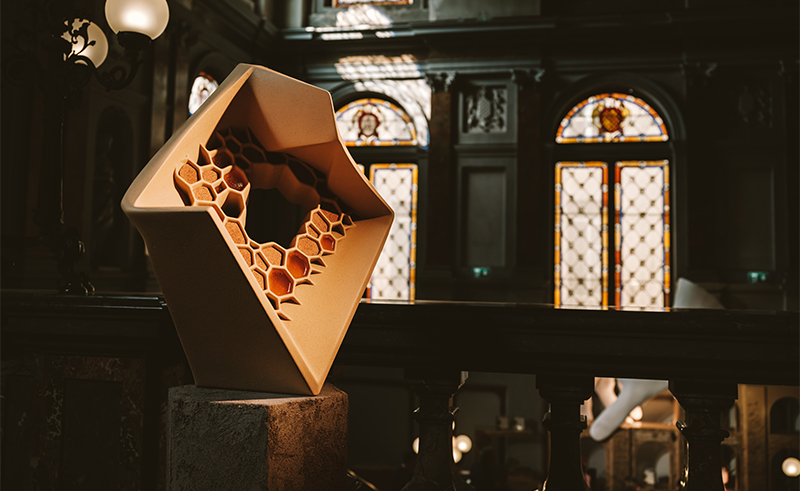
A sculptural fragrance installation that translates the honeycomb's geometric precision into a sensory mix of honeyed florals, mineral warmth, and raw woody structure.
- Previous Article Jusoor Brings Saudi Design to the World Stage at Milan Design Week
- Next Article How the Circle Shapes Power & Space Across the Middle East