

The Chair That Became an Egyptian Icon Through Meuble El Chark
A chair has supported the weight of the Egyptian people for generations, becoming so synonymous with our streets that we often forget it has a name, a birthplace, and a story of incredible resilience.
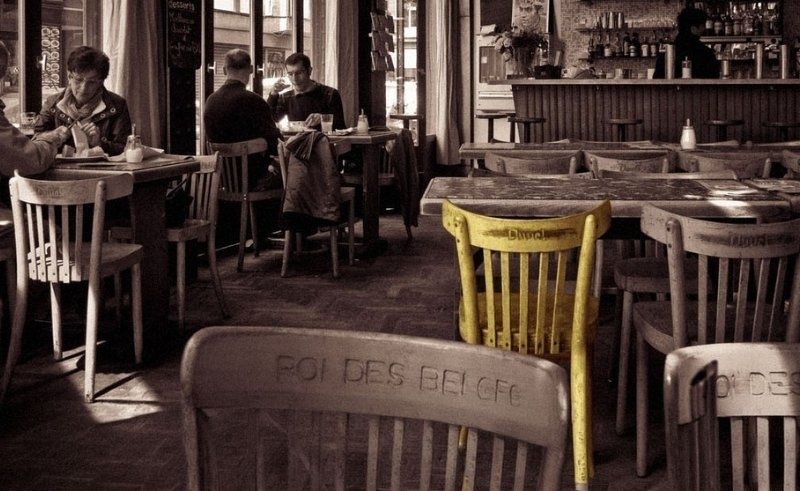
From attending Umm Kulthum’s iconic concerts to being the silent centre of the scene in Naguib Mahfouz’s books, the humble wooden chair, commonly known as ‘korsy el ahwa’, deserves to be celebrated. While its design origins are often debated, its lineage is likely rooted in the mid-20th century at the factories of Korsy Helal El Chark.
The story began in 1944 within a small, rented factory in Shubra. There, two brothers, Zaki and Helmy Abdel Hady, founded a humble enterprise where only six chairs were produced by hand every day. The brand’s identity was born from a moment of pure cinematic inspiration. “My father once watched a film in Cinema Rivoli and in the movie, there was a stallion named Helal El Chark that crossed the finish line first," Aly Helmy, Chairman of the Board of Meuble El Chark’s factory and son of Helmy Abdel Hady, recalls. "Struck by the animal’s strength and grace, he named the business Helal El Chark.” At the time, the workshop produced only one chair model, which came to be known as the Korsy Helal El Chark.
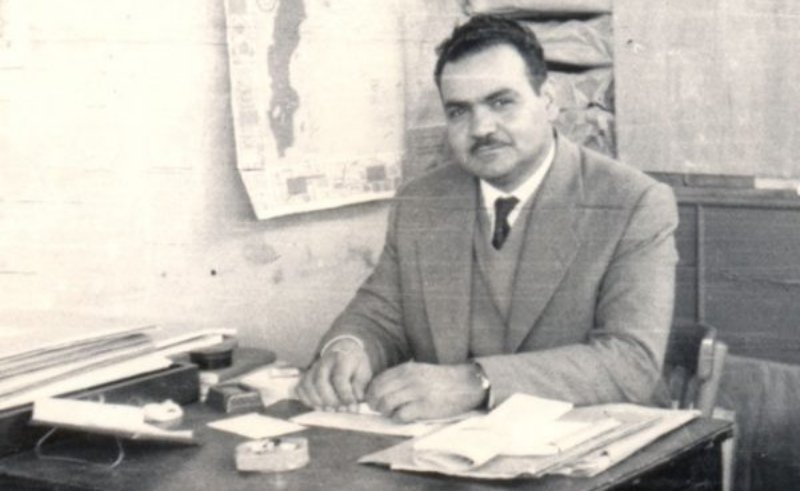
Their first major challenge came when Dar El Ma’arif, the former Ministry of Education, ordered 100 chairs for schools. At a time when they were struggling to produce even a handful, the brothers had to evolve. By 1954, they moved to a larger factory in Imbaba, purchasing primitive machinery and scaling their production to 1,000 chairs a day to meet the growing demands of the chair market.
However, Korsy Helal El Chark faced a decline in 1964. At the height of Egypt’s socialist movement, the factory and its 400 workers were nationalised and the family lost their company. But the spirit of the Abdel Hady brothers was not so easily broken. By 1965, they were starting over from scratch in Al Amereya under the new name Meuble El Chark, and were granted the seventh industrial registration in Egypt. They returned with a new philosophy, integrating the high technology and advanced machinery that, at the time, would set them apart.
In 1984, Helmy Abdel Hady and his son Aly Abdel Hady expanded to a larger factory in Nasr City, producing more than 400 different chair designs, tables and sofas. Since then, Meuble El Chark’s expansion has been exponential, growing their factories and expanding the areas in which they operate, serving everything from local street corners to international hotels and grand cinemas through their Cinec and Karassi + Karassi sub-brands. “I just want to say that we are passionate about what we do, we are masters of the craft and always put quality above all," Aly Helmy reflects. "Nothing ever comes out poorly made at Meuble El Chark.”
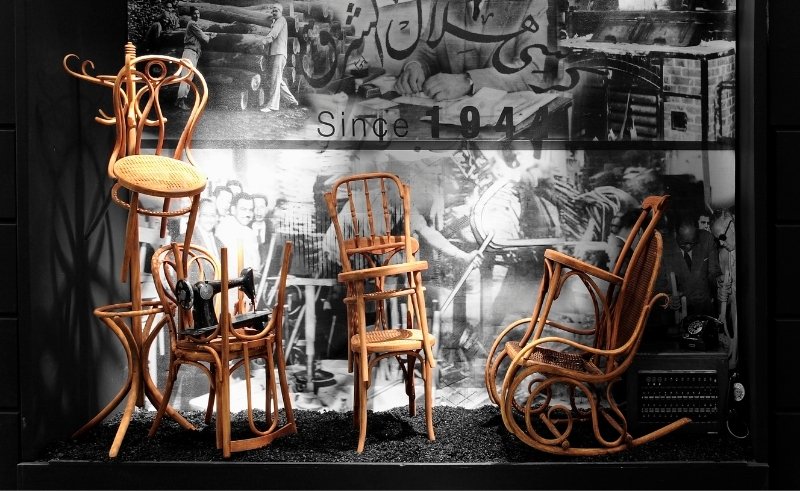
Today, Meuble El Chark continues to operate on a large scale, both internationally and locally. They have successfully bridged the gap between authenticity of the past, practicality of the present, and openness of the future. “What sets us apart is our mastery of the bentwood technique," CEO Nevine Helmy explains. "We have been experts in this method of manipulating wood for many years.” This expertise is a lifelong commitment. “I was at the factory since I was 12 years old, working in all sorts of things, learning the technicalities of the craft," Helmy recalls. "I was a carpenter myself at my father’s factory.”
The bentwood technique was introduced when Aly Helmy visited a factory in Germany and witnessed their wood steaming process. He wondered why they did not produce the same way, and upon his return to Egypt, he mastered the technique of shaping wood into curved shapes within three days. “I was furious,” he admits. “This was at my fingertips a long time ago, and its execution was that easy, yet I never thought of doing it myself.”
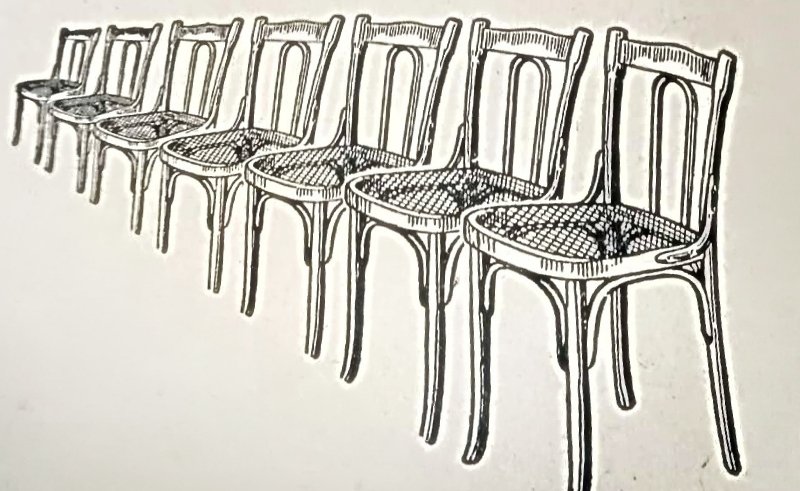
Today, the model known as Korsy Helal El Chark has become the blueprint for the Egyptian street, though the factory has produced other iconic pieces, such as those famously found in Cafe Riche. What really makes Meuble El Chark stand out is this specialisation in bentwood. You can spot an authentic piece if you look at the back and see that the back consists of a single piece without any joints. Producing with bentwood makes their furniture characterized by exceptional strength and durability.
Although we use it increasingly, we tend to take it for granted. German philosopher Martin Heidegger once suggested that we only notice the tools in our lives when they fail us; the "broken hammer" that suddenly demands our attention. When they work, they become invisible; when they do not work, they demand attention. At this moment, the object is questioned: was it ever useful, could I replace it with something better? By this logic, ‘korsy el ahwa’ by Korsy Helal El Chark is a masterpiece of design precisely because it is never noticed. It is so well calibrated to whichever environment it is found in that it disappears into the experience of sitting and has rarely demanded our attention for years. It serves as a reminder to notice the things we choose to block out, the silent wooden supports that hold up the heavy, chaotic architecture of our social lives.
If you’ve reached this far, you are probably sitting down. Take a moment to see where you are facing and which direction your gaze is. There was a pivotal moment in Cairo’s urban history when the chair turned 90 degrees. Before the modern cafe, the 'mastaba' (stone bench) was built into the walls of buildings, forcing sitters to face one another or the shopfront. But the wooden chair granted us a spectator culture. It allowed the Egyptian to sit with their back to the cafe and their face to the street, shifting the street cafe from a place of private meeting to a theatre of the world.
- Previous Article Football Becomes Kahhal 1871's Latest Cultural Backdrop
- Next Article This 1940s Bahraini Home Finds New Life as a Stylish Boutique Hotel