

Studio Mai-t Launches Hand of Fatima Collection by Yasmin Noureldin
Cairo-based circular design studio Mai-t unveils its debut Hand of Fatima collection, reimagining the symbol in recycled materials across side tables, mirrors and coasters, with otherworldly patterns.

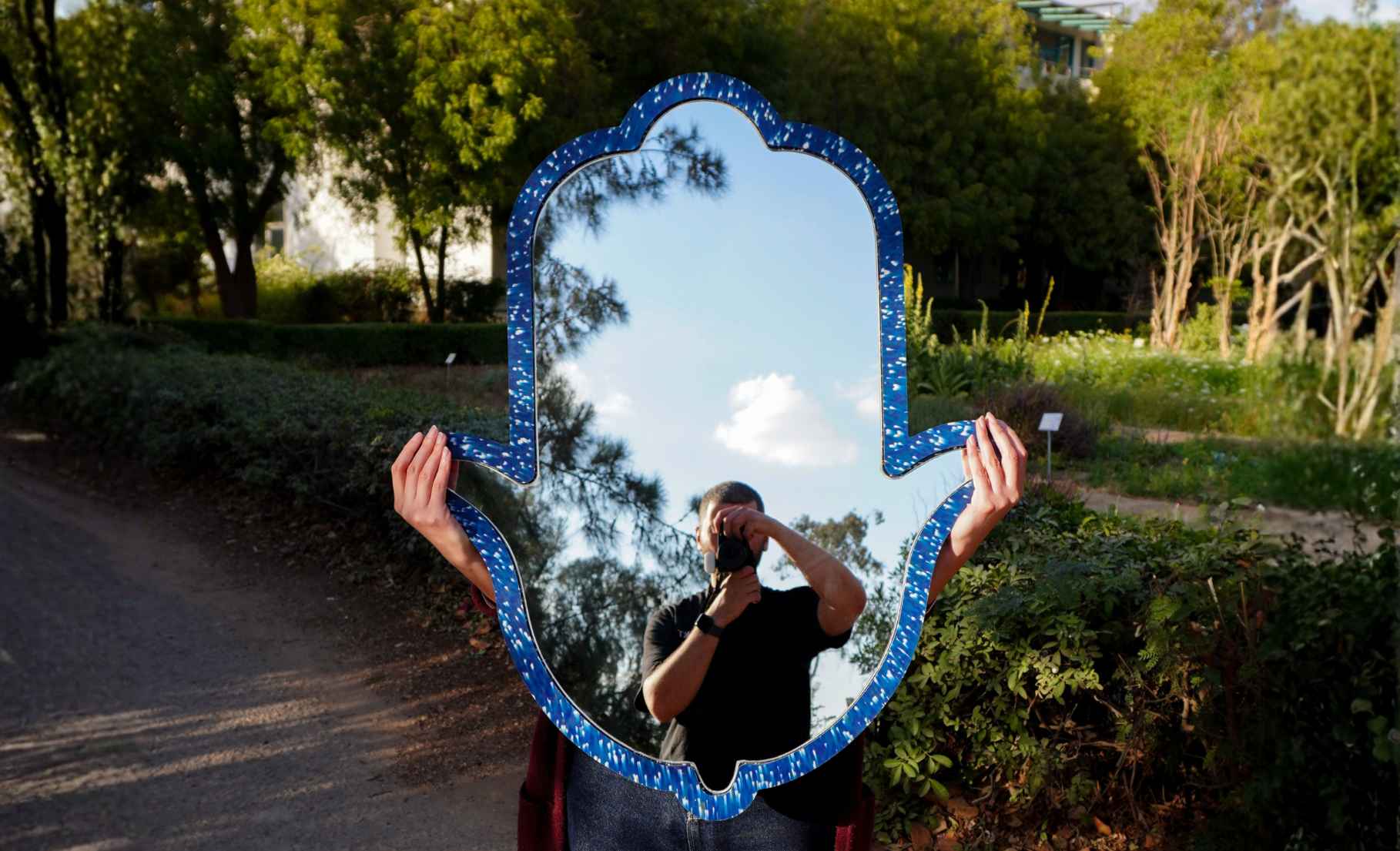
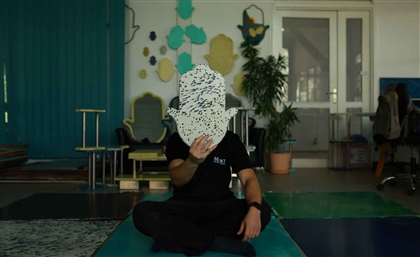
The Hand of Fatima, Khamsa, Khemisa, we name it differently depending on where we grew up, but the symbol itself needs little introduction. A palm open to the world, carrying the idea of protection, a motif deeply embedded in the visual culture of the region. It has always been there - on walls, in doorways, on jewellery, in the corners of homes, witnessing generations pass it on.
This sense of familiarity comes from what it holds: the expectation of safety, the passing down of blessings. It is also, paradoxically, the first time we encounter it like this. Cut, pressed, and reinterpreted through recycled Egyptian plastic, translated into three objects and a set of patterns that emerged from the luckiest production accidents.
Mai-t, the Egyptian circular design studio, is founded on the belief that waste can be treated as a material with untapped creative potential and emerged from a desire to bridge two industries in Egypt that continue to grow in parallel yet rarely intersect. "We wanted to connect the recycling and design industries in Egypt because both are booming, yet they rarely meet," Karim Abdullatif, Co-Founder of Mai-t, tells SceneHome.
Over two years of experimentation with recycled plastic and process, that idea was tested through a series of early collaborations, including a pivotal one with Egyptian designer Yasmin Noureldin, which became both the starting point and foundation. From there, Mai-t developed its first collection and, in the process, its visual language.
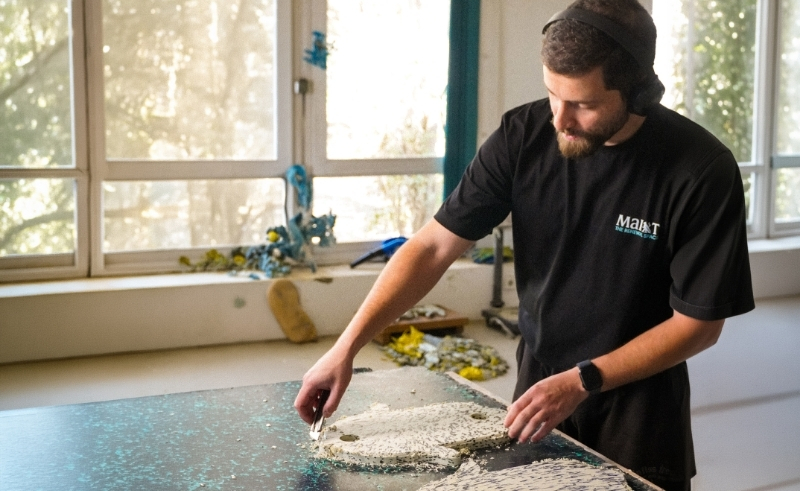
“The Hand of Fatima has been a recurring symbol in my work since 2011. Seeing a familiar design transformed through Mai-t's one-of-a-kind patterns and sustainable approach felt both refreshing and inspiring,” Yasmin Noureldin tells SceneHome. Debuting the collection through this piece felt particularly fitting. Its cultural familiarity offered a natural entry point into a collection centred on rethinking material value through recycled plastic. "Yasmin was among the first designers we approached to gauge interest in our concept and became the first to give us her product," Abdullatif explains. "Yasmin gave us her hand."
The collaboration ultimately became the foundation for Mai-t's debut collection, but the process also led to a series of unexpected discoveries. As the team developed their manufacturing methods, building machines and experimenting with recycled plastic sheets, imperfections began appearing throughout production. "It was the first time any of us had built machines and, as a result, we had some minor imprecisions that gave us results beyond our wildest dreams," Abdullatif says.
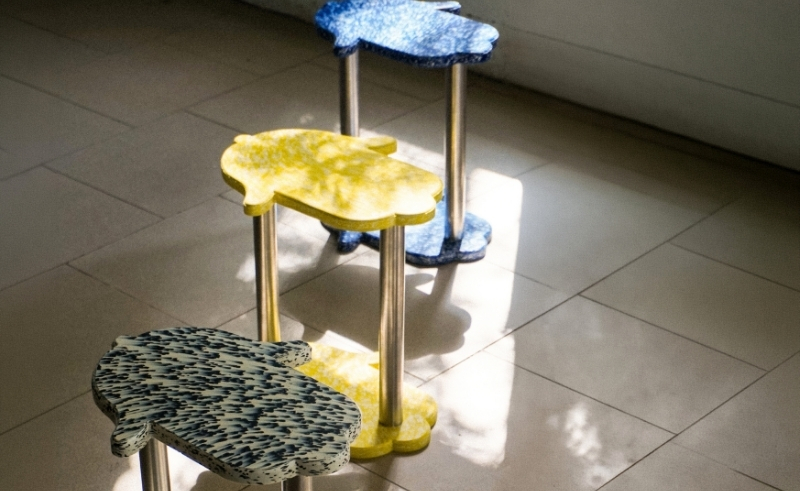
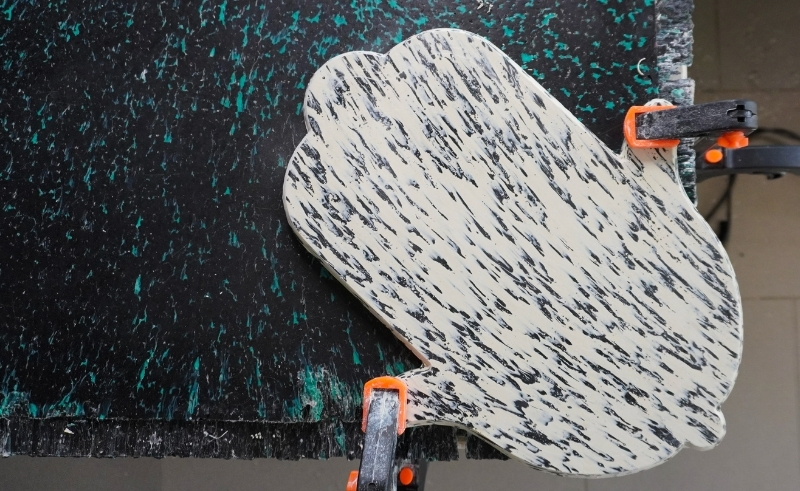
The process generated patterns that seemed to emerge organically from the material itself. Those accidental outcomes eventually evolved into three distinct surface treatments: Starfall, Orbit Grain and Cosmic Stone. "We were not expecting any of these patterns. Instead, we were hoping to get a uniform surface," Abdullatif says. Their origin sits in an unsettling parallel reality. Plastic waste no longer exists solely in landfills, waterways and oceans. Fragments of debris now orbit the Earth as part of what is commonly known as space junk.
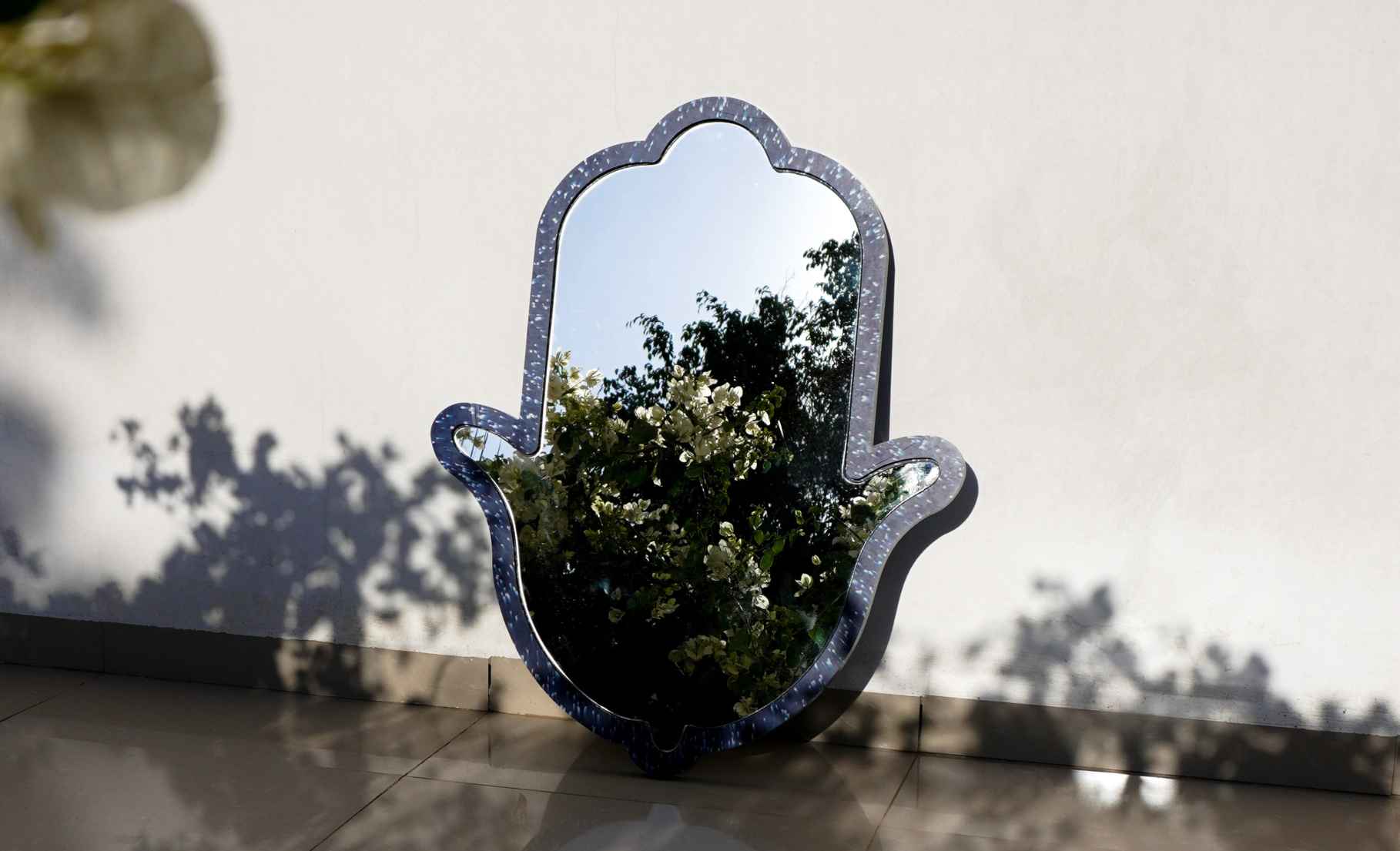
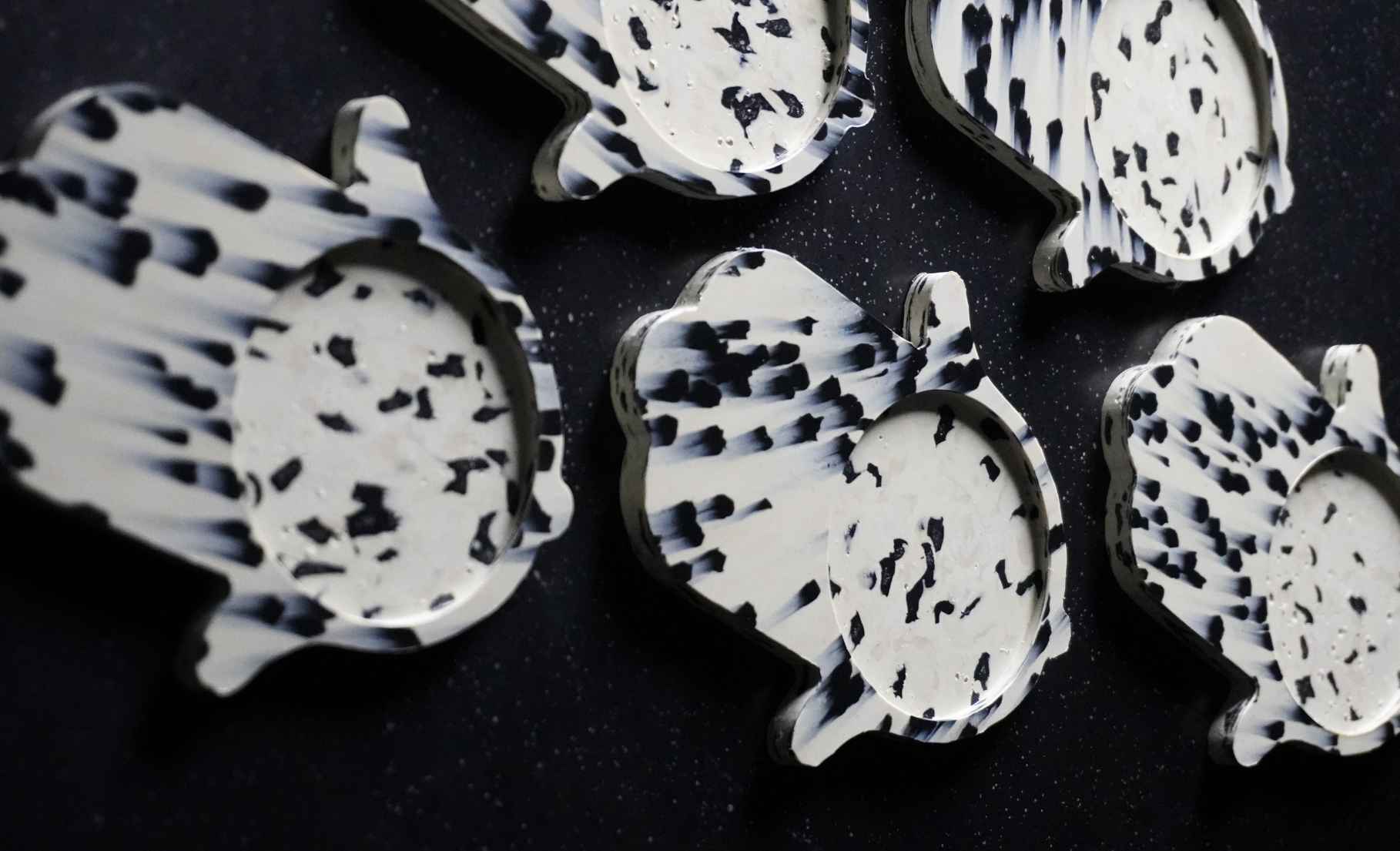
The first pattern, Starfall, emerged from a slight mechanical irregularity within Mai-t's press. As recycled plastic softened under heat, an almost imperceptible tilt in one of the aluminium plates allowed material to shift during production, creating streaks across the surface that resemble shooting stars. Orbit Grain developed on the opposite side, where subtle variations in heat distribution preserved traces of the recycled pellets within a textured finish. Cosmic Stone was discovered almost by accident after the team cut into one of the sheets and uncovered intricate marbling hidden beneath the surface.
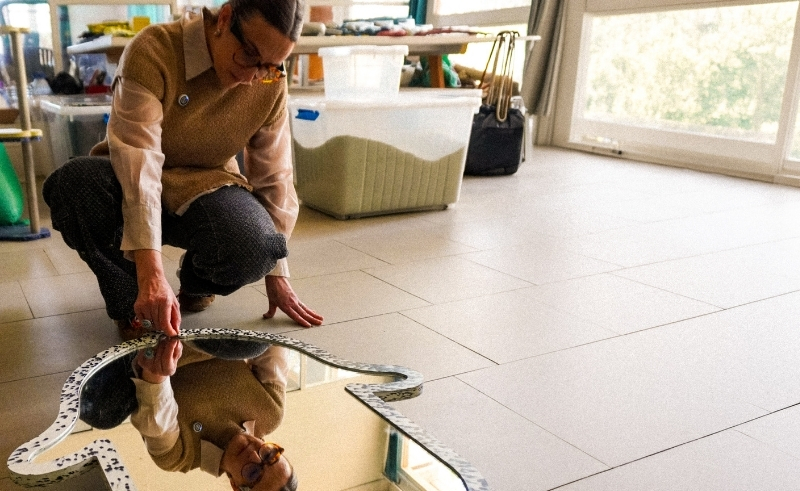
The discovery ultimately shaped Mai-t's visual identity. Because each recycled-plastic sheet responds differently during production, no two surfaces are ever exactly alike. The patterns can be recreated, but never replicated. Every object carries its own composition, making each piece effectively one of one.
The resulting collection expands Noureldin's original Hand of Fatima silhouette into three objects: a side table, a mirror and a series of coasters. The side table appears across all three patterns, while the mirrors and coasters are produced in Starfall. Designed as portable pieces, building on the versatility that first defined Noureldin's original design. The coasters, meanwhile, reveal two patterns at once and make practical use of recycled plastic's non-porous nature, resisting the stains and spills of everyday use.
Throughout the collection, the tension between machine production and handicraft remains visible. Pieces are machine-cut before being finished by hand, while production offcuts are collected and reintroduced into the manufacturing cycle. That relationship extends to the mirrors, which were developed in collaboration with local artisans who helped refine the complex contours of the Khamsa silhouette, adjusting angles and transitions to avoid potential breaking points during fabrication. And to carry that circular ethos through every stage of making, the studio's production process is powered entirely by solar energy.
For Yasmin Noureldin, the collaboration also became an extension of her own material experimentation. “What made this collaboration with Mai-t particularly exciting was the opportunity to explore an entirely new material. It is the first time I have worked with a recycled material, which adds another layer of meaning to the design. Beyond the visual outcome, I appreciate that the process contributes to reducing waste and giving materials a second life,” Noureldin adds.
The collection's emphasis on protection extends beyond symbolism. Through a partnership with Sanad Foundation, an Egyptian organisation supporting orphaned children, a percentage of proceeds from the collection will contribute towards the education of orphans from an early age and all the way up to the moment they are ready to engage with the professional world. The collaboration was facilitated through 7en, an initiative that connects NGOs, social initiatives and private-sector partners to create long-term social impact. “The Khamsa has always been a symbol of protection and Yasmin gave us her hand. Now, it’s our turn,” Abdullatif adds.
- Previous Article Egypt's Naguib Sawiris is Building a EUR 100 Million Resort in Mykonos
- Next Article The Intricate Beauty of Ben Youssef Madrasa