

Egyptian Artist Walid Onsy Takes Glass Beyond Decoration
Inside Walid Onsy’s three-decade exploration of fused glass, where handmade techniques meet tableware, architecture and interiors.
Glass is usually treated as a finishing material in a space. It frames a window, tops a table or hangs on a wall as a mirror. Even when it is decorative, it is rarely the first thing people notice. The sofa comes before the coffee table, the dining chairs before the plates, and the wall colour before the mirror. Glass often enters the process at the final stages of designing a space. For Egyptian artist Walid Onsy, that order has never made much sense. Since 1992, he has built his practice around the idea that glass deserves the same attention as any other material.
The studio began with a single kiln and a clear ambition. "I always had a dream of having my own brand," Onsy says. "I bought a very small oven, and it produced piece by piece, one piece a day." At the time, the focus was fused glass, a technique that involves layering sheets of glass and combining them inside a kiln. Onsy approached the process as an open experiment, using each firing to explore how colour, texture and thickness could create something entirely new.
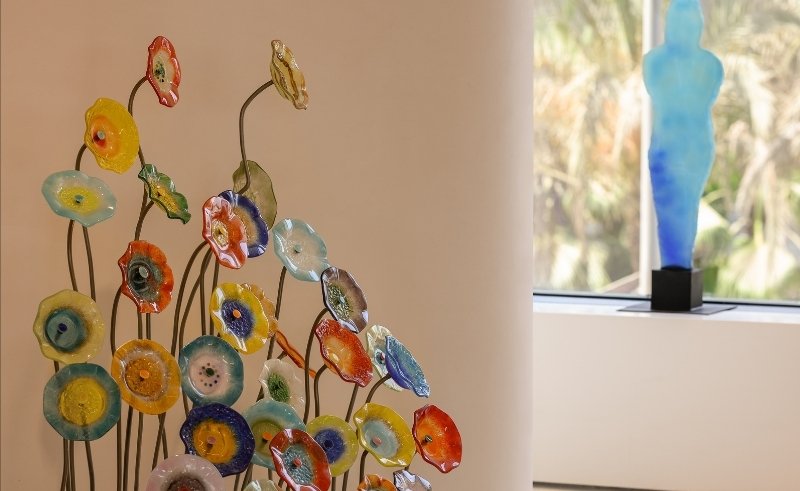
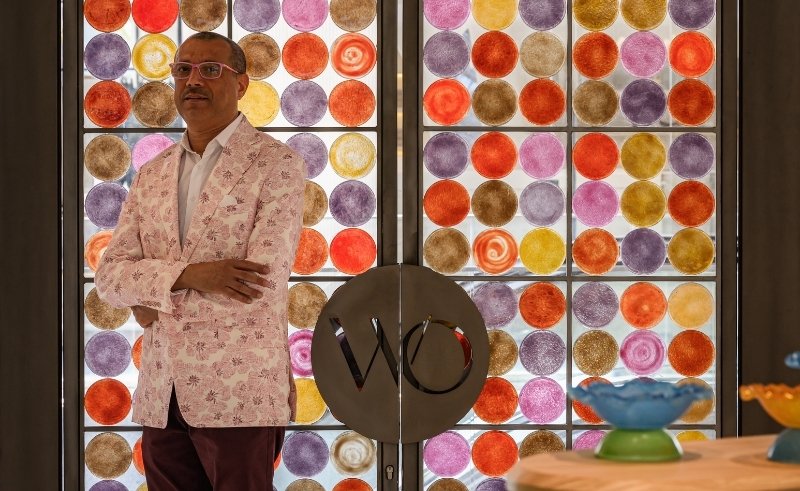
Those experiments eventually became his signature. "There are techniques and things that I invented," he explains. "How to mix colours, how to make patterns in a certain way. Each piece has its own customization." While many designers work within established methods, Onsy spent years developing his own approach to the material. The result is glass with an unusual sense of depth, where layers of colour and pattern appear embedded within the surface, challenging the flat and transparent qualities most people associate with glass.
Working with this level of craftsmanship requires patience. A single piece can spend weeks inside the kiln as layers are heated, cooled and fired again until they reach the desired outcome. This extended process is part of what makes each piece different. Small variations emerge during production, giving every object its own character in a way that cannot be replicated through mass manufacturing.
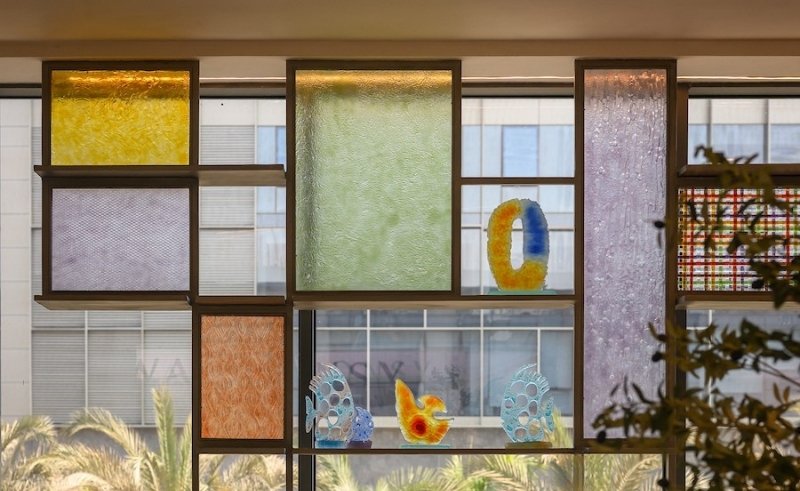
As the studio expanded, so did the scope of its work. Onsy moved beyond standalone artworks and began exploring how glass could become part of the spaces people live in every day. The collection grew to include lighting, architectural panels, doors, sinks, mirrors and tableware, bringing the same techniques into both functional objects and larger-scale installations.
Walid Onsy’s work has travelled far beyond Egypt, with his pieces appearing in exhibitions both locally and internationally. At international fairs, he often finds audiences surprised by the scale of a handmade glass practice developed in Egypt. “When I go to an exhibition abroad, people are surprised to see how I got to where I am today, even though it was never explained in books or anywhere in the world,” he says.
In 2026, Onsy presented his collection at Ambiente Frankfurt, one of the world’s leading consumer goods fairs, marking his ninth participation at the event. “Our participation for the ninth time in the fair has positioned us as trendsetters in the international glass market,” he says. These international platforms have continued to push the studio to explore new techniques, textures and colour combinations, with recent collections introducing new visual directions such as stripes and polka dot-inspired patterns.
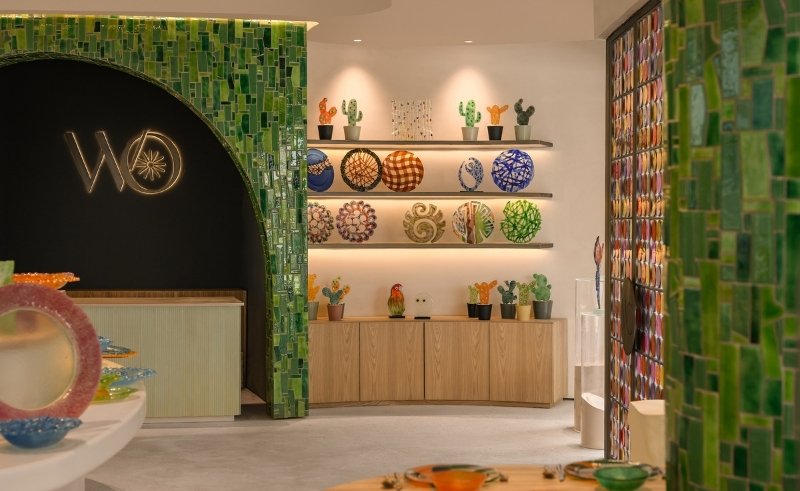
The store at U Venues brings together the different directions Onsy's work has taken over the past three decades. Tableware is displayed alongside lighting, architectural panels and sculptural pieces, showing how his fused glass techniques extend across different scales and functions. The space reflects the evolution of a practice that began with artistic objects and grew to include elements that shape the interiors they inhabit.
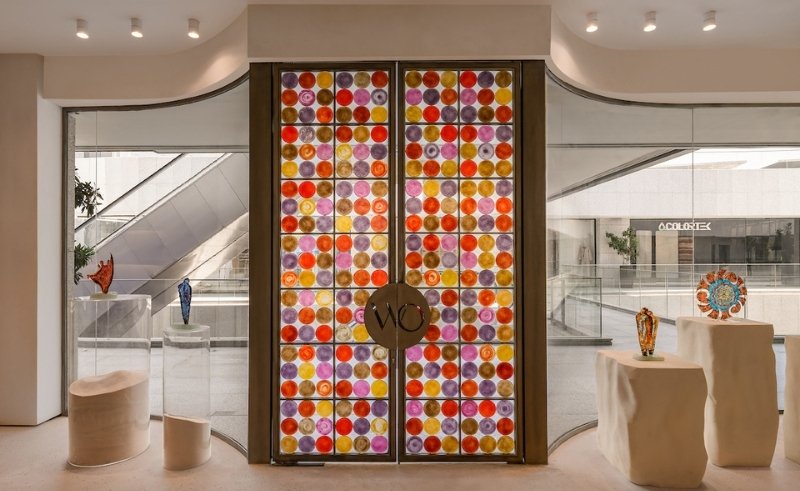
Onsy has built a practice that extends from the smallest tableware pieces to architectural installations. What began with a single kiln in 1992 has grown into a body of work that challenges the way glass is used and understood, proving that a material often considered secondary can become the defining element of a space.