

Saudi Design House Translates Cultural Gestures into Furniture
Saudi design house Zaza Maizon reworks gesture and landscape into stainless steel furniture at Milan Design Week.

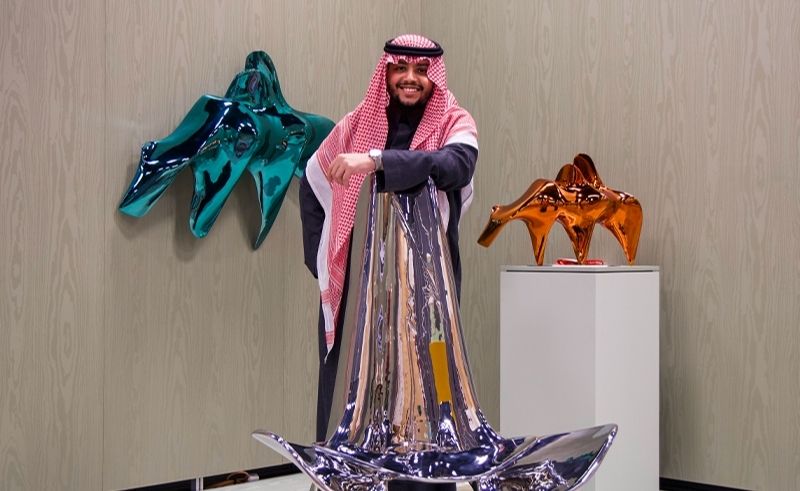
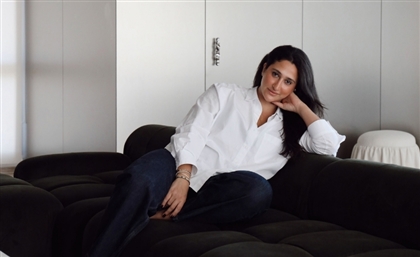
There are many elements that make Saudi culture distinctive, and many of them sit in everyday gestures, materials and ways of seeing rather than in formal symbols. Saudi architect Abdulaziz Khalid Al Tayyash, founder of Zaza Maizon, works with two of these references in his presentation at Milan Design Week this year, using them as starting points to think about how cultural movement can be translated into form.
At Milan Design Week, Zaza Maizon presents a selection of works that approach furniture through context. The exhibition brings together pieces from 'The art of living' and 'Gems of the Arabian Peninsula', two collections that look at how objects can carry traces of daily gestures and landscape. Stainless steel runs through the presentation as a primary material, used in a way that responds directly to light and position, so each piece shifts depending on where it is seen from.
The Vitturi Chair begins with the Saudi shemagh (a traditional checkered headscarf), and more specifically the nasfa, the quick motion used to adjust it. That small, repeated gesture becomes a continuous curve that runs through the chair, rising from the base, turning at the backrest and returning into the seat. The form holds as one line, with no clear break between elements. Its polished surface reflects its surroundings, so the object changes visually as light and movement shift around it. The reference is a translation of rhythm and motion into structure.
Alongside it, Tawāshuj looks at the relationship between creature and landscape. The camel is the starting point, and the work reads its form as terrain, where the hump becomes a ridge and the negative spaces suggest valleys and paths shaped over time. Both readings exist at once, and the object moves between them depending on how it is approached.
Across the presentation, Abdulaziz Khalid Al Tayyash works with movement as a way of constructing form. His process focuses on actions, pauses and shifts in direction, and how these can be held within material. The work treats furniture as records of motion and context, shaped through structure, surface and proportion.
- Previous Article Amr Helmy Writes a Story Before The Kitchen at Milan Design Week
- Next Article The Ancestral Resilience of Omar El Farouk’s Fayoum Home