

Saudi Roundabout Hosts a Sculpture Inspired by the Möbius Band
The proposal incorporates Arabic calligraphy, integrated wind turbines and reflective surfaces that respond to the surrounding desert landscape.

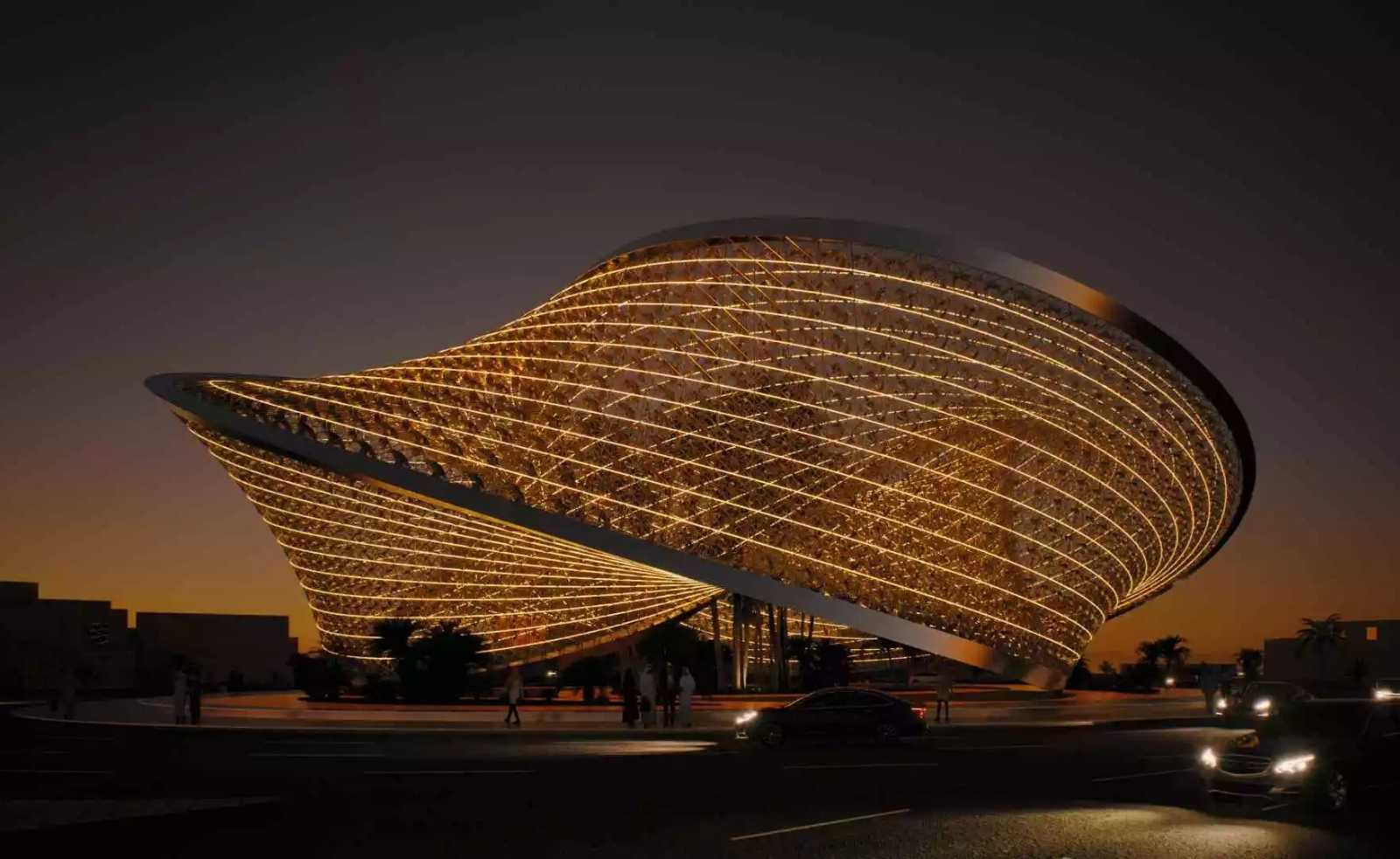
Across Saudi Arabia, the horizon is a defining feature of the landscape. Its uninterrupted line informs 'The Eternal Horizon', a sculptural proposal by Studio Symbiosis, led by architects Amit Gupta, Britta Knobel Gupta, and Fulvio Wirz that draws on the country's architectural heritage, desert landscape and growing focus on sustainable design.
Conceived as the centrepiece of a roundabout, the proposal takes its geometry from the Möbius band, forming a continuous loop with no beginning or end. Surface, structure and space are brought together within a single form that changes as visitors move around it, creating shifting relationships between light, shadow and reflection. "The Möbius band suggested a way of thinking about continuity that people could experience physically, Every step around the sculpture changes how its geometry is understood," says Amit Gupta.
Traditional geometric patterns and Arabic calligraphy are reinterpreted through parametric design and incorporated into the sculpture itself. Drawn from classical poetry and spiritual texts, the inscriptions trace the underside of the loop, carrying themes of unity, continuity and eternity. "We weren't interested in reproducing historical motifs, the challenge was understanding the principles behind them and allowing those ideas to inform a contemporary form," says Britta Knobel Gupta.
The sculpture's reflective metallic surface responds to changing conditions throughout the day, mirroring the surrounding desert and sky. As light shifts, the reflections continually alter the appearance of the structure, allowing the landmark to present a different view from each approach to the roundabout.
Embedded within the loop, a series of wind turbines harnesses the region's prevailing winds to generate renewable energy. The electricity they produce powers the sculpture's LED lighting after sunset, allowing the installation to illuminate itself using energy generated on site. "Too often, sustainability is introduced once a design has already been resolved, we wanted the environmental systems to shape the project from the beginning, so they became part of the architecture itself," Wirz tells SceneHome.
After dark, the illuminated loop offers another reading of the sculpture's continuous geometry, extending its presence into the evening. The environmental systems sit alongside the material palette and cultural references as integral parts of the proposal.
"Public works have the opportunity to connect people with culture, technology and the landscape at the same time, that relationship became an important measure for every design decision we made," explains Britta Knobel Gupta. As a sculptural landmark, 'The Eternal Horizon' reflects an ongoing conversation between Saudi Arabia's architectural heritage, its evolving design practices and the landscape that connects them.
- Previous Article Egyptian Artist Walid Onsy Takes Glass Beyond Decoration
- Next Article This 1940s Bahraini Home Finds New Life as a Stylish Boutique Hotel